Rozwój osobisty
The Rich Roll Podcast
Rich Roll
A master-class in personal and professional development, ultra-athlete, wellness evangelist and bestselling author Rich Roll delves deep with the world's brightest and most thought provoking thought leaders to educate, inspire and empower you to unleash your best, most authentic self. More at: https://richroll.com
 Otwórz w Hinto
Odcinki do nauki angielskiego1017

Apolo Ohno on The Weight of Gold
17 sie 20202h 9mOver the years, I’ve had the pleasure of conversing with many an Olympian, each with a uniquely impressive journey from obscurity to heights most can’t fathom. But what happens after the medal ceremony wraps, the klieg lights shutter, and the career comes to a close? When your entire life is centered on a moment now passed, how do you then shift overnight from podium to pedestrian? One would presume the many skills learned as an athlete -- mindset, focus, discipline, and teamwork -- would translate to seemless success in the civilian world. Ironically, that presumption would be misplaced. In truth, this transition is fraught, and has felled some the greatest competitors among us. We love to celebrate our Olympic heroes. We relish in the dissection of their habits, wrapt in what makes them tick; what makes them great; and what distinguishes the very best from everyone else -- all in service to that sliver of inspiration and applicability to our own lives. From private mental health struggles to debt, loss of identity and a lack of opportunities in retirement, the systems sending our athletes to the Olympics aren’t supporting them well in the long haul. And it’s gotta change. That change begins now, starting with the recently released HBO documentary, The Weight of Gold. Expanding upon a recurring theme of this podcast, the film presents a potent look at the mental health challenges our Olympians often face from their lived perspective. Executive produced and narrated by Michael Phelps, the world’s most athletically accomplished mental health advocate, it features a myriad of celebrated athletes, including today's guest. Meet Apolo Ohno, here to help untangle this dark thread that connects those who have stood in the spotlight. An eight-time Olympic medalist in short track speed skating, Apolo is the most decorated American Olympian at the Winter Olympics, and was inducted into the U.S. Olympic Hall of Fame in 2019. He is a Twelve-time U.S. champion, a three-time overall World Cup champion and in 2008 he was Overall World Championship gold medalist. Despite his post-athlete career successes, Apolo knows well the mental perils of elite athleticism. Raised by a single dad, Apolo took his dream all the way to the very top. When it was over he didn't just face what might come next. For the first time he had to discover who he was off the rink--and reimagine his life wholesale. This is a conversation about what it’s like to have a passion with a shelf life. The mental health repercussions of Olympic pursuit. And the pitfalls of prodigious success at a young age. More broadly, it's a dialog about why we sabotage ourselves, and how to break this bad habit. And it’s about deconstructing those preconditioned beliefs we all have about who we are and what we are capable of achieving. Today, one of history's all-time great Olympians provides a master class in mindset and intention: how to use it to our advantage, and what it takes to break the mold of what is possible. My hope is that this conversation will help you form a more holistic idea of who you are and what you seek to offer the world. I hope it encourages you to see the strength in vulnerability and the power in asking for help. But more than anything, I hope it breaks whatever illusion you have about what an Olympic athlete is and what an Olympic athlete is not. The visually inclined can watch it all go down on YouTube. And as always, the podcast streams wild and free on Apple Podcasts and Spotify. May you receive Apolo with an open heart. Peace + Plants, Rich Learn more about your ad choices. Visit podcastchoices.com/adchoices

The Gut Health MD: Dr. Will Bulsiewicz On Optimizing Your Microbiome (In A Pandemic)
10 sie 20202h 15mWe are living in a moment of compounding collective stress---personal, pandemic, economic, civic, and political. This trauma and tumult comes with side effects both physical and psychological. How do we take care of our bodies during this incredibly stressful moment? Furthermore, how do we buttress our immune system to combat the virus? The answer, we are increasingly coming to understand, begins with the microbiome. In fact, you might be surprised to learn, the gut is home to 70% of our immune system. To glean a better understanding of what that means, I convened with Dr. Will Bulsiewicz, a lauded gastroenterologist & gut health guru whose life’s work is devoted to better comprehending the microbiome and the crucial role it plays in all facets of health, from brain function and hormone balance to weight management and everything in between. Affectionately known as 'Dr. B', Will is a graduate of Georgetown School of Medicine and a former chief medical resident at Northwestern Memorial Hospital and chief gastroenterology fellow at the University of North Carolina Hospitals. In addition, he received his Master of Science in Clinical Investigation (MSCI) from Northwestern University and a certificate in nutrition from Cornell University. He's authored more than twenty articles in the top American gastroenterology journals and his New York Times bestselling book, Fiber Fueled: The Plant Based Gut Health Program For Losing Weight, Restoring Your Health, and Optimizing Your Microbiome, is a must-read primer on why gut health is so crucial--and everything you need to know to optimize it. Since the beginning of the pandemic, I’ve lamented the mainstream media's lack of attention to caring for our immune system. So today we dive in. This is a conversation about all things microbiome and gut health. The mechanisms behind it and latest research findings. We discuss our epidemic of dysbiosis (lack of gut biome balance) and its relation to a litany of chronic diseases that unnecessarily plague too many. We explore the gut-brain connection. The paramount need to increase the biodiversity in our bodies and our environments. And (sorry carnivores) why fiber is king. In addition, in this time of excessive sterilization and sequestration, Dr. B provides practical takeaways on how we can improve our gut flora and optimize our immune system, without putting ourselves and others at risk. And finally, we talk fecal transplants. Because, let's face it, I can’t have a gastroenterologist on the show and not ask about that. It was an honor to to converse with Dr. B--a fresh, new mind making big waves on the plant-based, microbiome scene. Passionate, empathetic and whip-smart, I enjoyed every minute. And I promise you will walk away from this episode armed to take your health to the next level. Note: I first came across Dr. B's work by way of his many appearances on my friend Simon Hill's wonderful Plant Proof Podcast (which you should all check out). The pandemic prevented an in-person exchange, so this conversation was recorded remotely a few months ago. Apologies in advance for any audio issues. We did the best we could. The visually inclined can watch it all go down on YouTube. And as always, the podcast streams wild and free on Apple Podcasts and Spotify. Enjoy! Peace + Plants, Rich Learn more about your ad choices. Visit podcastchoices.com/adchoices

Has Cancel Culture Gone Too Far? Plus: Training Principles, Favorite Gear, Listener Questions & More
6 sie 20202h 30mWelcome to another edition of Roll On—my bi-weekly deep dive into (semi) current events, topics of audience interest, and of course answers to your questions. Once again serving up co-host duties is Adam Skolnick, an activist and veteran journalist perhaps best known as David Goggins' Can't Hurt Me co-author. Adam has written about adventure sports, environmental issues and civil rights for outlets such as The New York Times, Outside, ESPN, BBC, and Men’s Health. He is also the author of One Breath, which chronicles the life and death of America's greatest freediver, and is currently hard at work on a novel. Some of the many topics explored in today's conversation include: An update on ultrarunner Tommy Rivs' battle with lymphoma; Endurance training first principles; Why building a Zone 2 base is critical; DHS failures & overreach; Cancel culture: the Harper's Letter & Bari Weiss; Gear review show & tell; and Wins of the week: Kai Lenny & Valarie Allman In addition we answer the following listener questions: How to live with an angry & abusive alcoholic? The paralyzing perils of self-help addiction Daily habits to thrive What changes should be made to public education? Is it worth writing and sharing your story? How to effectively work with your spouse or partner Thank you to Jake from Kansas City, Jackson from Wyoming, Adam from Alberta, Canada, Jeremy in Sant Michael, Minnesota, and Henry in Los Angeles for your questions. If you want your query discussed, drop it on our Facebook Page, or better yet leave a voicemail at (424) 235-4626. The visually inclined can watch it all go down on YouTube. And as always, the audio version streams wild and free on Apple Podcasts and Spotify. Enjoy! Peace + Plants, Rich Learn more about your ad choices. Visit podcastchoices.com/adchoices

Mirna Valerio: Shattering Stereotypes, Redefining Running & Confronting Racism in The Outdoors
3 sie 20201h 55mWhen you hear the words “professional runner” what image pops into your head? Most likely it's some version of a skinny white male in tiny shorts. Let’s just say Mirna Valerio is here to smash that stereotype — and completely redefine what it means to be an accomplished endurance athlete. She's not White. She's not a dude. And she isn't skinny. She is a total badass of her own design. Back for a long-awaited sequel to RRP #340, Mirna is back to drop truth bombs left and right on all things body inclusion, identity, and diversity in the outdoors. For those new to Mirna, aka the force of nature affectionately known as The Mirnavator, she is one of the most inspirational athletes I have ever met — a true ambassador of sport on a mission to empower humans of all shapes, sizes, colors and genders to proudly embrace their bodies, expand their horizons, and own their personal truth. Today’s conversation picks up where we last left off, spanning her evolution into a full-time sponsored running professional to her work as as a diversity and inclusion educator. We talk about identity, and the way in which we see ourselves as the lens through which we interpret the world. We discuss the difference between body inclusion versus body positivity and acceptance. We talk about everyday racism in the outdoor world and industry--and the work required to assess and overcome our own internalized unconscious beliefs. And it's about defining your values and embodying them in your actions--day in and day out. Mirna’s joyful self-acceptance is both real and rare. It’s authentic and bold. And it's as infectious as it is inclusive. She is totally unapologetic, far from sheepish, and 100% herself. The visually inclined can watch it all go down on YouTube. And as always, the audio version streams wild and free on Apple Podcasts and Spotify. I must confess: after almost 130 days in relative quarantine, melancholy has crept up on me. But there is something about Mirna’s gleeful demeanor that cheered me up. I think she will cheer you up as well. Enjoy! Peace + Plants, Rich Learn more about your ad choices. Visit podcastchoices.com/adchoices

Confronting the Climate Crisis with Margaret Klein Salamon, PhD
27 lip 20201h 35mIn the words of today's guest, "we are in a moment of acute collective suffering." I couldn't agree more. From our nation’s current civil rights struggles to a metastasizing global pandemic, the pain is real, exacerbated by acurrent political system that seems hardwired to exacerbate problems, yet rather inept at actually solving them. Fomenting a collective sense of existential dread is the dark beast of climate change, an accelerating background hum that can leave even the most optimistic among us feeling powerless. Because we are not nearing the edge of a cliff. We have already flung ourselves off. Hitting the brakes isn't enough. We need to jam the engine into reverse. We need an immediate call to action. We need a 'Manhattan Project' scale approach to reckon with the objective truth of our dire predicament. Margaret Klein Salamon, PhD is here to guide us. A Harvard graduate and self-dubbed “climate psychologist,” Margaret is the founder and executive director of The Climate Mobilization, a volunteer organization dedicated to initiating a transformation of the economy, politics, and society to respond to the climate emergency. She is also the author of Facing the Climate Emergency: How to Transform Yourself with Climate Truth, an emotional guide to processing our impending apocalypse, and the subject of today's exchange. Recorded remotely in early June, this is a conversation about our emotional response to climate change, and tools for contributing to the positive change required of us. It's about the intersectionality of the climate crisis--it’s ties to the pandemic as well as the protests. It’s about the inherent conflict between capitalism and environmentalism--and how we must de-couple corporate self-interest from the public good. And it’s about how to deal with weaponized media and the way in which we are being spoon-fed lies by conglomerated industry over-invested in maintaining the status quo. But more than anything, this is a discourse about effective altruism--and the actionable steps we can take now to backtrack from the global suicide we are nearing. It's normal to feel disheartened. Action seems futile. And 2020 has maxed out our collective bandwidth when it comes to crises and revolutions. But embracing the truth and finding a way to contribute to positive change is not only mandatory -- it’s a path to hope. To girding your life with more meaning, inclusion and empathy. This is one of my increasingly rare audio-only podcasts. You can find the is streaming wild and free on Apple Podcasts and Spotify. Margaret’s ideologies have totally reframed how I perceive, address, and talk about the climate crisis. My hope is that her words offer you a perspective that is honest and hopeful. But more than anything, my hope is that it inspires you to do something. Peace + Plants, Rich Learn more about your ad choices. Visit podcastchoices.com/adchoices

Roll On: Creation Over Consumption
23 lip 20201h 54mWelcome to another edition of Roll On—my bi-weekly deep dive into (semi) current events, topics of audience interest, and of course answers to your questions. Serving up hype-man duties is Adam Skolnick, an activist and veteran journalist perhaps best known as David Goggins' Can't Hurt Me co-author. Adam has written about adventure sports, environmental issues and civil rights for outlets such as The New York Times, Outside, ESPN, BBC, and Men’s Health. He is the author of One Breath, which chronicles the life and death of America's greatest freediver, and is currently hard at work on a novel. Today's conversation begins with a quick update on my forthcoming book Voicing Change and the subscription offering we are currently building. We then pivot to ruminations on goal setting based upon my personal experience and that of my many past guests. We talk about the latest coverage of the coronavirus, spikes across the country, the mask-authoritarianism debate, and the current constitutional crisis occurring in Portland. We honor the legacy of John Lewis, exploring his history and many accomplishments, including his pivotal role in the civil rights movement. We shoutout my friends Utkarsh Ambudkar and Darin Olien and their respective Netflix offerings: We Are Freestyle Love Supreme and Down to Earth--both mandatory quarantine viewing. We discuss the KFC-Beyond Chicken collaboration debut. And we send some love to legendary ultra runner Tommy Rivs — a beloved athlete and friend currently in the ICU (now in a coma since recording) suffering from undiagnosed COVID-like symptoms and severe respiratory distress. If you're able, please consider a donation to Tommy's GoFundMe to ameliorate medical expenses. A little goes a long way. And finally, we switch gears to answer a few questions submitted by audience members on our Facebook Group page and voicemail. How can we best ration our time between consumption and creation? What can we do to abate feelings of powerlessness and fatalism about the future of humanity and the planet? How do you maintain sanity while both working and being a parent and part-time teacher during this unique time in history? And How do you ease into running? The visually inclined can watch it all go down on YouTube. And as always, the audio version streams wild and free on Apple Podcasts and Spotify. Thank you to Patrick Dean, Bel Rumi, Joe from Pittsburgh, Bill Lawrence and Julie from Minnesota for your questions. If you want your query discussed, drop it on our Facebook Page, or better yet leave a voicemail at (424) 235-4626. I'm digging this new format. I hope you find it equal parts entertaining and informative. Peace + Plants, Rich Learn more about your ad choices. Visit podcastchoices.com/adchoices

How to Change Your Brain With Dr. Andrew Huberman (+ Utkarsh!)
20 lip 20202h 47mYou can’t teach an old dog new tricks. Past the ripe age of 25, we are fully cooked; calcified in our ways. So dispense with the idea of learning a new language, skill, or thought pattern—it’s just not happening. But what if that idea is simply false? What if I told you that you actually have the power to change your brain and reprogram your perception, irrespective of age? This is the life’s work of today’s guest, Andrew Huberman, Ph.D. A neuroscientist and tenured professor in the Department of Neurobiology at Stanford University School of Medicine, Andrew specializes in neuroplasticity--the brain's ability to reorganize and repair itself by forming new neural connections throughout life. In addition, his work in the Huberman Lab at Stanford has been featured on the pages of Science, Discover, Scientific American, Time, and the New York Times, not to mention countless peer-reviewed journals. First and foremost, this is a conversation about what it really takes to shift our thought patterns. A master class on all things neuroplasticity, Dr. Huberman walks us through the brain's inherent ability to modify itself based on experience and how we can advantageously leverage this process--through focus, mindfulness and restorative sleep--to not only learn new skills but also improve all essential aspects of well-being. We cover his research in self-motivation, and how we can hijack our dopamine systems and optimize stress to move forward in difficult situations. We discuss the inner workings of our nervous systems and how we can use our physical bodies—our diaphragms and visual systems—to access and optimize certain states of mind. And we also explore Dr. Huberman’s personal transformation. How he transcended family dysfunction and his days as a punk rock skater truant. And the most unlikely path he blazed to becoming the celebrated scientist he is today. Andrew teaches us that to shift the way that you function, changing your behavior is the first step. I just see it as the science backing my favorite mantra -- mood follows action. The visually inclined can watch it all go down on YouTube. And as always, the audio version streams wild and free on Apple Podcasts and Spotify. The Appetizer: People seemed to enjoy my previous brief check-in segments with Mishka Shubaly and Nadia Bolz-Weber so I thought I’d do it again. Today’s main course warm-up comes courtesy of my friend Utkarsh Ambudkar, the linguistically dexterous musician, actor and rapper longtime listeners will recall from RRP #373. The occasion is the release of We Are Freestyle Love Supreme--a must see documentary that chronicles a tribe of über-talented artists--including UTK and one Lin-Manuel Miranda--from humble beginnings to Broadway superstardom. I love this film. Check it immediately on Hulu (and no, this is not a sponsored thing). I am super impressed by Andrew, his story and the crucial work he is doing. And grateful for the practical tools graciously shared today. May this exchange serve to expand your perception, capabilities, and worldview. Peace + Plants, Rich Learn more about your ad choices. Visit podcastchoices.com/adchoices

How to Survive a Pandemic: Michael Greger, MD
13 lip 20202h 2mA powerful primer on all matters pandemic pertinent, today Michael Greger, M.D., FACLM returns for his fourth appearance on the podcast to answer all your coronavirus queries and more. A graduate of Cornell University and Tufts University School of Medicine as well as a founding member and Fellow of the American College of Lifestyle Medicine, Dr. Greger is the nutrition science wizard behind NutritionFacts.org — the world’s most authoritative, non-profit, science-based public service destination for all things nutrition, health and disease prevention. His massively popular books, including How Not to Die, How Not To Diet, and their cookbook analogues, all became instant New York Times Best Sellers and crowned Dr. Greger a media darling, his excitable face popping up everywhere from The Dr. Oz Show to The Colbert Report. Less well known is the fact that, prior to his focus on nutrition, Dr. Greger had an entire career as an internationally-recognized expert on public health. A specialist in emerging infectious diseases, he's been sounding the pandemic alarm for over a decade. Back then, nobody was listening. Now they are. To wit, Dr. Greger's latest release, How To Survive A Pandemic, now available in audiobook and kindle with a paperback version hitting the shelves August 18, forms the basis of today's conversation. Today's exchange is hyper focused on the public and political health disaster that is the novel coronavirus. The even more deadly impending H7N9 bird flu. And the common thread between these and other zoonotic diseases: humanity's broken relationship with animals. In general terms, I seize the opportunity to ask Dr. Greger his expert opinion on all my (and perhaps your) lingering questions about what exactly is happening. Where it started. Where it's going. How we prevent future pandemics. And how we survive this one. And perhaps the most fundamental question of all, how can we stop the emergence of pandemics in the first place? The answer begins with the dismantling of our industrialized factory farming infrastructure. Not only are America’s factory farms vile for the animals and the workers that slaughter them, but they are essentially breeding grounds for future pandemics. This is a call for the eradication of these systems--a moral imperative if we want to preserve not only our environment but the long-term viability of our species. This is an important, alarming, and downright terrifying moment of truth. So pay attention. The visually inclined can watch it all go down on YouTube. And as always, the audio version streams wild and free on Apple Podcasts and Spotify. If you're new to the show and interested in exploring Dr. Greger's work in nutrition, jump back to RRP #7, #199, and #522. It’s scary out there folks, but Dr. G, ever the enthusiastic optimist, remains hopeful. That gives me hope. And hopefully gives you a little. hope too. In the meantime, be kind. Peace + Plants, Rich Roll Learn more about your ad choices. Visit podcastchoices.com/adchoices

Roll On: Finding Purpose
9 lip 20201h 56mWelcome to the third installment of Roll On—my bi-weekly deep dive into (semi) current events, topics of audience interest, and of course answers to your questions. Serving up co-host duties is Adam Skolnick, an activist and veteran journalist is perhaps best known as David Goggins' Can't Hurt Me co-author. Adam has written about adventure sports, environmental issues and civil rights for outlets such as The New York Times, Outside, ESPN, BBC, Men’s Health and many others; and he is the author of One Breath, which chronicles the life and death of Nick Mevoli, America's greatest freediver. Today's conversation begins with a few exciting announcements: an update on a new book I'm close to completing and a premium subscription offering I am currently contemplating. We then pivot to ruminations on a few noteworthy current events. Adam and I share thoughts on everything from writer’s block and cancel culture to the conspiratorial bent that is shifting the character of certain swaths of the wellness community. We talk Kanye, including my experience attending his Sunday Service. We explore the manner in which people become manipulated by the vicissitudes of the YouTube algorithm—and why we should all be on high alert when it comes to the quality of our media diet. And we each share a few tidbits of good news. We then switch gears to answer a handful of questions submitted by audience members on our Facebook Group page: How do you find purpose? What are the secrets to maintaining goals? How can we be more mindful? What is the nature of cognitive dissonance and confirmation bias? The visually inclined can watch it all go down on YouTube. And as always, the audio version streams wild and free on Apple Podcasts and Spotify. Finally, I would love your feedback to help inform my thinking on a premium subscription offering (don't worry the podcast will always be free). Let me know your thoughts in the survey pinned to the top of our Facebook Group Page, where you can also submit questions for future episodes. We're also going to create a voicemail for future questions to be read on air. I'm having fun with this new format. I hope you find it equal parts entertaining and informative. In the words of Guru Singh, right now more than ever we all need less emotion and more devotion. I challenge you to embody this. Peace + Plants, Rich Learn more about your ad choices. Visit podcastchoices.com/adchoices

Kevin Smith & Harley Quinn Smith Dare To Enter The 'Vegan Abattoir'
6 lip 20201h 38mOver the last several episodes, I’ve endeavored to shoulder healthy and thoughtful conversations about what matters most right now — the pandemic, racial injustice, systemic racism, police brutality and food injustice. Today we shift from that somber gear for an interlude of reprieve. Enter entertainment’s ultimate plant-based father-daughter duo: Kevin Smith and Harley Quinn Smith. For the few unfamiliar among us, Kevin is an indie film making legend, actor, comedian, comic book writer, author and early podcast pioneer — a voice I credit as a huge influence on my personal career behind a microphone. In 1994, Kevin burst into prominence with his hyper low-budget comedy Clerks, a film he wrote, directed, co-produced, and filmed in the convenience store where he worked. Premiering at Sundance, it was fêted with the festival’s highest award before going on to become an indie cult classic. In addition to countless appearances in both movies and television, Kevin has created a litany of films, affectionately and collectively referred to by his many rabid fans as the View Askewiverse, a nod to Kevin’s production shingle, View Askew Productions. Returning to his roots (did he ever leave?), Kevin toured his latest film, Jay and Silent Bob Reboot (featuring names like Chris Hemsworth and Ben Affleck) to roadshow box office success, promoting it with pre-pandemic live events in over 60 cities across North America. An iconic and beloved character amongst indie film fans and comic book nerds, Kevin has always been immediately recognizable and famous for his hockey jerseys, backward hat and well, his weight. But in February of 2018, Kevin had a near-fatal heart attack. A lifestyle change was needed. Desperately. Enter Harley. An actress, animal rights activist and bass player for the bubblegum punk band, The Tenth, Harley suggested —some might say coerced—Kevin to adopt her plant-based ways. Kevin obliged. In short, he dropped 50 pounds and kept the weight off. His blood work normalized. And the rest is history. Together they recently launched Vegan Abattoir—a daddy daughter podcast affair that provides plant-based answers to the vegan-curious questions they get from a meat-eating and dairy-drinking audience. Dare you enter? If so you can catch yours truly in episode 2. Picking up where I left off with Kevin in last year’s barnburner 2.5 hour Vulcan mind meld (RRP #433), Today’s discussion centers primarily on veganism and animal rights. What led Harley to adopt this lifestyle, the way it has transformed her life, and that of her Dad. It’s about the many projects these two have up their sleeve, from restaurants to non-profits, to upcoming films. It’s a peek into the life of a Hollywood family, and the complicated dynamics of the movie biz and stardom — including a touching remembrance of Stan Lee and the story behind Harley landing a Manson girl part in Quentin Tarantino’s Once Upon A Time In Hollywood. The gleeful banter between Harley and Kevin is infectious. And while this conversation is light, I promise there is much to be gleaned — especially if you are new to the vegan world or perhaps contemplating a more-plant based approach to your plate and life. I’ve interviewed a lot of people. Few are as skilled as Kevin in the art of conversation. And Harley just made it all so much better. Enjoy! Peace + Plants, Rich Learn more about your ad choices. Visit podcastchoices.com/adchoices

John Lewis + John Salley Are Black In America
29 cze 20201h 48mToday I reconnect with my friends John Salley & John Lewis to discuss the black experience, race in America, food injustice, and where we go from here. A legit living legend, John Salley is the first basketball player in history to win four NBA championships with three different teams -- the Pistons, Bulls & Lakers -- in three different decades. A long-time vegan, Salley is also a passionate animal rights and healthy nutrition advocate (which we discussed in RRP 180). In addition, he’s an absolutely relentless entrepreneur, involved in a myriad of enterprises from vegan wine to cannabis. A prominent, ultra-positive voice in the vegan movement, John Lewis -- aka The Badass Vegan -- is a public speaker, personal trainer, and entrepreneur who can now add filmmaker to the resume. In partnership with mutual friend Keegan Kuhn (RRP 91, 176, 278, & 397), the co-director behind Cowspiracy, What The Health, and Running For Good, John is inching towards completion of They’re Trying To Kill Us -- a powerful upcoming documentary that examines the impact of food & health injustice on disenfranchised African American communities (a subject I first explored with John in RRP 260). Today we break bread. Black Lives Matter. Police misconduct. The pernicious nature of systemic racism. How religious institutions embed white supremacy. We also discuss the importance of black leadership and entrepreneurship. And we close with thoughts on food injustice -- how our broken food system negatively and disproportionately impacts communities of color. But most of all, this is a conversation about what is necessary to make things right. What black and brown communities need from white allies. And the ways in which we can grow, change, and do better -- together. Note: Check out the recently released and incredibly compelling trailer for They're Trying To Kill Us. Then visit the film's Indiegogo campaign to learn how you can support the film. Language Advisory: This one is packed with expletives, so pop on the earbuds if you got kiddos in the backseat. Finally, I suspect this will be an uncomfortable conversation for some; maybe for many. I invite you to listen or watch with an open mind and heart. Notwithstanding, these guys are a total blast. I love them both. I'm grateful for their friendship -- and their honesty. The visually inclined can watch our conversation on YouTube. And as always, the audio version streams wild and free on Apple Podcasts and Spotify. Strap in. Peace + Plants, Rich Learn more about your ad choices. Visit podcastchoices.com/adchoices

ROLL ON: Owning Your Story
25 cze 20201h 37mWelcome to the second installment of our newly-minted 'ask me anything' themed series, 'Roll On:' -- a twist on my usual format in which I share my thoughts on select topics and answer audience questions. Serving up co-host duties is Adam Skolnick, an activist and veteran journalist perhaps best known as David Goggins' Can't Hurt Me co-author. Adam has written about adventure sports, environmental issues and civil rights for outlets such as The New York Times, Outside, ESPN, BBC, Men’s Health and many others; and he is the author of One Breath, which chronicles the life and death of Nick Mevoli, America's greatest freediver. Today's conversation begins with a few thoughts on the current protests and a review of recent podcast feedback. We also discuss the intersectionality of food insecurity and social justice. And we examine the importance of healing our food deserts -- a featured theme in next week's episode with filmmaker John Lewis and NBA legend John Salley. The podcast then pivots to answer five relatively philosophical questions submitted by audience members on our Facebook Group page: How do we move past the stories that hold us back? When do you remain open and when do you stand your ground? How do you deal with imposter syndrome? How do you deal with conflict? And How do you discern truth from fiction in the era of fake news? It's about reclaiming your truth. Breaking down negative feedback loops. And crafting a gentler, more objectively honest narrative about who you are and what you're capable of. The visually inclined can watch our conversation on YouTube. And as always, the audio version streams wild and free on Apple Podcasts and Spotify. This series (and recent episodes) is an experiment in venturing out of my comfort zone. An effort to grow. And a commitment to evolve the show. I appreciate you taking the leap with me. I hope you find the content valuable -- and in service to forging a stronger RRP community. Peace + Plants, Rich Learn more about your ad choices. Visit podcastchoices.com/adchoices

Knox Robinson on The Divided States of America
22 cze 20202h 13mAgainst the backdrop of a global pandemic has emerged the most powerful civil rights movement of our lifetime -- an irrefutably historic moment that will indelibly shape the economic, political, and social fabric of our country for decades to come. To help us untangle the rhetoric behind our country's supercharged division, today Knox Robinson joins the podcast. Returning for his second appearance on the show (RRP #394 rests among my all time favorite episodes), Knox is a writer, athlete, national caliber runner, eponymous curator of running culture, and an astute student of black history, art, literature, music and poetry. Formally commencing under the tutelage Poet Laureate Maya Angelou at Wake Forest University, Knox's education has continued throughout the many chapters of his life. As a spoken word artist and music manager. As editor-in-chief of Fader magazine. And more recently as co-founder and captain of Black Roses NYC -- a diverse collective of running enthusiasts who routinely gather to hammer out intervals across Brooklyn & downtown Manhattan. Put plainly, urban culture is Knox's lifeblood. One of the most interesting and multi-faceted humans I have ever met, today Knox shares an important perspective on America's crossroads. This is an investigation into the culture shifts caused by the pandemic and protests alike. It's a conversation about the intersection of sport, politics and civil rights. Black American representation in athletics. And where we go from here. It's also about virtue signaling. Performative allyship. And why reading White Fragility simply isn’t enough. But more than anything, this is a conversation about the power and poetics of running. Running as metaphor. Running as an act of rebellion — and the disturbing symbolism behind Ahmaud Arbery’s murder. I left this exchange better for having had it. The visually inclined can watch our conversation on YouTube. And as always, the audio version streams wild and free on Apple Podcasts and Spotify. This is a special conversation. I'm better for having had it. I hope you will be similarly impacted. Peace + Plants, Rich Learn more about your ad choices. Visit podcastchoices.com/adchoices
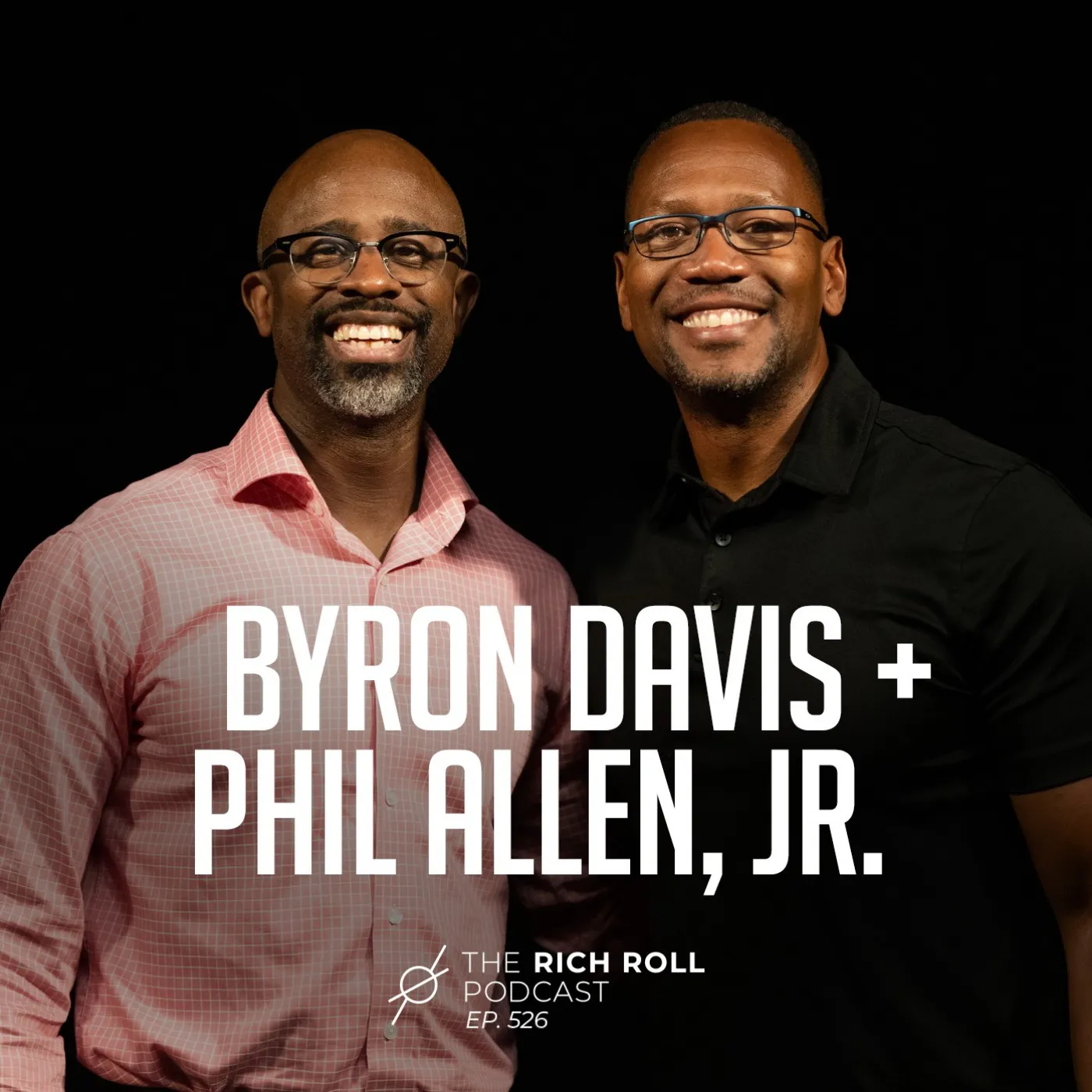
This Is America: Byron Davis & Phil Allen, Jr.
15 cze 20202h 9mMass demonstrations continue to spread across the nation — and now, the world — for the 20th day and counting. For many, this has been a wake-up call. An uncomfortable reckoning with the vast extent to which misuse of power, police abuse, and racism (both overt and covert) are baked into the very fabric of our nation. But for black people, African Americans and people of color, that pain, violence, and fear is an everyday reality. On a personal note, I’m determined to better understanding this unfortunate dynamic. The history that led to it. The systemic nature of it. The institutions that perpetuate it. And the solutions required for its long-overdue undoing. Part of that commitment is sharing an increased diversity voices. Towards that end, today I reconnect with my friend Byron Davis, alongside Pastor Phil Allen, Jr. An O.G. podcast guest dating back to early 2013 (RRP #14), Byron is a former USA Swimming National Team member, American Record holder, UCLA All-American, and Ironman who holds the distinction of falling just three-tenths of a second shy of becoming the first African-American to make the USA Olympic Men's Swimming Team. Phil is a pastor, teacher, poet, and the filmmaker behind Open Wounds, a powerful documentary that delves into the reality of intergenerational trauma through the story of his grandfather’s murder and the police’s subsequent refusal to investigate it (now available on Vimeo on demand). Today Byron and Phil share their perspective on the protests. The BLM movement as a whole. And its potential to catalyze significant structural change. Bluntly put, this is an important conversation about what it means to be black in America. It’s about the economic history of slavery in the United States. It’s about the extent to which racism is perpetuated systemically — by way of policy, law, economics, politics & generations of socialization. It’s about the ways in which white supremacy is embedded into the bedrock of our institutions — from religious and political to educational and judicial. And it’s about confronting the pernicious manner in which racism lives, breathes, and persists — often completely unconsciously — within ourselves. This country has arrived at a critical crossroads. A choice to implode or heal. The higher path demands responsibility. The awakening requires we examine history from a different perspective. It demands we define our personal and national values. And it dictates that we align those values with action. To dismantle what is broken. To rebuild our institutions. To reframe our relationships -- and ourselves. I’m grateful to Byron & Phil for their openness, patience & vulnerability. For sharing their perspective on race, personal encounters with racism, and stories of pain. The visually inclined can watch our conversation on YouTube. And as always, the audio version streams wild and free on Apple Podcasts and Spotify. I truly believe that conversations like this are crucial if we want to finally transcend our past, learn, grow, and lead by example. To echo Cornel West, what we don’t need are lukewarm folk. We don’t need 'summer soldiers’. What we need are all season love warriors. It is this spirit that I offer today's conversation. May you receive it with an open heart. Peace + Plants, Rich Learn more about your ad choices. Visit podcastchoices.com/adchoices

Roll On: America's Overdue (R)Evolution
11 cze 20201h 33mIt feels wrong to talk about anything other than this current historic moment. So let's address it, head on. The first in what I anticipate will be an ongoing series of ask-me-anything themed episodes we're calling 'Roll On:', I'm joined today by Adam Skolnick to discuss all things Black Lives Matter. Best known as the co-author of David Goggins' juggernaut memoir, Can't Hurt Me, Adam is an activist and veteran adventure journalist who has traveled the world writing for The New York Times, Playboy, Outside, ESPN, BBC, Men’s Health, and many other prominent publications. You may recall his outstanding reporting on Colin O'Brady's historic solo Antarctica traverse in 2018 for The New York Times. And long-time listeners will fondly remember his 2016 appearance on the podcast (RRP #218), in which we discussed One Breath — his poetic biography of Nicholas Mevoli, America’s greatest freediver. Shifting roles from host to guest, today I share a perspective on race in America. Civil rights and social unrest. White privilege. And how I'm actively seeking to better myself — and this podcast as a whole. The RRP is not a news program. And it's not a political talk show. But it is a show about what is important. It's about having conversations that matter. And right now, no conversation matters more than redressing racial injustice. This is an exchange about our collective responsibility to act. To speak up for what is right. And to finally dismantle the systemic ills that have contributed to unspeakable harms that can no longer go unchecked. It's also a discussion about the history and mission of this podcast. My vision for the future. And goals set to broaden the inclusivity of my advocacy. But more than anything, this is a dissection of the untold history of racism in America. And the unprecedented opportunity this unique moment presents to evolve and heal. As individuals. As a nation. And as a global community. Note: This is the simply the first of many conversations to come on the theme of race. Over the upcoming weeks I will be sharing impactful conversations with a variety of people of color, including Byron Davis, Phil Allen, Jr., Knox Robinson, John Lewis (aka 'Badass Vegan'), John Salley, Shaka Senghor, Neil Phillips and many others. In the interim, I encourage you to explore the many copious resources listed in the show notes below. Read. Listen. Challenge yourself. Get active. Donate if you're able. The visually inclined can watch our conversation on YouTube. And as always, the audio version streams wild and free on Apple Podcasts and Spotify. To coin Cornel West's phrase, what we need right now is 'all season love warriors.' It is in that spirit that I offer this exchange -- with gratitude and respect for all my brothers and sisters. Peace + Plants, Rich Learn more about your ad choices. Visit podcastchoices.com/adchoices
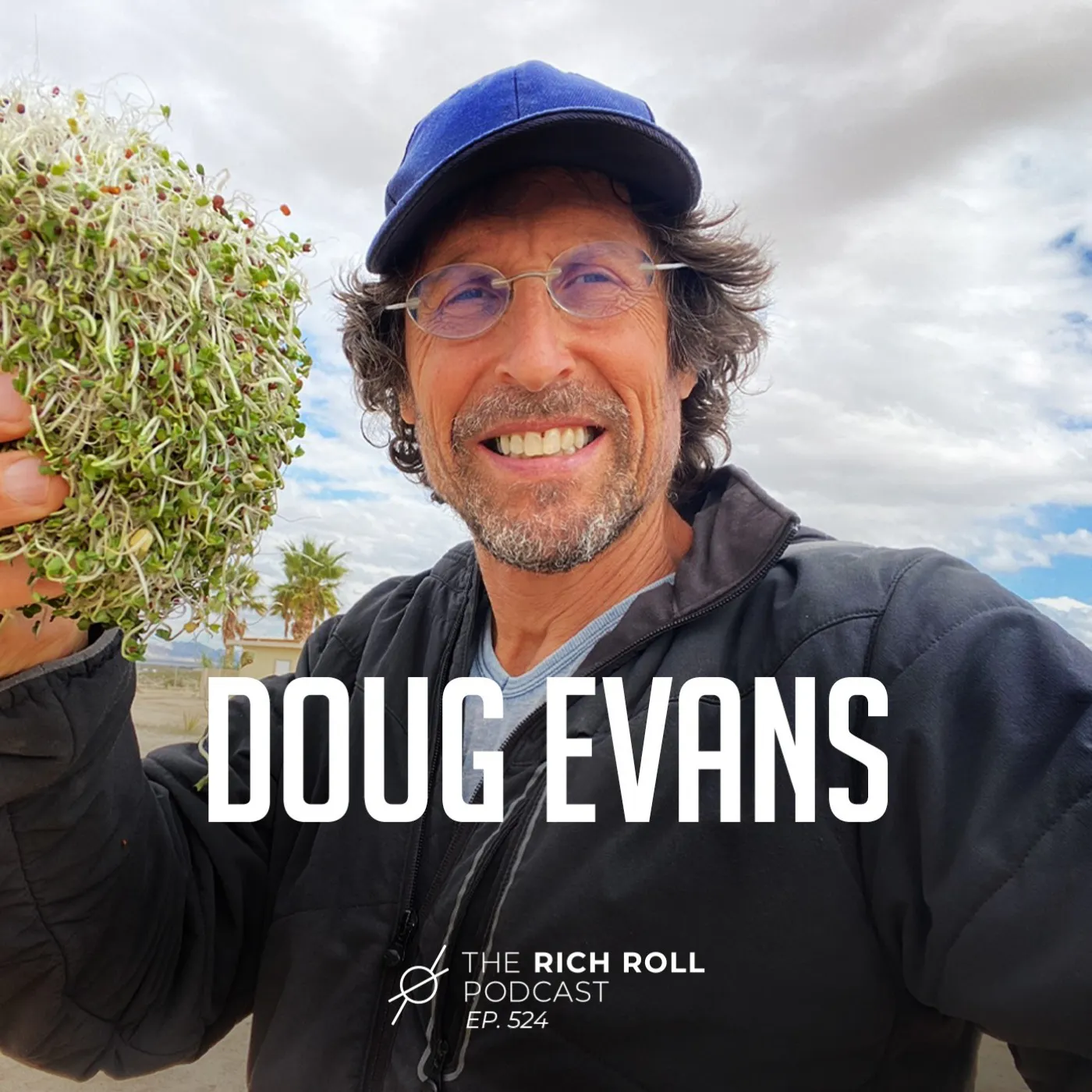
Doug Evans On Food Inequality, The Power of Sprouts & Lessons Learned from Failure
8 cze 20202h 29mA recurring theme of this show is deconstructing peak performance. Over the years, I've shared the success equations of. Olympic champions, entrepreneurs, actors, artists and spiritual masters -- all roadmaps to better guide our collective trajectories. But failure is the crucible for wisdom. And the litmus test of character. What happens when you give every ounce of yourself to a creation, only to see it crumble? Destruction can be our greatest teacher. How we move forward tells us who we are. After an epic public defeat, Doug Evans was confronted with this challenge. Not only did he survive, he emerged better for it. A serial health food entrepreneur, you may recall Doug as the Silicon Valley, juice-slinging mogul behind Juicero -- -- the infamous and futuristic wifi-connected, cold-press juicer start-up that raised $120 million from technology’s most high-powered VC’s before famously imploding in 2017. What you may not know is that Doug has always been a natural food industry pioneer. He co-founded O.G. New York City juice bar chain Organic Avenue, one of the first exclusively plant-based retail chains in the country. Now writing his next chapter, Doug recently released The Sprout Book, a primer on the power of sprouts as an ultra-food for health, weight loss, and optimum nutrition. Four years from our first conversation (RRP 221), today Doug returns to the podcast to share the valuable lessons learned from his Juicero experience -- and his new focus on getting people excited about the planet's most nutritious foods. Admittedly somewhat asynchronous with the current news cycle, this is nonetheless a conversation about a root cause of socio-economic disparity -- and how to redress systemic food insecurity across impoverished food deserts nationwide. It's about the importance of taking your health and nutrition to the next level -- critical in the age of coronavirus. It's a show-and-tell on the unheralded, superfood benefits of sprouts. The ease and affordability of growing your own at home. And the power of this practice to economically revolutionize your relationship with nutrition. In addition, we of course discuss all things Juicero. What happened. What can be gleaned from its demise. And the lessons Doug learned to better inform the decisions faced by every entrepreneur and business owner. Note: My first in-person interview since the start of the pandemic, this conversation (recorded on June 1 after conducting on site antibody tests) preceded my ability to timely schedule African American community leaders to directly converse on the historic events of the current moment. That said, I can assure you that I will be conducting several conversations with such leaders over the coming weeks. The visually inclined can watch our conversation on YouTube. And as always, the audio version streams wild and free on Apple Podcasts and Spotify. If your familiarity with Doug is limited to hyperbolic Juicero headlines, I ask that you set aside whatever pre-conceived notions you may harbor -- and prepare to be delighted. A dear friend for many years, Doug is a beautiful man. A wonderful character unlike any human I have ever met. And a true example of selfless service to others. May you be equal parts entertained and enlightened by our exchange. Peace + Plants, Rich Learn more about your ad choices. Visit podcastchoices.com/adchoices

Become An Idea Machine With James Altucher: Create, Experiment & Adapt
1 cze 20202h 3mThe dystopia is here. Chaos, confusion, fear and anger. Horrific racism. Generations of pain fueling rioting and violence. Death and illness. Faltering systems and leadership failures. Market crashes and jobs lost. Communities are divided. Home lives are disrupted. Meanwhile, cities all across America are literally on fire. How we can right the ship? Deal with these cataclysmic shifts? And move forward productively? We can crash and burn. Or we can adapt -- a remaking of society that begins with personal reinvention. James Altucher is a virtuoso of this process. A prodigious intellect and abundantly talented polymath, James is a comic, chess master, entrepreneur, investor and prolific writer with over twenty books to his name, including the Wall Street Journal bestseller Choose Yourself. He's also a fellow podcaster and an unconventional thinker with an idiosyncratic lens on pretty much everything from creativity to finances. James and his writing have appeared in major media outlets including The Wall Street Journal, The New York Times, The New York Observer, Techcrunch, and The Financial Times. His blog, JamesAltucher.com, has attracted more than 20 million readers since its launch in 2010. And The James Altucher Show regularly appears in the top 100 podcasts on iTunes. On the subject of self-experimentation, James' latest unconventional move was releasing his latest self-published book, Think Like a Billionaire, on Scribd. Most compelling is James' relentless devotion to constant reinvention. Making his fourth appearance on the podcast, today we explore the importance of this trait and the habits that enable you to adapt and thrive in rapidly changing times — more critical now than ever. Recorded pre-pandemic in mid-February, this conversation is the last in my stash of episodes banked before quarantine. Nonetheless, I suspect you will find our discourse highly applicable to our current moment -- packed with tactics and strategies you can deploy to better acclimate to the rapidly changing circumstances that face us all. It's about how to make better decisions. And ultimately, how to create opportunity out of calamity. The visually inclined can watch it all go down on YouTube. And as always, the audio version streams wild and free on Apple Podcasts and Spotify. James is one of my most favorite people. He’s a natural and gifted conversationalist, his ideas are easily deciphered, and packed with the perfect amount of humor and data-backed insight. To some degree, we are all being called to reinvent ourselves right now. May this conversation help serve that process. Peace + Plants, Rich Learn more about your ad choices. Visit podcastchoices.com/adchoices

How Not To Diet With Michael Greger, MD
28 maj 20201h 48mWhen it comes to reliable nutrition information, the internet is a warn-torn, metastasizing mushroom cloud of toxic half-truths and misinformation. How do we sort through the tribal wars? How do we separate fact from fiction? Let's start with seeking out the experts. And the best, most objective science available. This is the life’s work of today’s guest and my friend, Dr. Michael Greger. Long time listeners are well acquainted with Dr. Greger, one of my very first guests back in 2012 (RRP #007). But it's been almost five years since his second appearance in 2015 (RRP #199). So let's put matters to rights. A graduate of Cornell and Tufts University School of Medicine as well as a founding member and Fellow of the American College of Lifestyle Medicine, Dr. Greger is a nutrition science wizard who with a library of scientific journal publications to his name. He has testified before Congress; lectured at countless symposiums and institutions; and was an expert witness in the infamous Oprah Winfrey meat defamation lawsuit. Appearing everywhere from the Dr. Oz show to The Colbert Report, his books: How Not to Die, the How Not To Die Cookbook, and How Not To Diet — the focus of today's conversation — all became instant New York Times Best Sellers. When Dr. Greger isn’t speaking, crafting high-level policy initiatives or penning bestsellers, he scours thousands of medical journals in search of the world’s best, most objective nutrition research to bring you free videos and articles every single day at NutritionFacts.org — the world’s most authoritative, non-profit, science-based public service destination for all things nutrition, health and disease prevention. Finally, it’s worth noting that 100% of all fees and proceeds he receives from speaking and book sales are donated to charity — his effort to avoid all conflicts of interest. Today’s conversation pivots on the optimal criteria to enable weight loss — and the actionable steps required to create and sustain healthy lifestyle practices. In addition, we explore how commercial influence corrodes nutrition science. How to parse the incredibly conflicting information we are spoon-fed daily by the media and celebrities alike. And finally, it’s about separating evidence-based science from confirmation bias. Note: This conversation was recorded in February, so it's coronavirus free zone. For Dr. G’s take on our current state of affairs, check out his new audiobook released this week, How To Survive A Pandemic — a breakdown on the origins of zoonotic disease, how to protect ourselves, and what we must rectify to reduce the likelihood of future catastrophes. Dr. Greger is truly one of the most delightful, relentless, passionate, and service-minded humans I have ever met. It's an honor to share this conversation. My hope is that it catalyzes a new perspective on nutrition for yourself and your loved ones. Peace + Plants, Rich Learn more about your ad choices. Visit podcastchoices.com/adchoices

Remembering David Clark
25 maj 20202h 31mOn May 21, 2020, the world lost a treasure. A beloved, 2-time RRP alumni, David Clark was one of the most courageous, resilient and authentic human beings I've ever met. A force for positive change. A model of service. The epitome of transformation, embodied. A loyal friend to many. And a man blessed with a preternatural gift for igniting the best in everyone he touched. Succumbing after complications incident to a herniated disc surgery, a chapter ends far too soon. But the story behind this accomplished ultra-endurance athlete, bestselling author, and father of three is a legend that will continue to be told -- and will never be forgotten. Today we honor the life and legacy of Dave Clark. Dave's steel was forged from hardship -- periodic homelessness and a poverty both financial and educational. Adulthood found him descending into the firm grip of alcoholism. He ate recklessly. He drank and drugged himself into oblivion. And continued his downward spiral until he was utterly lost. Completely alone. And hopeless. Tipping the scales at 320 pounds, Dave finally met his breaking point. Summing a will of superhuman proportions, he ushered the courage to finally face his demons. Hence began a process of implausible personal transformation. It's a staggering journey that would ultimately lead to breathtaking feats that defy possibility. And a laudable call to service that rivals anyone I've ever met. Dave didn’t just drop 150 pounds on a plant-based diet. Nor did he celebrate with a simple marathon. Instead, Dave would go on to on to crush a relentless list of the world's most challenging ultra-marathons, from Badwater to Leadville. He ran the Boston Marathon course four times without stopping. And he even ran across the entire United States. With uncompromising vulnerability, Dave recounts his inconceivable arc in his first book, Out There. In Broken Open, he faces the dark side of taking athleticism too far. Released just two weeks ago, Eat Sh*t And Die boldly tackles food addiction head on. I can't bring Dave back. Nor can I begin to measure his positive impact on myself and countless others. What I can do is honor his life and legacy. So today, RRP alums Mishka Shubaly and Josh LaJaunie -- both close friends of Dave -- join me to eulogize him, followed by a re-release of my first conversation with Dave, recorded in November, 2014 (RRP #113). More Dave Clark: If Dave's message resonates with you, check out RRP #290, my 2nd podcast with him published almost exactly three years ago. It's a banger. Dave was a sober warrior unlike any other. He wrung every last drop out of life. He was deeply loved and will be terribly missed. Let his story be a beacon. A reminder that when the body, mind and spirit align with faith, human potential is truly boundless. Run free, my friend. Run free. Peace + Plants, Hosted on Acast. See acast.com/privacy for more information. Learn more about your ad choices. Visit podcastchoices.com/adchoices

Good Grief: Guru Singh On Death & Loss
21 maj 20201h 26mWelcome back to another edition of Guru Multiverse — the latest in my ongoing series of spiritual deep dives with Guru Singh, my treasured friend and favorite wizard of all things mystical. For those newer to the show, imagine a modern-day Gandalf who rocks like Hendrix while dropping pearls of wisdom that beautifully fuse Eastern mysticism with Western pragmatism. A celebrated third-generation Sikh yogi, master spiritual teacher, author, and family man, for the past 40 years Guru Singh has been studying and teaching Kundalini Yoga. He is the author of several books, a powerful lecturer, and behind-the-scenes guide to many a luminary, including Fortune 500 CEOs, athletes, and artists. A peer of rock legends like Janis Joplin and the Grateful Dead, Guru Singh is also a talented musician who began his recording career on Warner Bros’ Reprise label in the 1960s. When he isn’t recording tracks with people like Seal, he’s bringing down the house on the daily at Yoga West, his Los Angeles home base. As the pandemic has reminded us, the human body is delicate — a fragile soul vessel susceptible to a host of diseases and disasters. And it simply does not last forever — no matter how much we endeavor to deny or repress this universal truth. Today we explore the experience of being left behind. The emotions that follow. And the powerful lessons contained therein. Marking his 10th appearance on the show, this is a deconstruction of grief and loss. The potency it contains to both create and destroy. And the potential energy it holds for grace, gratitude and transformation. We talk about our relationships with our bodies. How to master our physical containers while also practicing non-attachment. We get raw about losing those we love. Owning our pain. And rejoicing in grief. Although this exchange was recorded well in advance of the pandemic (back in August 2020), Guru’s wisdom is timeless, easily digested and more pertinent now than ever. You can watch it all go down on YouTube. And as always, the conversation streams wild and free on Apple Podcasts and Spotify. If you've experienced loss and the grief that accompanies it, may Guru Singh's gentle and loving energy, soothing words, and new perceptions guide you through your difficulties. Peace + Plants, Rich Learn more about your ad choices. Visit podcastchoices.com/adchoices

For Colin O'Brady, Infinite Love Fuels Human Potential
18 maj 20202h 43mReturning for his fourth appearance on the podcast, Colin O'Brady is here to elaborate. Longtime listeners are well acquainted with Colin's story from burn victim to boundary eclipsing adventurer. Even if you're new to the podcast, chances are stumbled across his story by way of his appearances everywhere, from the Today show to the Tonight Show With Jimmy Fallon. If you missed our previous conversations (RRP#207, RRP#235 and RRP#439), they're an excavation of Colin's origin story growing up on a commune. How he survived an almost lethal burn accident that left him unlikely to walk again. His phoenix-like transformation into a professional ITU triathlete and Olympic hopeful. And how he morphed into a mountaineer with the audacity to attempt such incomprehensible feats of adventure athleticism is well worth the time invested. Today we pick up where our ongoing series last left off. Note: we recorded this conversation many months ago on January 18. My initial plan was to share this episode on February 9. However, on February 2, National Geographic published an article entitled The Problem With Colin O’Brady - a 7,000 word take down that accuses Colin of embellishing his accomplishments. It’s an upsetting piece that left me confused. I’ve known Colin for many years. I’ve spent quite a bit of time with him and his wife Jenna. I consider him a good friend. And myself a decent judge of character. However, in light of this development, it also felt tone deaf to release the podcast as scheduled. So I put a pin it. Two weeks later, Colin published a thorough, 16-page point-by-point refutation of the National Geographic article. I thought it only fair to provide Colin an opportunity to comment on the allegations. So, on March 8 (still pre-pandemic), we sat down again for a subsequent conversation to discuss the controversy particulars. Today I share both conversations. First, the original interview we conducted in January. It's an exploration the hows and whys behind The Impossible Row. The intention behind his new book and the process of birthing it. And a deep dive into human potential and the infinite love that fuels his. Immediately following this initial exchange is an additional 30-minute discourse specific to the National Geographic scuffle appended to the audio version of the podcast and viewable as a stand-alone piece here & below. The visually inclined can watch it all go down on YouTube -- where we separated the main podcast conversation and Colin’s thoughts in response to the article into two distinct videos. And as always, the audio version streams wild and free on Apple Podcasts and Spotify. As Colin and I are both fond of repeating, we all sit atop mountains of untapped potential. May this conversation help you tap yours. Peace + Plants, Rich Learn more about your ad choices. Visit podcastchoices.com/adchoices
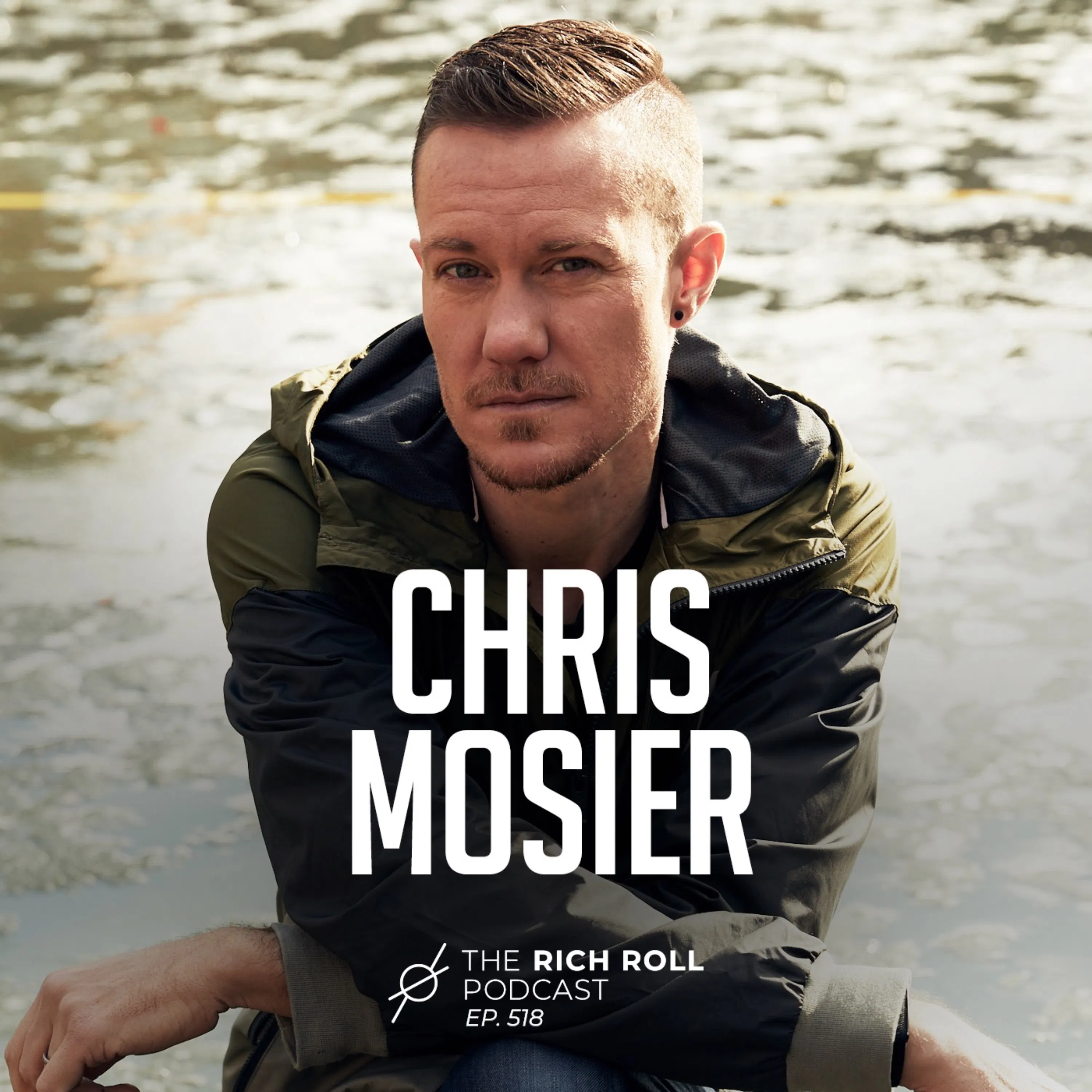
Trans Athlete Chris Mosier On Making History (+ Nadia)
11 maj 20202h 42mMeet Chris Mosier — arguably the most prominent and accomplished transgender athlete working to progress cultural perceptions and activate legislative change. You may recognize Chris from the viral Nike commercial that aired during the 2016 Rio Olympics. In addition to being the first transgender athlete to be sponsored by Nike, Chris holds the distinction of being the first trans athlete ever to be featured in the ESPN Body Issue. Among his many accomplishments, Chris is a hall of fame triathlete, All-American duathlete, 2-time National Champion, and a 6-time member of Team USA. In 2015 he became the first known transgender man to represent the United States in international competition. As an activist, Chris has spent years at the forefront of the LGBTQ+ rights movement, paving a more inclusive path for future trans athletes. In 2015, he was the catalyst for changing the International Olympic Committee’s policy on transgender athletes to provide such individuals with the right to represent their country at the Olympic Games. And in 2016, Chris drove further policy change within the IOC, expanding the rights of transgender athletes to take part in the Olympic Games without the previously required necessity of gender reassignment surgery. Profiled everywhere from Rolling Stone to the New York Times, Chris is also the founder of Transathlete.com, a resource for students, athletes, coaches, and administrators to find information about trans inclusion in athletics at various levels of play. He has mentored transgender athletes around the globe, from high school and recreational to the professional levels, and helped teams, leagues, and professional sports leagues create gender-inclusive policies. Aside from his physical prowess, what impresses me most about Chris is his courage. He had the option to stay silent — to make the most of his passing privilege without enduring the scrutiny that accompanies a public coming out. But he did so to set precedent. To change public perception. And stand as a beacon of hope and possibility for those who will come after him. This is a conversation about Chris’s unique life. His transition. His trials. And his tribulations. It’s about the privileges of gender, race, and class. It’s about what it’s like having your very existence up for debate, and how our country is treating so many of her citizens as non-humans. For context, consider that 41% of trans youth attempt suicide. Horrific and unacceptable, it's a statistic that must change. Together we can do better. So it is with pride that I share Chris’ story, bravery, and vulnerability with you today. Note: This conversation was recorded pre-pandemic, thus there is no mention of the coronavirus. May this episode provide a significant and thoughtful reprieve from your 24/7 pandemic news feed. And for something new & different: Today's appetizer to the main course is Nadia Bolz-Weber -- my favorite heavily tattooed Lutheran pastor from RRP #428 -- who drops in to talk quarantine, 'grace for fuckups' and her fabulous new podcast, The Confessional. The visually inclined can watch it all go down on YouTube. And as always, the audio version streams wild and free on Apple Podcasts and Spotify. I sincerely hope you find this exchange as revealing and enlightening as I did. Peace + Plants, Rich Learn more about your ad choices. Visit podcastchoices.com/adchoices
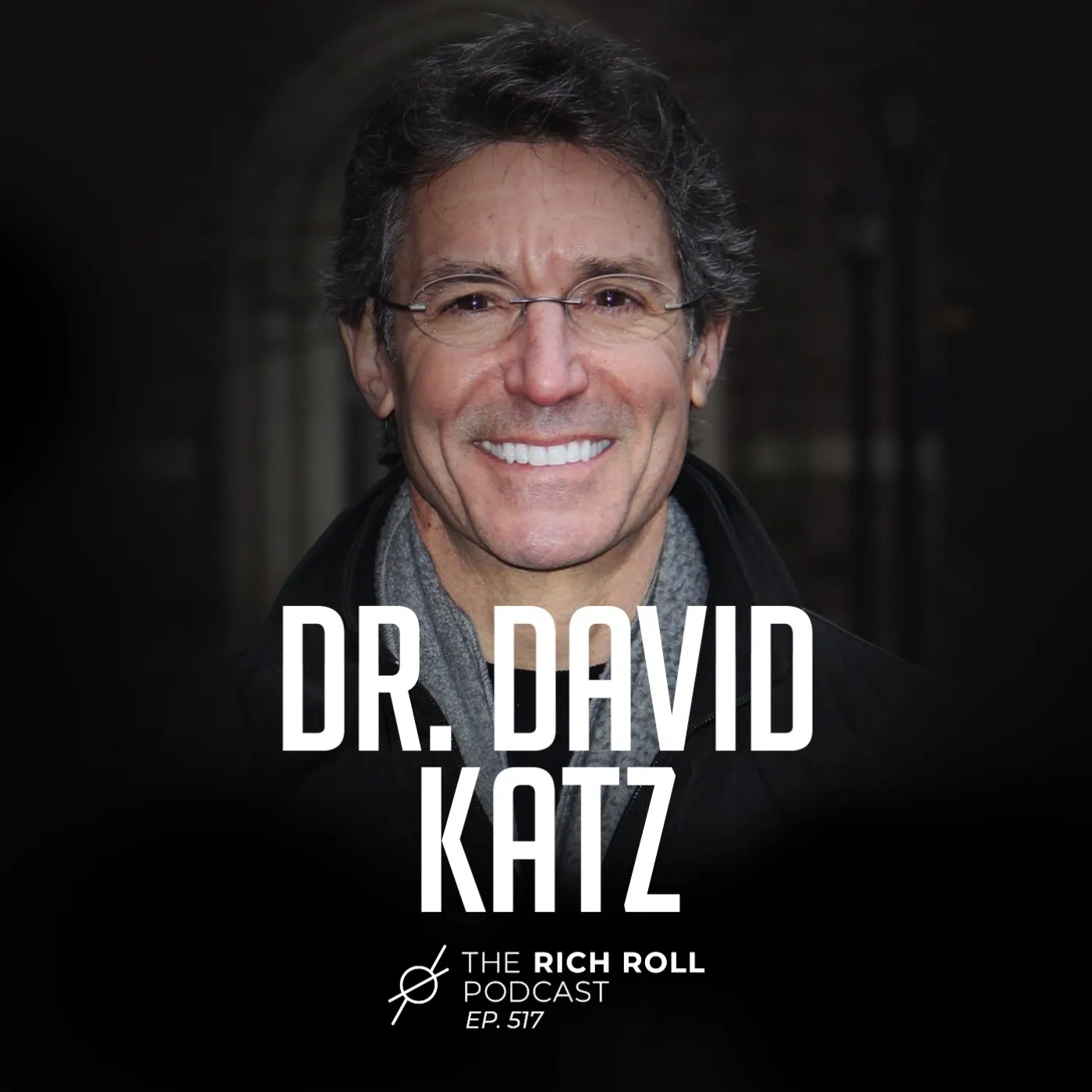
Dr. David Katz: The Choreography of Contagion Interdiction
7 maj 20201h 46mThe media fervor currently swirling the pandemic is a fever of conflicting data and performative politics. Black and white, it's either sequester ad infinitum or back to work now — a conversation devoid of nuance. How to discern fact from fiction? Separate opinion from data? Politics from perspective? Like me, I suspect you're frustrated — yearning for evidence-based answers over conjecture; considered strategy over confusion; and objectivity over punditry. I can’t tell you when this alternate reality (which has morphed into a distorted normality) will cease. What I can offer is the experience and perception of one of the best and brightest in public health and preventive medicine. Meet David L. Katz, MD, MPH FACPM, FACP, FACLM. A pioneering voice in functional lifestyle medicine, David is a graduate of Dartmouth, the Albert Einstein College of Medicine & Yale School of Public Health. In addition, he is the founding director of Yale University’s Yale-Griffen Prevention Research Center, a past-president of the American College of Lifestyle Medicine, and the founder & president of the True Health Initiative, a non-profit coalition of more than 500 world-renowned physicians, scientists, and nutrition experts (including myself, the least qualified member of this coalition) committed to establishing and communicating a growing scientific consensus on the optimal diet for human beings and the planet. The recipient of 3 honorary doctorates, David was also a James Beard Award nominee in 2019 for health journalism, has contributed countless articles to top medical journals along with op-eds in The New York Times and other magazines, and somehow found the time to write 17 books, including his latest, How To Eat, which he co-authored with the great Mark Bittman. Although David has been a prominent voice in nutrition science and lifestyle medicine for many years, the pandemic has suddenly foisted him into a very bright spotlight. Currently making the major media rounds, you might have caught one of his recent appearances on Real Time With Bill Maher, CNN or Fox News, where he's been advocating for a more data-driven, targeted public health response to coronavirus. It's a strategy he calls vertical interdiction. It's (strangely) controversial. And it's the focus of today’s conversation — a nuanced discourse on improving how we consider and navigate the landmines of this unique global predicament. I appreciate David's thoughtful perspective and his commitment to service (including treating COVID-19 patients on the outbreak frontlines in the Bronx). He’s eloquent and data-driven. Evidence-based and no-nonsense. And quite charming to boot. To anyone suffering from the virus or the effects of it, my heart goes out to you. This pandemic is hurting us all, some in more catastrophic ways than others. I hope Dr. Katz’s words bring you comfort — he gets as close as he can to providing us with the answers we are all so desperately seeking. The visually inclined can watch it go down on YouTube. And as always, the audio version streams wild and free on Apple Podcasts and Spotify. It’s an honor to share his perspective with all of you today. May you receive it with an open mind and heart. Peace + Plants, Rich Learn more about your ad choices. Visit podcastchoices.com/adchoices

Ingrid Newkirk Is Animal Rights’ Provocateur In Chief
4 maj 20201h 52mA true force of nature, today's guest needs little introduction. Meet Ingrid Newkirk. The original doyenne of animal activism, Ingrid is the legendary and infamous co-founder and president of People for the Ethical Treatment of Animals, a non-profit she personally shepherded into the largest animal rights organization in the world, currently boasting more than 6.5 million members and supporters. Under Ingrid's stewardship, PETA quite literally put animal welfare on the map. Operating under the principle that animals are not ours to experiment on, eat, wear, use for entertainment, or abuse in any other way, PETA has a storied and often controversial history of exposing countless acts of gruesome and horrifying animal abuse, with it's media-savvy provocateur in chief grabbing headlines and creating significant awareness, policy changes and legal protections along the way. Named a top businessperson of the year by Forbes, Ingrid has been profiled in countless publications -- including twice by The New Yorker -- and has appeared in seemingly every prominent media outlet including the Today Show, The Oprah Winfrey Show, Larry King, Politically Incorrect, Crossfire, Nightline, and 60 Minutes. Irrespective of your opinions about PETA, Ingrid is someone who has dedicated every breath to what she believes in. Combating injustice. Taking action to change what many of us simply want to deny or avoid. Looking suffering straight in the eye. And doing something about it. That level of purpose -- the courage to speak truth to power, tenacity to weather persistent criticism and stay the course for change -- is rare. It's impressive and laudable. Behind it all, there is an undeniable sincerity to Ingrid. A fascinating, complex, and charismatic character, she’s also deeply sensitive. Quite self-aware. And surprisingly funny. Today Ingrid shares her story. Note: This conversation was recorded pre-pandemic on February 18, 2020. Therefore there is no coronavirus discussion. However, I think Ingrid's message is profoundly of the moment given the undeniable role animal agriculture plays in fomenting disease. The visually inclined can watch it all go down on YouTube. And as always, the audio version streams wild and free on Apple Podcasts and Spotify. In this moment of forced repose, my hope is that we reflect on humanity's misguided entitlement to dominion over all things. Our intelligence is not the gauge of the animal kingdom. And our relationship with the living beings with whom we share this imperiled planet is broken. Ingrid is here to recalibrate that relationship. Peace + Plants, Rich Learn more about your ad choices. Visit podcastchoices.com/adchoices

Kamal Ravikant On Why Self-Love Is Everything
27 kwi 20202hI've got nothing but love for stories of personal metamorphosis, perhaps the most predominant theme of this show. We call it the hero’s journey. Archetypal and totemic, it’s a most powerful narrative that unites, connecting with something indelible and universal within us all. Over the years, I’ve hosted many flavors of physical triumph. From Olympic medalists to arctic explorers, I celebrate the arc of the athletic warrior. But life’s greatest passage isn’t physical. It’s not free-soloing El Capitan, crossing Antarctica, or running ultramarathons in Patagonia. Our most challenging voyage is learning how to love ourselves. No one embodies this genus of the hero’s journey better than Kamal Ravikant. To be clear, Kamal has more than earned his spot as a respected adventurer living beyond convention. From modest beginnings, he’s trekked to one of the highest base camps in the Himalayas, earned his US Army Infantry patch, walked 550 miles across Spain, and meditated with Tibetan monks in the Dalai Lama’s monastery. Professionally, he’s done it all too, founding a company with the guy who wrote the first browser. From launching startups to managing venture capital funds, Kamal has spent the better part of his career working alongside some of the smartest investors and engineers in Silicon Valley, writing books in his free time. But Kamal's most transformative experience has been the simple act of learning how to love himself. Why is it so hard for us? I first heard about Kamal by way of his frequent appearances on our mutual and beloved friend James Altucher’s podcast. Compelled by his honesty and vulnerability, I felt myself holding space with someone who embodied an important wisdom. A wisdom I lacked. Reflexively, I picked up Kamal's latest book, Love Yourself Like Your Life Depends on It. Spiritual and emotional growth is my jam and yer I never thought much about self-love. So I freely admit I met Kamal's book with a healthy dose of initial skepticism. However, the read ignited a realization that I continue to harbor unhealed wounds. Simple, straightforward and profound, I discovered practices not just helpful, but truly transformative. I wanted to know more. Today we unpack Kamal's heroic journey of the heart. It’s a conversation about his trials and his triumphs. His divine moment. The path of self-discovery that followed. And what he learned surviving a recent near death experience. It’s about how he learned to love himself. The simple routine he deploys to maintain it. And why this practice is essential to living an examined, self-actualized life of presence, purpose and contentment. For the stoics and skeptics, I implore you to set aside whatever resistance you may be feeling right now. And give this one a shot with an open mind and heart. Note: This conversation was recorded pre-pandemic (February 12, 2020), thus there is no coronavirus reference. Nonetheless, Kamal's wisdom is timeless. Moreover, the practices we discuss are powerful tools of self-discovery than can prove transformative as we navigate this challenging time. The visually inclined can watch it all go down on YouTube. And as always, the audio version streams wild and free on Apple Podcasts and Spotify. Kamal’s vulnerability is refreshing. I love this conversation and the friendship it has birthed. I hope it serves you as it did me. Peace + Plants, Rich Learn more about your ad choices. Visit podcastchoices.com/adchoices

Chris Hauth: Tactics For The Quarantined Athlete (+ Mishka!)
23 kwi 20201h 37mCoronavirus has canceled more than just school, work, and social outings. It’s also canceled sports. The Olympics. And even that race you've been training for -- gone. The world has huge problems right now. To lament your cancelled marathon, ultra or Ironman is feels tone deaf; insensitive to the countless people across the world currently suffering in unimaginable ways. And yet for the athlete, the disappointment is still real. It's not shameful to experience the emotions that accompany a let down. Just don't linger there. In this precarious moment, we can't afford to dwell on a future that will no longer be. And events beyond our control. Instead, let us pull focus on creative solutions for maintaining our enthusiasm for fitness. Strategies to engage with our physical selves. And tactics to ensure adherence to a daily routine with staying power. To dive deeper into the hows and whys of staying fit during quarantine, I'm joined today by Chris Hauth -- my friend and trusted sensei of of all matters strength and endurance. A two-time Olympian, former professional triathlete, Ironman champion, Age Group Ironman World Champion, and accomplished ultra-athlete, Chris is one of the world’s most respected endurance coaches — and the star act in my recurring Coach's Corner edition of the podcast. A remarkable coach and lifelong athlete, Chris has honed his craft unlike any other sports professional I have ever met. But my favorite thing about Chris is his attitude. A fount of soothing positivity, he values experience and fun over podiums. This is a conversation about adapting our fitness routines to quarantine. How to maintain healthy home habits in this hectic time. How to reimagine goals. And craft personal adventures in lieu of canceled races. Finally, Chris provides copious tangible takeaways to stay sane for those whose training life has been turned upside down. And for something new & different: An appetizer to precede today's main course, we also briefly check in with the RRP's favorite lap dog Mishka Shubaly. To get a little taste for his flavor of quarantine. To celebrate the 7th anniversary of our bromance. And because my self-deprecating, gravelly voiced brother from another mother has a new must-listen Audible Original called Cold Turkey: How To Quit Drinking By Not Drinking. May these exchanges lift your spirits in this bizarre moment we are collectively experiencing. Peace + Plants, Rich Learn more about your ad choices. Visit podcastchoices.com/adchoices

Shane Parrish: A Former Spy On How To Think Smarter
20 kwi 20202h 1mEvery single day you make about 35,000 decisions. Our lives truly are the sum of our decisions compounded. What we do and what we decide quite literally defines who we are. In this destabilizing moment of fear and uncertainty -- when lives quite literally hang in the balance -- the nature and quality of our decision making is paramount. It is thus incumbent upon us all, now more than ever, to optimize our decision making skills. So how precisely do we do this? It’s a question that became an obsession for Shane Parrish, a former computer scientist and spy who began to ply his curiosity and copious analytical aptitude to create a canonical roadmap to drive better judgment, better decisions, and ultimately better life outcomes for himself and others. According to Shane, the key is expanding our mental models, the frameworks we craft and rely upon to simplify complexity and understand the world. Prioritizing objective reasoning, mental models help to better frame the decision-making process, putting us in a better position to create relevancy and succeed in life. One of the biggest influencers across Wall Street, Silicon Valley and professional sports, Shane is a former cybersecurity expert for Canada’s version of the NSA and the founder of Farnam Street — a curated collection of research and musings to sharpen your mind, help you make smarter decisions, and ultimately live better. Featured in The New York Times, The Wall Street Journal, Forbes, and The Economist, Shane also hosts The Knowledge Project podcast (always high in my personal rotation), pens the Brain Food weekly newsletter and is the author of The Great Mental Models Vol. 1: General Thinking Concepts and The Great Mental Models, Volume 2: Physics, Chemistry and Biology — the first two releases in a series of books designed to improve your decision making, productivity, and how clearly you see the world. We begin today's exchange with Shane’s prior career at Canada’s top intelligence agency. His take on cybersecurity in a post 9-11 world. And the lessons he learned from his time as a spy. It's a conversation about the importance of reading and deep learning— training yourself to remember everything you read and how to apply it to your life. And it’s about developing your mind and thought processes to create a competitive advantage. But more than anything, this is a conversation about distilling wisdom into teachable formulae for living a better, more fulfilling, more wholesome life. Because how we decide is how we live. The visually inclined can watch it all go down on YouTube. And as always, the audio version streams wild and free on Apple Podcasts and Spotify. Note: this conversation was recorded on February 11, 2020 -- weeks prior to the alternate reality we find ourselves in today. Therefore, there is no talk about the pandemic. Nonetheless, Shane's wisdom and experience is both timeless and timely. I suspect you will find this exchange instructive and helpful in navigating the perils of our current situation. If you are interested in Shane's pandemic related thoughts, he recently penned an excellent piece on Farnam Street entitled What You Truly Value. I’m grateful for this exchange and am better for it. My hope is that you find Shane as dynamic and helpful as I did. Peace + Plants, Rich Learn more about your ad choices. Visit podcastchoices.com/adchoices

What Nick Butter Learned Running A Marathon In Every Single Country
13 kwi 20201h 59mCompleting a marathon is a noble accomplishment. How about completing a marathon on every continent? A feat of a lifetime. Now imagine completing a marathon in every single country in the world. Impossible? Meet Nick Butter — an enterprising young Brit who recently reframed human potential, becoming the first person in history to crush 196 marathons in all 196 countries. A world-record setting feat noteworthy for daunting financial and logistical challenges that often dwarfed those athletic, it took Nick and his team two years to plan and 674 days to complete — an astounding accomplishment that entailed running 3 marathons, in 3 new countries a week, every week, for 96 weeks, blowing through 10 passports and 455 flights along the way. More Jason Bourne than Forrest Gump, Nick ran through 15 war zones and endured several Argo-esque border crossings. He was mugged twice and repeatedly attacked by dogs, even going so far as to run 335 laps around a car park on the Marshall Islands to avoid that country’s overrun population of rabid canines. He had his luggage stolen. He ran in extreme cold and unbearable heat, oftentimes starting marathons at two or three in the morning to avoid 140-degree weather. He repeatedly succumbed to food poisoning and kidney infections. This list goes on. But ultimately, Nick prevailed -- and learned a few things about life along the way. What drives a man to attempt such a feat? In Nick’s case, it wasn’t fame. It wasn't notoriety. It was something far greater. In 2016, while enduring Marathon des Sables deep in the Moroccan desert, Nick struck up a friendship with fellow ultrarunner Kevin Webber — a man given just two years to live, courtesy of incurable advanced prostate cancer. Kevin’s courageous life embrace inspired Nick to rethink his career path in finance. Empowered him to tackle an impossible goal. And motivated him to raise funds and awareness for prostate cancer solutions along the way. This is a conversation about the physical, mental, and emotional strength it took to conquer a challenge of breathtaking magnitude. It’s about the obstacles faced and overcome. The lessons learned. And the importance of giving back. It’s about audacious dreams. Unbridled adventure. And the courage required to jump into the unknown without a safety net. But more than anything, this is a conversation about this fleeting, shared experience we call life — and what we can all learn from Nick's example about ourselves and our place in the world. The visually inclined can watch it all go down on YouTube. And as always, the audio version streams wild and free on Apple Podcasts and Spotify. Note: This podcast was recorded pre-pandemic (on January 28, 2020). Reminder: I recently created a Facebook Group for fans of the show to to congregate. Click here to join. I think you're going to fall in love with Nick. I sure did. Peace + Plants, Rich Learn more about your ad choices. Visit podcastchoices.com/adchoices

Charles Eisenstein On The Coronation
9 kwi 20201h 38mOne of the deepest integrative thinkers active today, today's guest is a voice both crucial and integral to this conversation. Meet Charles Eisenstein. A speaker, writer, and social philosopher focusing on themes of human cultural evolution, economics and consciousness, Charles is the author of several books, including Climate - A New Story, Sacred Economics, The More Beautiful World our Hearts Know is Possible, and The Ascent of Humanity. A graduate of Yale University, where he acquired degrees in both mathematics and philosophy, Charles is a counter-culture intellectual and proponent of alternative political and economic narratives that combine ecology, biology, philosophy & spirituality to challenge our current system. You can find his essays, videos, courses and podcasts at charleseisenstein.org. Recognizing the delicacy of this moment, I’ve been very careful about who I invite on the show to discuss it. The pandemic has cast a cosmic panic I am not interested in amplifying. Nor do I feel it appropriate to deliver an empty dose of conjectural optimism. I don’t hold myself out as knowing what exactly is happening. I don’t think any of us do. I can’t give you a prediction or a prescription. What I can offer is perception. Some perspective. And a broader aperture to reckon with the many ramifications of this most unusual global event. Last week I devoured a recent essay by Charles entitled The Coronation. I found it to be one of the most insightful and well-considered long reads on how to think expansively about our current moment. It’s a piece that has stayed with me -- and the motivation behind today's exchange. In the vein of my exchanges with Dr. Zach Bush, this is a thoughtful and at times metaphysical conversation about completely redefining our definition of normal. It's about the potential energy of this shared experience to unite humanity around reinventing society wholesale. It’s about asking questions. It’s about challenging the dominant narrative. Taking a hard look at our institutional failures. And the systems that perpetuate them. But more than anything, this a conversation about standing in our fear. As we delicately wade through the muddy waters of media calamity, conspiracy theories, and fake news, it's about learning how to listen. How to feel. And how to excite the senses around the quiet call that change is actualizing. Without minimizing the severity of what is and what is to come, this truly is our opportunity to cast a new world. May Charles Eisenstein be our gentle steward. Audio Note: This podcast was recorded remotely. Therefore, please excuse the audio quality, a somewhat eroded version of what you’ve come to expect. Facebook Group: I have been remiss in not previously announcing that I recently created a Facebook Group for fans of the show to to congregate. Click here to join. I'm honored to host today's discourse. May it leave you better than you were before. Peace + Plants, Rich Learn more about your ad choices. Visit podcastchoices.com/adchoices

Leah Garcés On Turning Adversaries Into Allies — Leveraging Empathy To Change Animal Agriculture
6 kwi 20202h 7mToday Leah Garcés joins the podcast with a public service announcement: everything you think you know about chicken is wrong. The new president of the international non-profit Mercy for Animals, Leah Garcés has spent her life on the frontlines of the animal welfare movement exposing what actually transpires inside industrial chicken farms. Devoted to improving conditions for factory-farmed animals, she has made significant progress not through a traditional strategy of antagonism, but instead by pursuit of cooperation, working alongside some of the largest food and agriculture companies in the world -- including Perdue, Popeye’s, Panera & Chipotle -- to produce positive change. In her new book, Leah chronicles her experience teaming up with whistleblowers in the megafarm industry. Part memoir, part investigative thriller, Grilled: Turning Adversaries into Allies to Change the Chicken Industry is a great read that not only elucidates the ills of our broken food system, but also casts an optimistic lens on a better future for food, animals, and humans. Most impressive is Leah's profound empathy. Not just for the animals, but for the people most animal rights folks consider the enemy: the factory-farmers; the slaughterhouse workers; and the corporate executives that control animal intensive farming. Rather than fight against these people, Leah adopted a different approach, working with them instead. It's a tactic that might strike the hardened animal rights activist as anathema. Controversial and perhaps even unacceptable. But the cornerstone of the vegan movement is compassion. And lasting change can only come from directing that emotion not just to the animals, but to all — including the people behind the animals. Today we unpack all of it. It's a conversation about the insidious reality of industrial chicken farming. An exploration of the modern-day farmer's plight as an indentured servant. And the industrial complex that entrenches our broken and undeniable cruel system of food production. But ultimately, this is a conversation about empathy. It’s about practicing what you preach. And the strategies required to create sustainable change to forge a better world for all. The visually inclined can watch it all go down on YouTube. And as always, the audio version streams wild and free on Apple Podcasts and Spotify. Note: For those who shut down at the mere mention of animal rights, I ask only that you set aside your preconceived judgments. Because this conversation isn’t just about the suffering of animals. It’s about the suffering of people. And it’s about a system that is hoodwinking us all, including the chicken farmer with his boots in the ground. Final Note: this conversation was recorded pre-pandemic on January 31, 2020. Our world has since changed. But given what we are learning about the relationship between large-scale intensive animal farming and the propagation of disease, Leah's message, experience and wisdom is more relevant now than ever I am grateful for Leah's advocacy and passion. May you find this conversation as impactful as I did. Peace + Plants, Rich Learn more about your ad choices. Visit podcastchoices.com/adchoices