Kişisel gelişim
The Rich Roll Podcast
Rich Roll
A master-class in personal and professional development, ultra-athlete, wellness evangelist and bestselling author Rich Roll delves deep with the world's brightest and most thought provoking thought leaders to educate, inspire and empower you to unleash your best, most authentic self. More at: https://richroll.com
 Hinto'da aç
İngilizce öğrenmek için bölümler1017

Gemma Newman, MD Is The Plant Power Doctor
20 Haz 20192h 5mRecorded live during our recent Plantpower Italia retreat in Tuscany, I'm delighted to share a fun and highly informative conversation and audience Q&A with the delightful, whip-smart “Plant Power Doctor” herself. Gemma Newman, MD has worked in medicine for 15 years, the last decade serving as Senior Partner at a family medical practice in the U.K.. She studied at the University of Wales College of Medicine and has worked in many specialities as a doctor including elderly care, endocrinology, pediatrics, obstetrics and gynecology, psychiatry, general surgery, urology, vascular surgery, rehabilitation medicine and General Practice. In recent years she has developed a specialist interest in plant-based nutrition and lifestyle medicine, serving as a Jikiden Reiki practitioner and advisory board member of Plant Based Health Professionals UK. On the daily, she provides evidence based nutrition, mental and physical health modalities, energetic healing and lifestyle advice to her patients, who have gained tremendous results using the power of their plate. As a broadcaster and writer she has been featured on numerous national press outlets including ITV, Channel 4, Channel 5 and Sky News Sunrise. She is a regular contributor Glamour, Zest and Health magazines and has appeared in the feature film Vegan 2018. Gemma's journey to plant-based advocacy isn't rooted in ideology or moral compunction, but rather on hard science matched with self-experimentation. As a young doctor in a high-pressure environment, like many newly minted physicians she began neglecting her own health. Struggling with her weight, and having bought into the background hum of ‘cut the carbs', she adopted a low carb diet. Calorie counting ensued, combined with a modest daily exercise routine. It worked. Sort of. Dropping from a size 18 to a size 8, she was feeling pretty good about herself. Then she checked her blood profile to discover an elevated lipid profile, markers suggesting a tendency to heart disease. She shrugged off to genetics. Both her father and grandfather died relatively young of atherosclerosis. It's just something I was born with. Something I just have to live with. Nonetheless, she couldn't shake the feeling that perhaps there was something she could do to alter this seemingly immutable fate. Meanwhile, Gemma's husband Richard picked up a little book called Finding Ultra while training for the London Marathon. He decided to give this plant-based diet thing a whirl. Being the skeptical doctor she is, Gemma was less than enthusiastic. Where would he get his protein? Won’t there be nutritional deficiencies? We will never be invited to friend’s houses for dinner ever again! How would I feed my family? Undeterred, Richard completed that marathon, slicing an incredible one hour and ten minutes off his personal best. This got Gemma's attention. She had already been passionate about researching lifestyle medicine. How changes in stress, sleep, exercise and diet could improve health for a long time. But nothing was to prepare her for the powerful transformations that were possible when people embraced a whole-food plant-based diet. Hence ensued a deep dive into medical literature, scientific research, and self-experimentation. Today we explore the result of Gemma's journey. How it transformed her life and medical practice wholesale. Peace + Plants, Rich Learn more about your ad choices. Visit podcastchoices.com/adchoices

The Awakening Of Russell Brand
17 Haz 20191h 56mEvery podcaster has their dream list — guests they fantasize interviewing. From day one, today's guest has occupied my top slot. Officially, Russell Brand is one of the most recognizable and best-loved comedy performers in the world. He is also is also a phenomenally successful author, broadcaster, actor, columnist, political commentator and mental health & drug rehabilitation activist. His global bestselling books include Revolution*,Recovery: Freedom from Our Addictions*, and his latest release, Mentors: How to Help and Be Helped*. Now a devoted dad and husband, when he isn't touring or performing he can be found hosting Under The Skin on Luminary, one of my very favorite podcasts. Unofficially, Russell is iconic for his very public awakening. A recovering heroin addict, his struggles with drugs, sex, fame, money and power were custom tailored for tabloid fodder. And his satirical but always probing takes on politics, celebrity culture and religion often find him in the crosshairs of controversy. I think of Russell as a hyper-intelligent master of modern discourse and disputation. Perpetually armed with a most delicious turn-of-phrase, he is a philosopher of the extreme. A man who has voyaged to the brink of overindulgence, he has returned to share the unique personal wisdom gleaned from such surfeit with razor-sharp musings on the broader humanity we collectively share — and have a laugh along the path. With a sui generis brew of eccentric wit, subversive candor and extreme charm, Russell grapples fearlessly and out loud with that which lays beneath the surface. With the ideas that define our time. Of the history we are told. And the ulterior truth behind our constructed reality. What is truly real? How can we craft a more fair and just society for all? How can we live a more intentional life of meaning? What does it mean be a spiritual being in a human existence? Today we voyage beyond the walls of our constructed material world. We dive into The Matrix. And to coin Russell's phrase, lick the walls of the hologram. I’m absolutely delighted by this magical, modern-day mystic. Once a dream, this conversation is now a tangible reality. Or is it? Either way, I sincerely hope you relish the conversation as much as I adored having it. The visually inclined can watch our entire conversation on YouTube here: bit.ly/russellbrand448 (please subscribe!) Peace + Plants, Rich Learn more about your ad choices. Visit podcastchoices.com/adchoices
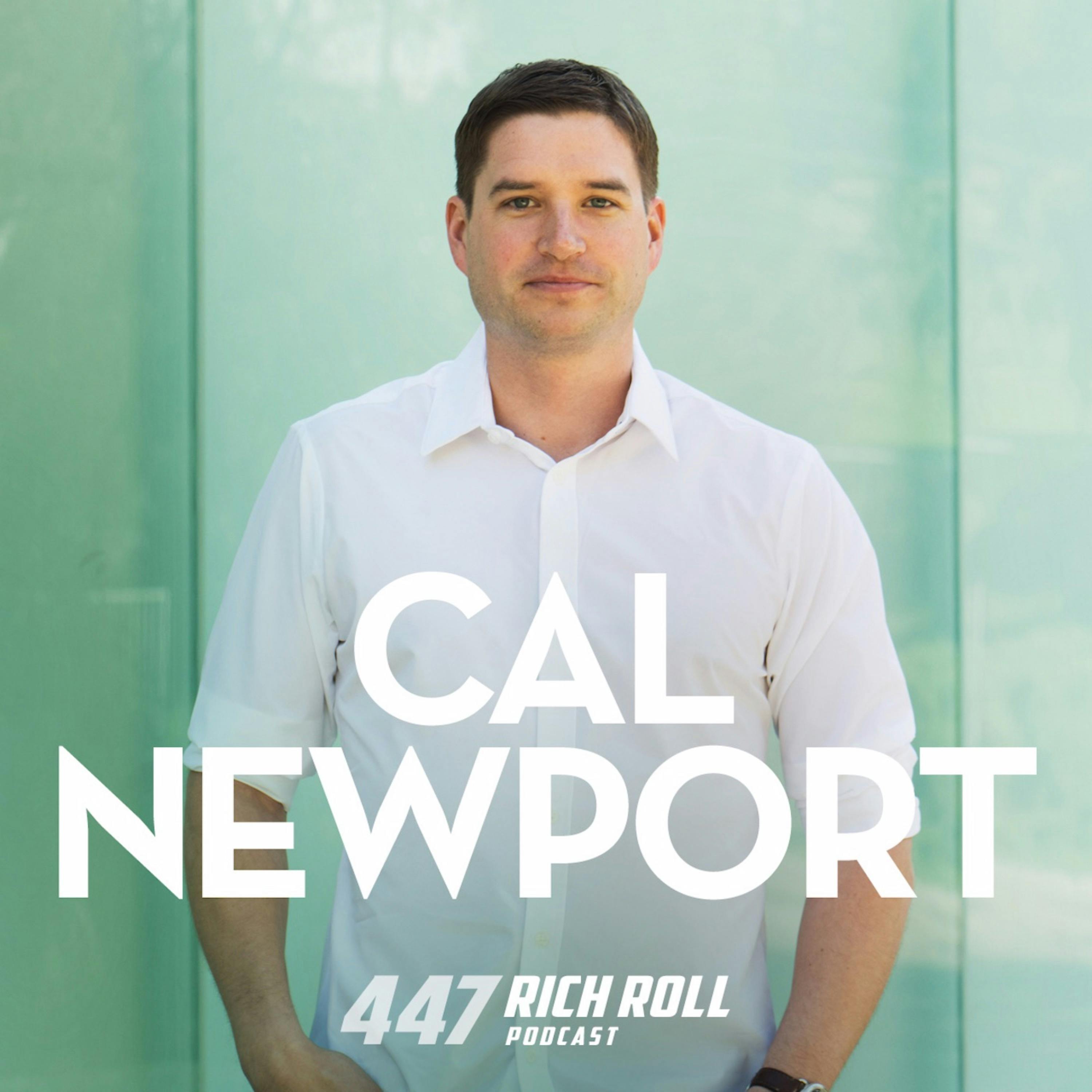
Cal Newport on Digital Minimalism: Why Focus Is the New Superpower
10 Haz 20192h 11mIt's become increasingly harder to just put the phone down. Because the latest apps and digital platforms are specifically designed to addict, we have become slaves to their irresistible allure. Our precious attention is being hijacked. The ability to focus — to concentrate on that which is most meaningful — simply cannot compete with the magnetic pull of our Instagram feed. No longer need anyone ever be bored. Alone with one’s thoughts. Or simply present with one’s self. The result is a global epidemic of distraction. A fomenting of loneliness and isolation. And a degradation of our humanity. The solution isn't Ludditism. Instead it's agency. We need not be victims of technology. We have the power to liberate ourselves from the tether of digital dependency. And the freedom it creates isn't just the salve to what ails us, it's the gateway to that which we seek most. Meaning. True human connection. And a reconnection with our innate humanity. Indeed, there is no substitute for real relationships. Boredom is useful. And focus is the new superpower. Cal Newport is someone who has spent a lot of time thinking deeply about these issues. An associate professor of computer science at Georgetown University, Cal is the author of six books, many of which focus on the impact of technology on society. The primary focus of today's conversation is rooted in his latest New York Times bestseller, Digital Minimalism: Choosing a Focused Life in a Noisy World*. Cal’s work has been published in over 20 languages. He is a frequent guest on NPR and has been featured in many major publications, including the New York Times, Wall Street Journal, New Yorker, Washington Post, and Economist. Regular listeners know I have a penchant for dropping Cal's name with regularity. I became acquainted with his work in early 2016 by way of his seminal book, Deep Work: Rules for Focused Success in A Distracted World* — pages that profoundly impacted how I think about and apply my attention. We struck up an e-mail friendship. And I’ve been trying to track him down for the podcast ever since. People often ask me which books have influenced me the most. The aforementioned two rank close to the top — manifestos of great practical import for our modern age. Similarly, I estimate that this episode rates among the most consequential conversations I've had in the 6+ year history of this podcast. Packed with practical, actionable steps, Cal's message will empower you to free up precious time. Declutter your mind. Connect you more deeply to the work and relationships you care most about. And profoundly improve the quality of your professional and personal lives. It was an absolute pleasure to spend time with Cal. I sincerely hope you not only enjoy the listen, but heed his message, and put his advice into action. The visually inclined can watch our entire conversation on YouTube here: bit.ly/calnewport447 (please subscribe!) Peace + Plants, Rich Learn more about your ad choices. Visit podcastchoices.com/adchoices

Sanjay Gupta, MD On Chasing Health, Work-Life Balance & Responsible Journalism
7 Haz 20191h 26m“Human existence is but the blink of an eye. It doesn’t take much research to think about how we evolved and why we evolve the way that we do.” Dr. Sanjay Gupta Western medicine is extraordinary. Over the last several decades, scientific advances in the diagnosis and treatment of previously thought incurable diseases has utterly transformed how we live. But with these breakthroughs comes an arrogance — a hubris that modalities outside the very narrow rubric of our dominant paradigm are without value — archaic, outdated legacies of less developed cultures. But is this always the case? Or do lessons remain to be learned by taking a critical but objective look at how other societies approach health and well-being? This question nagged at Sanjay Gupta, MD. So he decided to find answers for himself. For those unfamiliar, Sanjay is the associate chief of neurosurgery at Atlanta's Grady Memorial Hospital and assistant professor of neurosurgery at the Emory University School of Medicine. But most people know him as the multiple Emmy-award winning chief medical correspondent for CNN. In his tenure as a journalist he has spent decades covering everything from the 2003 invasion of Iraq to the Haiti earthquake in 2010, where he performed surgery on a 12-year-old girl earthquake victim along with Henri Ford and two U.S. Navy doctors. If that's not enough, this dad, husband, and novelist was named among “The Sexiest Man Alive” by People magazine and in 2009 was selected for the position of Surgeon General by President Barack Obama — a job he declined. To answer the aforementioned question, Sanjay spent the last year traveling the world, finding where people live longer, happier and more functional lives than anywhere else on the planet. The result of his quest is the recently-aired CNN Original Series Chasing Life — must-see TV if you haven't caught it already. Today we cover his origin story and incredible career. We discuss the responsibility of journalism in the era of alternative facts — and the role storytelling has played in his personal brand of reporting. We talk about his time in the White House, what it's like covering overseas conflict zones overseas, and how he manages his work- life balance. In addition, we canvass the current state of health care in America, what he learned about health, happiness and longevity in the course of producing Chasing Life, and the not to be overstated incredible impact Sanjay has had on my own life. Over the years Sanjay has become a good friend, as well as a mentor to me. He is someone I have wanted to get on the show from day one. I love this guy, and I’m delighted to help share his story with you today. The visually inclined can watch our entire conversation on YouTube here: bit.ly/sanjaygupta446 (please subscribe!) Peace + Plants, Rich Learn more about your ad choices. Visit podcastchoices.com/adchoices

You Are A Superorganism: Ara Katz & Raja Dhir On The Power Of Microbes
3 Haz 20192h 26m“We are, by definition, an ecosystem. The microbiome reveals a more connected biology, radically transforming our approach to medicine, hygiene, diet, and living.” Ara Katz & Raja Dhir Our bodies are comprised of about ten trillion cells. But our microbiome — all the bacteria, viruses, and fungi that live in or on our bodies – outnumber human cells by a factor of 10. Indeed, we are far more microorganism than human. Moreover, rapidly developing science reveals the vast extent to which the nature of our personal microbiome drives not only our propensity for disease and digestive health, but also, quite surprisingly, can dictate our mental disposition, cognitive function, and even our specific food cravings. Today we take a magnifying glass to the mind-blowing netherworld of microbiota to illuminate their implications not just on human health, but the well-being of planet Earth at large. Our stewards for this fantastic voyage are Ara Katz and Raja Dhir, the co-founders of Seed, a venture backed microbiome company at the pioneering edge of bacteria science. Ara is a serial entrepreneur and fellow at the MIT Media Lab’s Center for Future Storytelling and CCA’s DesignMBA program. She was named one of the “50 Most Influential Women in America” by Marie Claire, listed on Business Insider’s “Silicon Alley Top 100” and “36 Rockstar Women in NYC Tech”, and was recently included in Create + Cultivate’s 100 List for STEM. One of the most knowledgeable people I have ever met when it comes to our rapidly evolving understanding of the microbiome, Raja is a life sciences entrepreneur and a member of the Microbiome Think Tank at Mass General Hospital. He sits on the editorial board for the scientific journal Microbiome as well as the advisory committee for the International Scientific Association for Probiotics and Prebiotics. In addition, he is a director and co-chair of the scientific advisory board for Micropia, a $20MM microbial ecology and education platform as well as the world’s first museum dedicated to microbes. Today we cover it all. First, we define the microbiome. We discuss the difference between prebiotics and probiotics. And to cut through the consumer confusion fomented by gut health commodification, we separate fact from fiction by examining the difference between an effective priobiotic and the countless food and supplement products simply marketed as such. Most importantly, we explore what the latest science tells us about the power of microbes to heal our bodies, positively impact childhood development, reinvigorate the quality of our soil and improve the overall ecology of Planet Earth — including some amazing work Ara & Raja are doing with bee populations. Seed Offer: As a simple thanks for listening, Ara & Raja have a gift for you. Go to: seed.com/richroll to learn more. Disclosure: In my opinion, Seed's Daily Synbiotic it is the highest quality probiotic I have tested (which is one of the reasons I wanted to have them on the show). Rigorously evidence-based, I’ve been using this product for the last several months to great effect. However, I have zero financial involvement with the company. Seed is not a show sponsor. Ara & Raja did not pay me to appear on the podcast. (I have never accepted money for a guest to appear on the show and never will). Nor am I an affiliate of Seed. In other words, I get a big zero from you using the above-mentioned discount code other than the satisfaction of sharing a product I myself enjoy. Peace + Plants, Rich Learn more about your ad choices. Visit podcastchoices.com/adchoices

Andy Ramage On Creating The ‘One Year No Beer’ Movement & How Alcohol-Freedom Unlocked His Potential
26 May 20191h 57mOver the years, I have openly shared my personal journey with alcoholism and that of many guests. A lifeline for the desperate many that struggle in silence, I do this to underscore that there is always hope, no matter how far down you find yourself. But what if you’re not an alcoholic? What if you, like millions of people, occasionally drink just a little too much? Even though it doesn't destroy your life, it leaves you feeling off. You're tired of the hangovers, the lethargy and the low grade depression it provokes. You'd prefer to stop. But because drinking is integral to your social or professional life, opting out seems impossible. What then? This week's guest faced this very predicament, a relatable scenario for a vast number of people. The only difference? Andy Ramage decided to do something about it. A former professional footballer (as they say in the UK), a career-ending injury prompted Andy to hang up the cleats and enter the world of finance. Channeling his work ethic, it didn't take long for him to become successful in the traditional sense, co-creating two multimillion-dollar city brokerages. But doing well in banking ‘required' (or so he thought) drinking. Lots of drinking. Long Mad Men style booze-soaked client lunches. Countless happy hours, pub crawls, and cocktail soirées, followed by clubbing and the occasional after party. It's just what you gotta do to play the game. Andy didn’t necessarily have a drinking ‘problem’. But the lifestyle left him drained. Listless. And looking for a change. Bucking the unwritten rules of his professional environment, he decided to to take a break from alcohol and embarked instead on a quest for peak performance and well-being. It stuck. Not only did Andy feel markedly better, his work performance improved. His relationships became more meaningful. He fell back in love with the simple things that brought him joy as a young lad. Slowly, a new world of life opportunities began to emerge. Transformed, Andy enthusiastically began sharing his experience, challenging friends and colleagues to quit the booze for 28, 90 or even 365-days. What he didn't know was that the friendly contest he concocted among peers would soon explode into a full-blown international movement he ultimately dubbed One Year No Beer. Today, Andy and his friend Ruari Fairbairns have birthed OYNB into a world-leading behavioral change platform offering instruction and support for a variety of alcohol free challenges. Their companion book, The 28-Day Alcohol-Free Challenge* is a UK bestseller (now available in the U.S.*). To date, their endeavors have inspired over 50,000 people to boot the bottle and invest instead in well-being. I first met Andy two years ago when he turned up for our Plantpower Ireland retreat. Fast friends from the outset, I've wanted to share his story ever since. Alcoholism is a self-diagnosed disease. Left untreated, it will progress, ultimately leading you to one of three places: jail, institutions, or death. So if you are a true alcoholic, or a sober member of a certain unnamed 12-step program, Andy's message isn't necessarily aimed at you. This one is for the average drinker, those a bit closer to ‘normal’ (whatever that is) on the alcohol spectrum who find themselves abusing the booze from time to time. It’s for those who started drinking in their teens and never really stopped. And it’s for people who have maintained a slow and steady pace of consumption without any given thought to addiction or the negative side effects of alcohol on a daily basis. In other words, this conversation is directed at the majority of our society. Because quitting alcohol isn’t just for alcoholics. Enjoy! Rich Hosted on Acast. See acast.com/privacy for more information. Learn more about your ad choices. Visit podcastchoices.com/adchoices

Doug Bopst On Fitness, Faith & The Jail Cell That Saved His Life
23 May 20192h 17m“Always focus on how far you've come, not how far you have to go.” Doug Bopst Admittedly, It's a thrill to converse with renown experts, world-class athletes and celebrities. But the most rewarding aspect of my job is occasionally turning my spotlight on the everyman — relatable people who have conquered adversity to reinvent themselves wholesale, all in relative civilian anonymity. These people are a gift. Amplifying their stories isn't just an honor. And it isn't just my joy. I see it as a responsibility. Through these individuals we are better able to see ourselves. Their weaknesses, struggles and strengths mirror our own. Their relatability uniquely qualifies them to reflect back upon us our shared, collective humanity. In their victories we can connect more viscerally with our own inner power and potential. Today it's my privilege to share yet another such story. This is the tale of Doug Bopst – an essentially normal kid who, like so many, suffered in silence from depression. To self-medicate he began experimenting with drugs in his teens. Smoking pot quickly evolved into a heavy opioid addiction. A day in the life involved snorting several hundred milligrams of OxyContin, complemented by a pack of cigarettes and the occasional cheesesteak. No exercise. No interest in maintaining relationships with anyone who didn't do drugs. No self-confidence. And no care for tomorrow. At 21, it all came to a head. High on opiates and on his way to make a drug deal, a cop pulled Doug over for a broken taillight. The officer found $2,000 in cash plus half a pound of marijuana under the spare tire in the trunk. Promptly arrested on a felony drug charge, Doug ultimately served 2 months in jail. It was hardly the harshest sentence. But it was more than sufficient for Doug to hit bottom. Reflect on his errant path. And commit to an entirely new life. A life redeemed by sobriety, faith, fitness and family. I was initially introduced to Doug through my friend Amy Dresner (another sober warrior you may remember from episode 341) and knew immediately I wanted him on the show. In fairness to Doug, his story isn't entirely that of the anonymous everyman. Now an award-winning personal trainer, author, and public speaker, his saga has been covered by a variety of media outlets, including The Today Show. But the press intrigue is driven by Doug's innate relatability. And I’m fairly confident this conversation is the most complete chronicle of his life and redemption to date. This is a conversation about what it was like, what happened and what it's like now. We cover the low lows. Hitting rock bottom. And exactly how he was able to conquer his demons and put the past in the rear view. It's about the power of sobriety. Leaning on mentors. And how a love of fitness, spirituality, and putting service service first returned him to sanity. All told, it's a story of redemption full stop — and I’m honored to help tell it. The visually inclined can watch our entire conversation on YouTube at: bit.ly/dougbopst443 (please subscribe!) I sincerely hope you enjoy the exchange. Peace + Plants, Rich Learn more about your ad choices. Visit podcastchoices.com/adchoices

Jesse Thomas: Work Hard, Play Harder & Love Hardest
20 May 20192h 19m“There’s just no substitute for working hard.” Jesse Thomas He's one of the world’s most popular and accomplished professional triathletes. But that's just the tip of the iceberg when it comes to this week's guest — a humble athlete, proud dad, devoted husband and dedicated entrepreneur with a unique success equation: Work hard. Play harder. Love hardest. His name is Jesse Thomas. He's rad. And this is his story. It begins with a stand out track and field career at Stanford and the Olympic steeplechase dream cut short by a career-ending injury. While later pursuing a masters degree in mechanical engineering, he picked up a bike and progressed so rapidly he entertained a professional cycling career. But that dream too was crushed when a spill left him with a fractured C1 vertebra, nine months in a neck brace, a plate and 4 titanium screws to hold it all together. Life as an athlete was over for Jesse. Or so he thought. Spending the next several years as a tech entrepreneur, Jesse got itchy. He didn't like being out of shape. So he decided to do something about it. Fast forward to 2011. The stage was Wildflower, a prestigious and formidable half-ironman distance triathlon set in the idyllic rolling hills of central California. A complete unknown amateur, Jesse nonetheless won the race outright, shocking the triathlon community by dominating an impressive professional field on a borrowed bike and a pair of $9 aviator sunglasses he bought at the drug store. The victory was so unexpected, as Jesse crossed the finish line the race announcer had to ask, Who are you? The story is legend. And the rest is history. Jesse went on to become the first person to win that race three years in a row. And along his circuitous path as a professional, he has graced the podium at many of the most lauded triathlons in the world, including 3rd at the coveted Challenge Roth ironman distance event last summer. Jesse's ability to out-exercise the rest of us is impressive. But it's only a somewhat unrelatable fraction of what truly interests me about him. It's who he is that compels me most — a person successfully alchemizing an insanely demanding training and racing schedule against the more relatable pressures of being a present dad, husband, podcast host (check out Work, Play, Love) and CEO of Picky Bars — the performance nutrition company he co-founded with his wife Lauren Fleshman, herself a prolific former professional runner with the most All-American accolades in Stanford athletics history. How does he do it all? Today we canvass a life in motion — from the Wildflower race that changed his life to his symbiotic relationship with entrepreneurship and family that fuels his purpose. We discuss the importance of coaches. Leaning on mentors. The challenges faced by the retiring athlete. And the conundrum of replacing sport with newfound purpose and passion. We explore the career importance of storytelling in the era of social media. Why he decided to start a podcast. And — most importantly — how he turned a cheap pair of aviator shades into a global multi-sport fashion trend. But more than anything, this is a conversation about balancing work, play, and family at the highest level of elite sport. It's about facing and overcoming obstacles. The mindset required for success. And the work ethic entailed to achieve your dreams. Enjoy! Rich Learn more about your ad choices. Visit podcastchoices.com/adchoices

Pete Holmes: Comedy! Sex! God!
14 May 20192h 17mComedian! Writer! Author! Spiritual seeker! One of my favorite people, Pete Holmes needs no introduction. But I'm going to give it to you anyway. A stand up veteran with a cornucopia of comedy specials, television shows and late night appearances to his name, Pete is best known as the creator and star of the semi-autobiographical HBO show Crashing, a riotous and touching series he executive produced alongside Judd Apatow loosely based on Pete’s life in the early days of his comedy career. In addition, Pete hosts You Made It Weird – hands down one of my absolute favorite podcasts (I was honored to be a guest) — and is the author of the brilliant and just released Comedy Sex God*. Part autobiography, part philosophical inquiry, part sacred quest, I can't recommend this book more highly. Equally hilarious and profound, it hits bookstores everywhere this week. Pick it up immediately*. Read. Ponder. Thank me later. A long-time fan of Pete's, we were first introduced by our mutual friend (and former podcast guest) Rob Bell. From that moment forward I have yearned to get this fellow traveler on the show. It finally happened. And the experience is everything I hoped it would be. Comedy. Sex. God. And everything in between. We cover it all. We discuss his evangelical upbringing and how his failed attempt to live up to picture perfect standards forced him to question his faith and re-examine long-held beliefs, catalyzing the soul-seeking journey he has pursued ever since. We talk comedy and creativity. How he squares Christianity with alternative faith modalities. And what he has learned spending time with spiritual savants like Ram Dass and experimenting with psychedelics. We explore how fatherhood has impacted his spiritual and professional perspective. What it's like working with Judd Apatow. The experience of being a celebrity with a big show on HBO. And, more importantly, what happens when that show suddenly goes away. But mostly, this is a beautiful exploration of the messy, confusing, wonderful, mysterious, disorienting thing we call life. You can watch the entire conversation on YouTube at bit.ly/peteholmes441 (please subscribe!) As Pete would say, GET INTO IT! Peace + Plants, Rich Learn more about your ad choices. Visit podcastchoices.com/adchoices

The Awakening Of Jeff Grant: From Addiction & Incarceration To Prison Ministry
10 May 20192h 14mAn epidemic of colossal proportions, millions struggle with substance addiction. Suffering in silence, they too often slip through the cracks, desperate and alone. As a society, it’s incumbent upon us to better address the problem. Improve our collective understanding of its underlying causes. And enhance access to the resources required to heal the decaying hungry ghosts among us. It is for these reasons I felt compelled to share the story of Rev. Jeff Grant — a former well-respected New York City attorney who got hooked on painkillers and started making decisions so bad, he lost everything. Like so many, Jeff’s using started rather innocently in the aftermath of a basketball injury. But it didn’t take long before the tectonic plates of his ethical landscape began to shift. Under the influence, he perpetrated a series of financial misdeeds that led to losing control of his law firm. A suicide attempt prompted sobriety, but the long shadow cast by past actions revisited Jeff with a felony fraud conviction and a federal prison sentence. After serving 18 months, Jeff was faced with re-entry. His old life was no longer an option. He had to create an entirely new one. Searching for a meaningful spiritual life line to help make sense of his transgressions and inform his trajectory moving forward, Jeff entered the Seminary, earning a Master of Divinity from Union Theological Seminary in New York, with a focus in Christian Social Ethics. Upon graduation, he began serving at an inner-city church in Bridgeport, Connecticut as Associate Minister and Director of Prison Ministries. It is here that Jeff finds his calling assisting convicted felons and their families to navigate the treacherous waters of civilian re-entry. Now an ordained minister with 16+ years of continuous sobriety, Jeff is the co-founder of Progressive Prison Ministries, the world’s first ministry created to provide confidential support to individuals, families and organizations with white collar incarceration issues. He has been profiled in a variety of media outlets including Inc., Forbes and Business Insider, has graced the stage at The Nantucket Project (where we first met) and hosts the Criminal Justice Insider Podcast. This is his story. It’s a conversation about the perils of addiction and the joys of sobriety. It's about the the opioid epidemic and the prison industrial complex it supports. And it's about how spirituality and divinity can pave the road to redemption. Not just a cautionary tale from the perspective of a white collar felon, this is also discussion about what happens to the by-standing family members and loved ones, often overlooked casualties in the perpetrator’s wake. But ultimately this is a story about absolution. It's about confronting past misdeeds. Making amends. Finding grace. And giving back to those in need by sharing the experience and wisdom procured along the way. For the visually inclined, you can watch our entire conversation on YouTube at bit.ly/jeffgrant440 (please subscribe!) Peace + Plants, Rich Learn more about your ad choices. Visit podcastchoices.com/adchoices

Freeze Solo: Colin O’Brady Is The First to Cross Antarctica Alone & Unassisted
7 May 20192h 27mLife has taught me one essential truth: the human spirit is boundless. Just when you think we’ve reached the absolute pinnacle of what’s physically possible, someone performs a feat so utterly mind-bending you're left breathless. The skies of perception part. Blanketed in awe, we’re compelled to re-evaluate our own personal capabilities. And humanity is left just a little bit better than it was before. This is the sensation I experience when I spend time with Colin O'Brady – a former Yale swimmer turned professional triathlete turned elite adventure athlete with 4 breathtaking world records to his name. Colin's latest jaw-dropping feat of athletic prowess, stunning endurance and sheer human will was becoming the first person in history to cross the continent of Antarctica solo, unsupported and unaided. Under nothing but his own power, Colin pulled a 300lb sled 932 miles in just 54 days across the coldest, windiest, most remote continent on earth from the Atlantic to the Pacific via the South Pole. Colin first appeared on the podcast in December of 2015 (RRP 207) — a deep dive into his unique upbringing on a commune; how he survived an almost lethal burn accident that left him unlikely to walk again; his phoenix like transformation into a professional ITU triathlete and Olympic hopeful; and how he morphed into a mountaineer with the audacity to attempt incomprehensible feats of adventure athleticism. After conquering the Explorer’s Grand Slam, a challenge that encompassed scaling the highest mountain on each of the seven continents and treks to both the North and South Poles, Colin returned to the podcast in June of 2016 (RRP 235). Among the 44 who have completed the EGS, only 2 have done it under a year. Not only was Colin the youngest person to successfully complete this most prestigious undertaking, he crushed the world record by a stunning 53-day margin, completing it in a mere 139 days. Along the way, he simultaneously broke the 7 Summits world record by two days. Today he returns to share his most remarkable achievement to date, a freeze solo adventure he dubbed the Impossible First. It’s a jaw-dropping story you might have seen unfold in real time on Colin’s Instagram (@colinobrady) or in the stellar 360-degree New York Times coverage penned by my friend (and former podcast guest) Adam Skolnick. Uncovering the why behind the expedition, we explore how he dealt with the gear, solitude, -80F temps, and 30 mph headwinds. He explains why to sweat is to die. We discuss his battle against the elements and British Army Captain Louis Rudd — the legendary explorer who also set off the same day with the same goal in his heart. We talk about Colin’s final day 77-mile, 32-hour superhuman push to the finish. And Colin explains how a phone call with a certain musician changed his entire perception on who he is. But mostly this is about a man who uses endurance and adventure as art that speaks to the heart and soul of the human experience. The visually inclined can watch our entire conversation on YouTube at bit.ly/colinobrady439 (please subscribe!) Enjoy! Rich Learn more about your ad choices. Visit podcastchoices.com/adchoices

Lisa Damour, PhD On Parenting Teens Under Pressure
30 Nis 20192h 18mToday’s expedition takes us into the beautifully mysterious world of parenting, with a specific lens on navigating the perplexing vicissitudes of the teenage girl — one of the most beguiling and opaque creatures I've encountered in my 52 years. I have been a parent and step-parent for two decades. Along the way, I successfully helped raise two young boys. Sure, I made many mistakes. But I also did a few things right. Today they are both amazing young men. And yet somehow that experience failed to adequately prepare me for the rather unique challenges I face guiding a teenage daughter towards adulthood — a joy that has at times brought me to my knees. To elevate my parenting game, I began searching for greater insight into the idiosyncratic psyche of the female adolescent. That quest continuously referred me to one notable expert: Lisa Damour, PhD. A teen whisperer par excellence, Lisa is a Yale educated psychotherapist with a doctorate in Clinical Psychology from the University of Michigan who specializes in education and child development. But she is best known for her two New York Times bestselling books — Untangled: Guiding Teenage Girls Through the Seven Transitions into Adulthood*; and her newest release, Under Pressure: Confronting the Epidemic of Stress and Anxiety in Girls*. The parent of two teenage girls herself, Lisa writes the monthly Adolescence column for the New York Times. In addition to her private consulting and psychotherapy practice, she is a regular contributor to CBS News, speaks internationally, is a Senior Advisor to the Schubert Center for Child Studies at Case Western Reserve University, and serves as the Executive Director of Laurel School’s Center for Research on Girls. This is all a long way of saying that when it comes to adolescents and teens, Lisa knows her shit. Today's conversation deconstructs the particular emotional overload and unique social pressures young people face – everything from sex and drugs to body image, grades, navigating social media and everything in between. By better understanding the nature of these dynamics, and how they specifically impact our young ones, we glean insight into how to optimally parent through them. In addition, we discuss the recent astronomical rise in stress and anxiety in young girls — what accounts for it, and what it means. We also cover the common mistakes many parents (myself included) often make. We delve deep into the importance of open communication and how to foster it. Finally, Lisa imparts a myriad of strategies to optimally pilot the healthy developmental transitions that specifically girls (but also boys) undergo as they mature into grownups so that we, as parents, can help cultivate self-esteem and self-efficacy in the next generation under our charge. If you are a parent of young humans trying to make the right moves — or just want to better understand how young people think and why they behave as they do — then this episode is appointment listening. Lisa’s books have been instrumental in improving how I parent my daughters, so this is a meeting of great personal significance I have been hotly awaiting for some time. They don’t call her the teen whisperer for nothing. Enjoy! Rich Learn more about your ad choices. Visit podcastchoices.com/adchoices
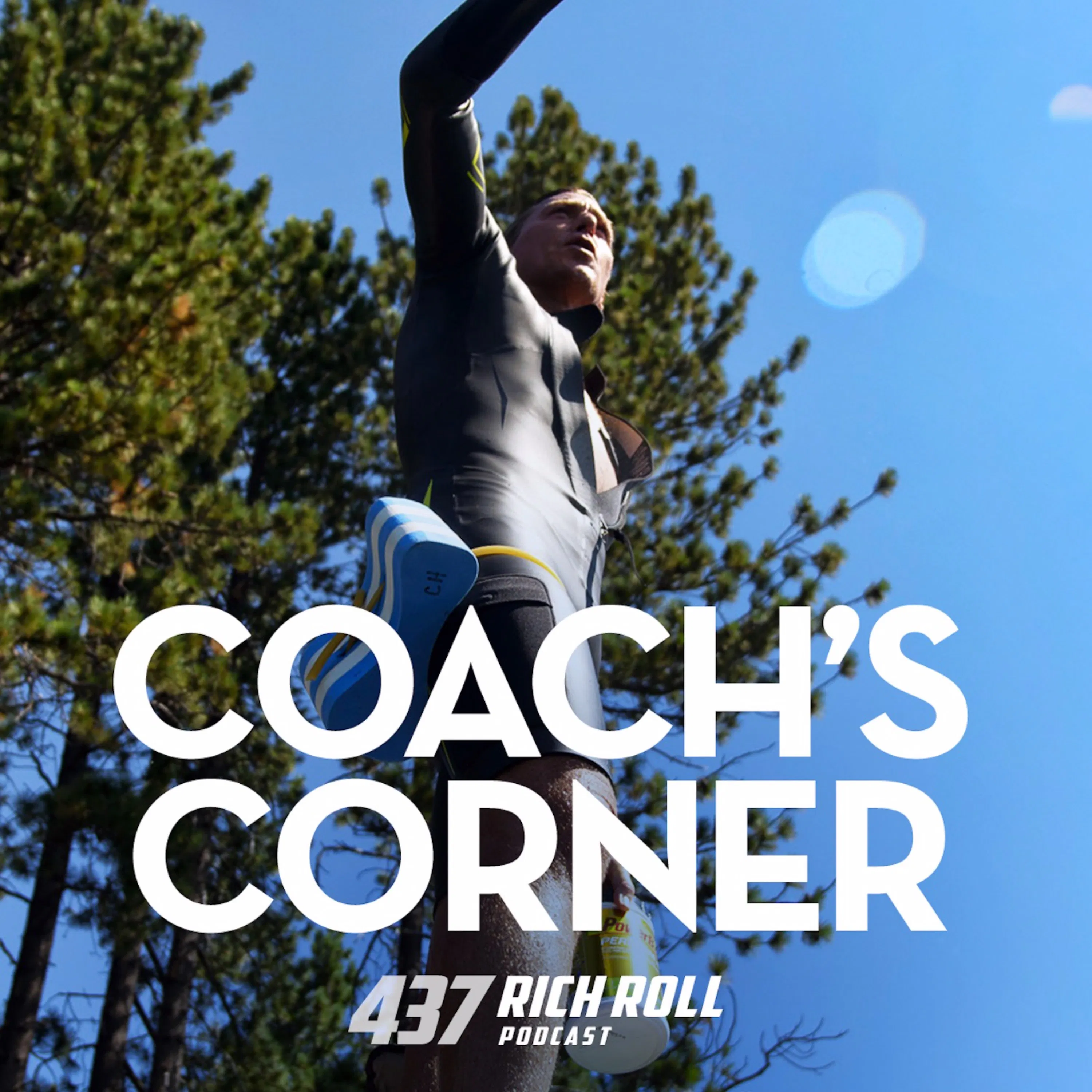
Optimizing Spring Training: Chris Hauth Returns
26 Nis 20191h 33mMaking his latest appearance in our ongoing Coach’s Corner series is none other than Chris Hauth, one of the world’s most respected endurance and ultra-endurance coaches. A sub-9 hour Ironman, Chris (@AIMPCoach) is a former professional triathlete, Age Group Ironman World Champion, and 2-time Olympic Swimmer. In 2006, Chris won the Ironman Coeur D’Alene and went on to be the first American amateur & 4th overall American at the Ironman World Championships in Kona, Hawaii. When he’s not training and racing, Chris hosts the Weekly Word Podcast and runs AIMP Coaching, mentoring a wide spectrum of athletes ranging from elite professionals — including Ironman and Western States top finishers, Ultraman winners and Olympic Trials qualifiers — to first time half-marathoners. Whether you are an elite athlete or just starting out, Chris knows how to get the best out of athletes the right way. A long-time friend and mentor as much as a coach, I have been under Chris’ tutelage since 2008, during which time he deftly guided me through three Ultraman World Championships (’08, ’09 & ’11), EPIC5 in 2010 and the Ötillö Swimrun World Championships in 2017, an event we raced together as a team. I could have never achieved the level of athletic success I have enjoyed without Chris’ deft counsel, so it is with pleasure that I share more of his wisdom with you today. As we put the cold winter months behind us, today's conversation focuses on balancing your fitness goals against life's demands as we welcome warmer days. As always, Chris drops knowledge applicable whether you are a professional athlete or a cubicle warrior just looking to improve the quality of your day to day. Specific topics discussed include: * optimizing fitness as we transition from winter to spring; * scheduling training in balance with real-life pressures and expectations; * when to hold back & how to avoid doing too much; * experimenting with race nutrition during training; * tips to develop the nuances of swimming technique; and * finding joy in the training process For those in the northern hemisphere, Spring is officially here. Whether you've fallen off track or been on top of your game, it’s the perfect time to once again check-in with the coach. I sincerely hope you enjoy the exchange. If you're new to the show, please check out Chris' previous RRP appearances in episodes 21, 256, 297, 30... Enjoy! Rich Learn more about your ad choices. Visit podcastchoices.com/adchoices

David Sinclair On Extending Human Lifespan & The Science Behind Aging
23 Nis 20192h 26mEverybody grows old. Everyone dies. But is this scientific fact? Or is it merely a story based on history and our current understanding of biology? What if we instead consider aging as a disease? This begs the question: what is the cure? Welcome to the mind of David Sinclair, PhD, one of the world’s leading scientific authorities on longevity, aging and how to slow its effects. A professor in the Department of Genetics at Harvard Medical School and co-Director of the Paul F. Glenn Center for the Biological Mechanisms of Aging, David obtained his Ph.D. in Molecular Genetics at the University of New South Wales, Sydney in 1995 and worked as a postdoctoral researcher at M.I.T. where, among other things, he co-discovered the cause of aging for yeast. The co-founder of several biotechnology companies, David is also co-founder and co-chief editor of the journal Aging. His work has been featured in a variety of books, documentaries, and media, including 60 Minutes, Nightline and NOVA. He is an inventor on 35 patents, has been lauded as one of the Top 100 Australian Innovators, and made TIME magazine’s list of the 100 most influential people in the world. In addition, David is the author of the forthcoming book, Lifespan: The Revolutionary Science of Why We Age — and Why We Don't Have To* which hits bookstores on Sept. 10 and is currently available for pre-order here*. This is an absolutely fascinating conversation on all things human lifespan, aging and longevity. We begin with the specific scientific mechanisms that contribute to biological degeneration. Then we dive deep into the hard science David and his peers are examining to better understand what contributes to aging and how to prevent it. According to David, the prospect of living to 200+ is not a pipe dream, but a very possible reality. If humans could indeed double lifespan, how would this change how you live? And what does this mean for the future of humanity? This conversation travels deep into the scientific weeds. Perfect for the geeks among us. But it's also grounded in practical takeaways for all of us — because David's work isn't just about extending lifespan. It's about learning how to live as vibrantly and energetically as possible for as long as possible. It’s an honor and a privilege this brilliant man’s pioneering work and wisdom with you today. Plus he's a lovely guy. If you enjoyed my episode with Dr. Valter Longo (RRP #367), a fellow brilliant warrior in the longevity space, then I’m fairly confident you’re going to love this one. So break out that pen and paper, because you're going to want to take notes on this one. I sincerely hope you enjoy the episode. Peace + Plants, Rich Learn more about your ad choices. Visit podcastchoices.com/adchoices

The Strava Story: Building A Fitness Community Fueled By Emotional Connection
16 Nis 20192h 1mRiding up a local canyon climb back in what must have been late 2009, my Airstream-dwelling, frequent cycling compadre Stu Bone couldn't stop talking about this brand new social network specifically aimed at the 2-wheel community. Always eager to test new tech, I signed up immediately, quickly fell in love and have been evangelizing the platform every since. Meet Strava – the fitness social network designed by athletes for athletes. Evolving beyond it’s cycling roots as a platform for all who sweat, today Strava is widely embraced as the premier workout sharing fitness network — a rapidly expanding ecosystem of Olympic, professional, elite, amateur and beginner athletes that boasts over 1 million new registered new users every month and growing. What distinguishes Strava from other fitness trackers and social media platforms is the positive emotional connection it engenders. Encouraging and community oriented, it’s devoid of the negativity and toxicity that plagues most sharing networks. There’s something uniquely special about being privy to the daily grind of my favorite multi-sport athletes. Their transparency holds me accountable. In turn I help hold my community accountable. And openly sharing our collective fitness experience – the highs and the lows — makes all of us better. So just how did Strava become the only fitness app that matters? To get the story behind the story, today I sit down with Mark Gainey and Michael Horvath — the dynamic duo co-founders who gave birth to Strava and continue to guide it's ongoing growth and evolution. Currently Strava’s interim CFO, Michael Horvath previously served as Chief Executive Officer from 2010-2013 and President from 2014-2017. Holding a Ph.D. in economics from Northwestern University and an A.B. in economics from Harvard (where he was men’s lightweight crew team captain), Michael is a former Stanford economics professor and entrepreneurship professor at the Tuck School of Business at Dartmouth. Prior to Strava, Michael co-founded enterprise software firm Kana Communications and was the CFO and VP of Operations at GlycoFi, a biotech company. Mark Gainey currently serves as the co-founder and chairman of Strava. Also a Harvard graduate, Mark is a former venture capital executive and seasoned entrepreneur who has been building successful companies for nearly 20 years, including Kana, which he co-founded alongside Michael as CEO, president, and chairman. In addition, Mark sits on the board of Alter-G, BoardVantage, Daum, Clari, and Coaching Corps. Michael and Mark initially met on the crew team at Harvard. Friendship ensued, but after graduation they pursued disparate paths. Mark went into venture capital in Palo Alto. Michael became an academic. Reunited when Michael took a professorship at Stanford, they hatched their first startup. Kana Communications was a massive triumph. Little did they know that their follow up act — a passion project born out of a mutual love for fitness — would eclipse their first company's success, reshaping the fitness landscape for millions of athletes across the world. This exchange canvasses everything from technology, business and entrepreneurship to fitness, sports and social media. But at it’s core, it's a conversation about community. How to create it. How to nurture it. And why the integrity of community is paramount. I love Strava. As an early adopter (I was the 14,443 person to sign up for the service), it's my pleasure to share Mark and Michael's story with you today. Disclosure: In the interest of total transparency, I have run ad campaigns for Strava on this podcast in the past. Enjoy! Rich Learn more about your ad choices. Visit podcastchoices.com/adchoices

Guru Singh On Positivity — Why Receptivity Is The Better Path
12 Nis 20191h 24mWelcome to yet another edition Guru Corner featuring Guru Singh, my favorite teacher on all things mystic and metaphysical. Fusing Eastern mysticism with Western pragmatism, Guru Singh is a celebrated third-generation Sikh yogi and master spiritual teacher who has been studying and teaching Kundalini Yoga for more than 40 years. He is the author of several books, a powerful lecturer and behind-the-scenes guide to many a luminary, including Fortune 500 CEOs, athletes, and artists. A peer of rock legends like Janis Joplin and the Grateful Dead, Guru Singh is also an accomplished musician who began his recording career on Warner Bros’ Reprise label in the 1960's. When he isn’t laying down tracks with people like Seal, he’s bringing down the house on the daily at Yoga West, his Los Angeles home base. Today we spin the wheel on positivity. Not your typical disquisition on the benefits of adopting a positive mental attitude, we take a more nuanced approach to self-awareness. Focusing on receptivity over repression, it's a call to embrace the power of both negativity and positivity as important forces to be experienced without getting lost in either extreme. And we discuss how to break free from the entrenched, looping stories we tell ourselves about ourselves that don't serve the lives we aspire to lead. Note: If you missed my previous conversations with Guru Singh, start with episode 267 and then enjoy episodes 332,368, 393, 400 and 418. Final Note: You can watch our conversation on YouTube at bit.ly/gurucorner434b and the show is also now available on Spotify. I love this beautiful being. It's my privilege to once agains share his wisdom with you today. So let the master class resume. Peace + Plants, Rich Learn more about your ad choices. Visit podcastchoices.com/adchoices
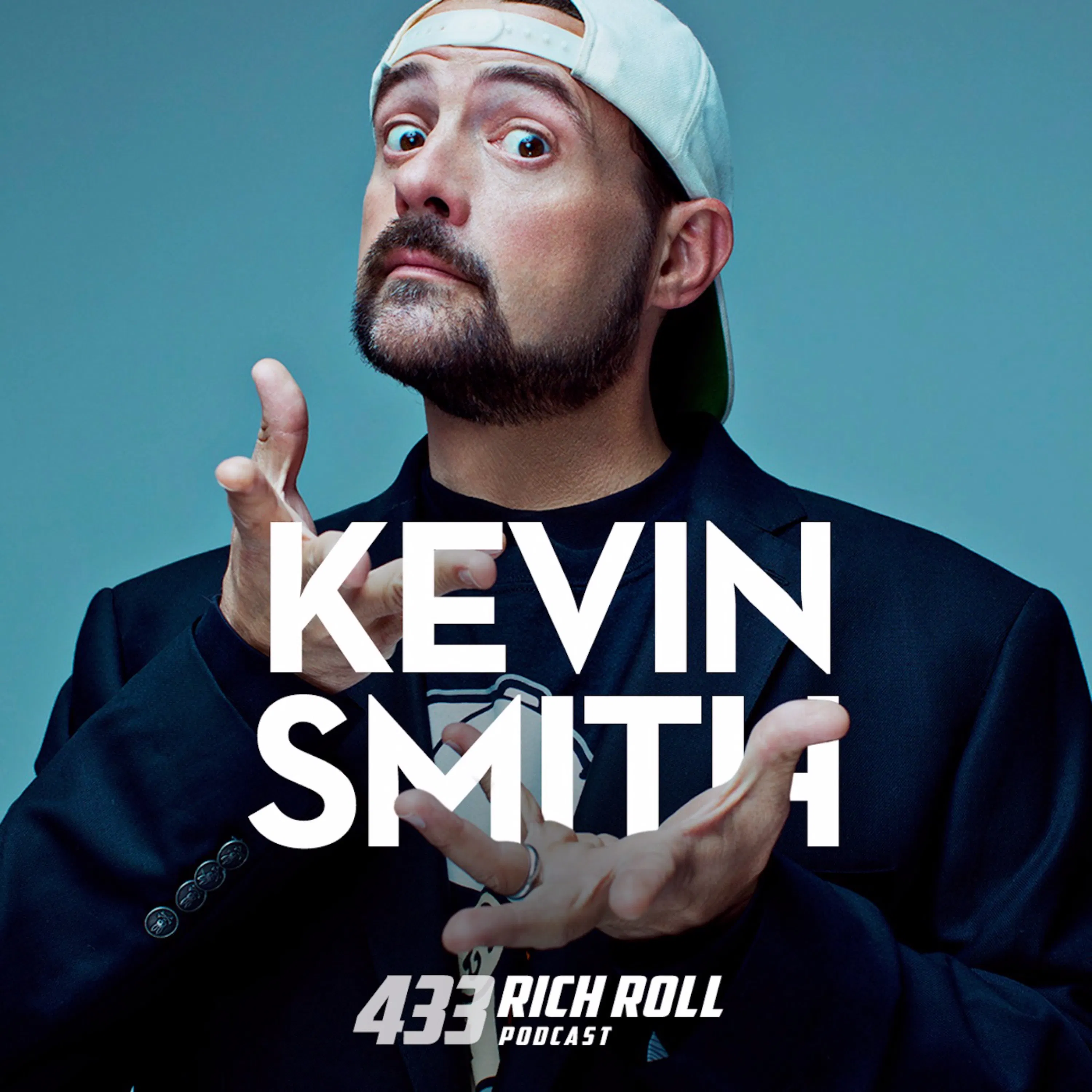
Kevin Smith On The Heart Attack That Saved His Life & The Art Of Prolific Creativity
8 Nis 20192h 38mAbout 610,000 people die of heart disease in the United States every year. In other words, America's number one killer claims 1 out of every 4 deaths. Not all heart attacks are fatal. But when your heart's left anterior descending artery becomes 100% blocked, the result is a massive heart attack known as The Widowmaker. Few survive its fatal clutch. Kevin Smith is the rare exception that proves the rule. The arch villain in his own personal superhero comic book narrative, Kevin's Widowmaker nemesis failed in it's dastardly quest to claim his young life. Instead, like Spiderman in the aftermath of that fateful bite, it made our protagonist hero stronger — more convicted about his life, purpose, family and art. One might even say it gave him superpowers — a new life animated by an urgent productivity. An emboldened creativity. And, more than anything, a spirit ennobled. This week's guest beat the odds. But this should come as no surprise for those well versed in the Kevin Smith canon. Because Kevin has always been an outlier — a fiercely independent voice who has been successfully cutting against the grain for as long as he can remember. Today this charismatic master storyteller shares his most amazing tale to date — the story of Kevin Smith. For the few unfamiliar among us, Kevin is a filmmaker, actor, comedian, comic book writer, author and early podcast pioneer. In 1994 he burst into prominence with his hyper low-budget comedy Clerks, a film he wrote, directed, co-produced, and filmed in the convenience store where he worked. Premiering at Sundance, it was feted with the festival's highest award before going on to become an indie cult classic. In addition to countless appearances in both movies and television, Kevin has created a litany of films, including Mallrats, Chasing Amy, Dogma, Jay and Silent Bob Strike Back, Cop Out, Jersey Girl, Red State, Tusk, Yoga Hosers and Clerks 2. Just last week he wrapped production on Jay and Silent Bob Reboot. An iconic and beloved character amongst indie film fans and comic book nerds, Kevin is immediately recognizable and famous for his hockey jerseys, backwards hat and well, his weight. But in February of 2018, between sets of one his stand-up shows, Kevin suffered his aforementioned heart attack. A lifestyle change was needed. Desperately. Harley Quinn Smith (a vegan herself) suggested Kevin adopt a plant-based diet. Kevin obliged. For the first time in ages, he began exercising. In short shrift, he lost 50 pounds. His blood work normalized. And the rest is history. Today we unpack all of it. How maxing out his credit cards spawned an entire career. His perspective on podcasting as one of the very first to embrace the medium. And of course the amazing transformation that compelled me to seek him out. Heart disease is ubiquitous. But as Dr. Caldwell Esselstyn is so fond of saying, it's a toothless paper tiger that need not exist. So if you feel stuck in lifestyle habits that are leading to your own fateful confrontation with that villainous Widowmaker, my greatest hope is that this conversation catalyzes the required changes well within your grasp to master — because inside all of us is a latent superhero waiting to unleash its fury on the unnecessary evil that is heart disease. As a long time fan of Kevin, it was an absolute delight and honor to spend a few hours with him. I love everything about this exchange. I hope you do too. Final note: I conducted this interview at Kevin's house, so no video version of this episode. Enjoy! Rich Learn more about your ad choices. Visit podcastchoices.com/adchoices

David Bronner On Cosmic Engagement, Conscious Capitalism & Cultivating Unity
2 Nis 20191h 47mEat local. Buy organic. Avoid GMO. Give back. Be of service. These are all great practices. Good for your health. Good for humanity. And good for the planet. But it's not enough. The health and environmental problems we currently face are global epidemics of unprecedented scope and scale. We simply cannot solve these issues with the mindset that created them. What we need, now more than ever, is a revolution of consciousness. There are few people more well suited for this conversation than David Bronner. By far the most unique ‘CEO' I have ever met, this week's guest is the Cosmic Engagement Officer of Dr. Bronner's Magic Soaps, the top-selling brand of natural soaps in North America and producer of a range of organic body care and food products. The Dr. Bronner story, which is amazing, begins in 1948 with Emanuel Bronner — a German immigrant, third-generation master soapmaker, master consciousness and generally far out dude — who used his ecological soaps to proselytize his “All One” philosophy, labeling product bottles with the key tenets of his teachings on self-realization and unity across religious and ethnic divides. Embraced by 1960's counterculture for its ecological properties and spiritual sensibility, the brand soon found it's way into most natural foods markets across the United States. David and his brother Michael eventually took stewardship of the family business, shepherding their grandfather's brand from counterculture cult status to mainstream embrace by growing revenues from $4 million in 1998 to over $111 million in 2017. Along the way, David went to great lengths to respect, protect and ultimately deepen Emanuel's vision, cultivating a thriving and truly conscious capitalistic enterprise making socially & environmentally responsible products while successfully pursuing its broader mission to create a better world for ourselves and future generations. Environmental activist. Psychonaut. Visionary.These are but a few of the words that describe David, a man who very much shares his grandfather's ‘cosmic hippie’ DNA but matches it with entrepreneurial flair, a degree from Harvard and the business savvy necessary to grow and sustain an ongoing concern at scale. Under David's stewardship, Dr. Bronner's has championed a number of causes, many of which provide the foundation for today's conversation — a free range exchange that explores David's involvement in advancing animal rights, drug policy reform, GMO regulation, regenerative organic agricultural practices, fair trade projects and practices, medicinal applications for cannabis and psychedelics, as well as wage equality, including self-imposed caps on executive pay. Backing up its mission statement, roughly a third of Dr. Bronner's profits are dedicated to charitable giving and activist causes annually. Furthermore, the company is a founding partner in the Climate Collaborative, which leverages the power of the Natural Products Industry to compel action on climate change. This is David's story. And it's sure to blow your mind. Disclaimer #1: David expounds upon his personal experience with with psychedelics and cannabis in the context of spiritual growth. Disclaimer #2: This is not a branded podcast. I have no financial relationship with Dr. Bronner’s and was not paid to host David (to be clear, I have never accepted money to host a guest, and never will). I am simply a fan of the Dr. Bronner ethos and products, have followed David’s journey with admiration for some time and have always wanted to have this conversation. Enjoy! Rich Learn more about your ad choices. Visit podcastchoices.com/adchoices

Mike Posner On Making Art, Embracing Growth & Walking Across America
26 Mar 20192hAn accomplished singer, songwriter, poet & producer, Mike Posner knows what it's like to be rich and famous. He also knows what it's like to be forgotten. To grieve. To grow. To embrace that which is most important. And ultimately express his truth through art. This is the story of a remarkable talent's attempt to live an artist's life — the struggles faced and lessons learned along his most mercurial path. In 2010, while still an undergraduate at Duke, the Detroit native's career exploded with the release of his debut song Cooler Than Me. The irresistible pop song topped charts worldwide, selling more than two million copies and launching him into the stratosphere almost overnight. But fame is fleeting. Unable to immediately top his debut, Mike's solo career soon faltered. Turning to writing, Mike spent the next several years behind the curtain churning out hit songs for everyone from Justin Bieber (‘Boyfriend') and Maroon 5 (‘Sugar') to Pharrell, Snoop Dogg, Nick Jonas and Avicii. Then, in 2016, his career as a solo artist once again blossomed. A remix of his song ‘I Took A Pill In Ibiza' unexpectedly surfaced as an international smash on the electronic dance scene, landing him a Grammy nomination for Best Song that year. Not long after, Mike was hit with a trifecta of heartache. He weathered a break up with his girlfriend. His father passed after a bout with brain cancer. And his friend and frequent collaborator Avicii took his own life. It was a dark time for the young musician. But the life of an artist is one of persistence. No matter what, Mike continued to show up for music. The result, and his best work to date, is the recently released album, A Real Good Kid — a mature, vulnerable and infectious pop meditation on grief, celebrity, ego, loss, art and personal growth. Without a doubt, Mike is an incredibly talented musician. But what inspired this conversation has little to do with music and everything to do with character. What draws me to this human is his spirit. An old soul with an expansive perspective on art, life and meaning that belies his age, Mike overflows with emotional wisdom forged from experience. And his unbridled, authentic enthusiasm for life and personal expression is as infectious as it is instructive. This is the story of unpredictable highs. Low lows. Love and loss. What it means to move on. And finding solace while stuck in the middle. I first saw Mike perform before an IN-Q spoken word event several years ago and ever since have appreciated him from afar. But I fell in love with him during our conversation. I'm fairly certain you will too. For those visually inclined, you can watch our conversation on YouTube at: bit.ly/mikeposner431 or listen in on Apple Podcasts or Spotify. Peace + Plants, Rich Learn more about your ad choices. Visit podcastchoices.com/adchoices

Jack Dorsey On Solitude, Self-Care & Shouldering The Health of Global Conversation
22 Mar 20192h 28mImagine shouldering responsibility of one of the planet's largest social networks. Now imagine that's just one of your jobs, the second focused on reinventing the world's relationship with money. This is Jack Dorsey's life. The co-founder and CEO of both Twitter and Square, today's guest is one of the most influential figures of the modern age — a man who has made an indelible impact on our cultural landscape by quite literally shaping how society communicates in the emergent digital era. What started as a simple means to share personal status updates, Twitter has swelled into arguably the most important social media platform for breaking news, journalism, and political discourse. A powerful tool for speaking truth to power, it's put wind in the sails of important social movements. Provided safe haven for whistle blowers. And given marginalized groups and dissidents a voice that can be heard across the globe. But Twitter must also account for the noxious devolution of civil discourse — a behemoth apparatus easily weaponized for motives nefarious. Twitter is nothing if not controversial. And Jack is the face of such controversy — a polarizing figure in the crosshairs of Twitter critics across all sides of the social and political spectrum. Recognizing the need to more thoroughly address Twitter's role and responsibility in the growing toxicity of public conversation, Jack has spent the last month publicly addressing the platform's missteps, challenges and aspirations on a wide variety of media platforms and podcasts that include two appearances on The Joe Rogan Experience, Sam Harris' podcast Making Sense, and many others. My sense is that critics were left unsatisfied with Jack's answers to the many hard questions posed. I understand and appreciate the criticism. Just how exactly can Twitter successfully promote healthy conversation, eliminate toxicity and fairly police bad actors across 500 million daily tweets? I don't know the answer. But I do know that I heard an intelligent, empathetic and well intentioned man in an almost impossible situation — someone owning his failures and transparently endeavoring with great equanimity to solve these herculean problems in both good faith and real time. In approaching this conversation, I made the choice not to retread territory explored at great length on Rogan. Instead, my interest is to better understand the human behind the curtain. What does it actually feel like to be at the helm of one of the largest and most powerful social media platforms in the world? What is a day in the life of Jack Dorsey like? What daily self-care practices does he employ to mitigate the stress of his gargantuan responsibilities? And just how did this young man blaze such an extraordinary entrepreneurial path? I first met Jack about two years ago during a visit to San Francisco. A fan of the podcast, he invited me up to the Square offices. Although our encounter was brief, I liked him immediately. Soft spoken, kind and curious, I left our meeting wanting to better understand what makes him tick. Open to sharing his story on the podcast, I visited his San Francisco home on a foggy Saturday morning a few weeks ago. Unsurprisingly, his home is beautiful and well appointed. But it's also strikingly modest given his stature. Minimal to the point of spartan, it's devoid of material excess. No entourage. No private chef. No crazy car collection. Not even an assistant. Just Jack, barefoot, unpretentious and excited to show me his infrared sauna and his cold plunge... Enjoy! Rich Learn more about your ad choices. Visit podcastchoices.com/adchoices

The Paradox of Passion With Brad Stulberg & Steve Magness
19 Mar 20192h 6mFollow your passion. For many it's a mantra. For others, an over-hyped trope. I plead guilty to advocating this pursuit — a subject worthy of frequent exploration on the podcast. But is a life propelled by passion always the best course of action? The answer, it turns out, is complicated. Passion can be a gift. But only if you know how to properly channel it. The same drive that fuels breakthroughs — whether they're athletic, scientific, entrepreneurial, or artistic — can be every bit as destructive as it is productive. Unchecked by balance (that other culturally touted virtue), passion can manifest as a curse, leading to endless seeking, suffering, and burnout. Simply put, passion is a paradox. To demystify this important subject, my friends Brad Stulberg and Steve Magness return to the podcast (their 1st appearance was RRP 293 back in June 2017) to explore how to develop, harness and express the right kind of passion to unlock potential and actualize a meaningful, purpose-driven life. Long time listeners might recall Steve as a former elite track & field athlete who clocked an extraordinary 4:01 mile in high school. Today, Steve is one of the most accomplished, respected and in demand track & field and cross country coaches in the world. In addition to serving up duties at the University of Houston, he is the personal coach to some of the most accomplished professional and Olympic runners on the planet. In addition, he consults with start-up technology companies on innovation and growth, holds a Master’s degree in Exercise Science from George Mason University, and serves as an adjunct professor at St. Mary’s University in the United Kingdom. Brad is a former McKinsey & Co. health care consultant turned writer specializing in the health and science of human performance. Lauded for his ability to merge the latest science with compelling personal stories and practical insights, his work has been published in The New York Times, Outside Magazine, New York Magazine, Forbes, NPR, The Los Angeles Times & Runner’s World. Together, Steve and Brad are the co-authors of Peak Performance: Elevate Your Game, Avoid Burnout, and Thrive with the New Science of Success*, a science-based primer on the principles that drive and sustain high performance in sport, business and life. This week marks the publication of their latest collaboration, aptly titled The Passion Paradox: A Guide to Going All In, Finding Success, and Discovering the Benefits of an Unbalanced Life*. A fascinating look int0 the science behind passion and it’s double-edge-sword nature, it's a must read for anyone searching for that spark or how to best harness its magical powers to unlock inner potential. Today's conversation is a wide-ranging exploration into the very nature of passion. Chock-a-block with scientific takeaways & experiential insights, we examine the pros and cons of this intoxicating impulse. Enjoy! Rich Learn more about your ad choices. Visit podcastchoices.com/adchoices

Nadia Bolz-Weber Is Shameless — Reconciling Sex & God With Grace
12 Mar 20192h 10mToday we continue my exploration of faith with one of the most fascinating spiritual leaders in America today — a Lutheran pastor and public theologian dedicated to redefining how we think about church, practice religion, ritualize divinity, and cultivate community. But her latest concentration, and the focus of today's conversation, is reforming religion's antiquated, sexist ideas about sex, gender and our bodies – and all the pain, guilt and shame they provoke — to reclaim our sexuality and boldly begin anew. You see, Nadia Bolz-Weber is no ordinary pastor. Standing six-foot-one, this heavily tattooed former drug addict rocks the collar with bright red lipstick, fancies serious custom-made jewelry (her rings and belt buckles are off the hook) and swears like a sailor. Confusing matters more, she's also very much a traditionalist – a fearless and deeply reverent pastor for America's outsiders with intrepid beliefs about what “church” can and should be for the seekers among us. For eleven years, Nadia served as the founding pastor of House for All Sinners and Saints, a colorful and eclectic, all-comers welcome congregation she started in 2007 with just eight members in her living room in Denver. She is also a three-time New York Times bestselling author. Pastrix: The Cranky, Beautiful Faith of a Sinner & Saint*, is her prayer-and-profanity laden narrative about an unconventional life of faith. Accidental Saints: Finding God in All the Wrong People* recounts her religious but not-so-spiritual path and perspective. Her newest book, Shameless A Sexual Reformation*, unleashes her critical eye, her sharp pen, and her vulnerable but hopeful soul on the caustic, fear-riddled, and religiously inspired messages about sex that have fed our shame. I first laid eyes on Nadia when she took the stage at The Nantucket Project to interview Lance Armstrong. Her opening line? “So, I see from my notes that you took some drugs you weren't supposed to and then you lied about it? OMG. I did that shit SO MANY TIMES!” The crowd erupted. Instantly, I was hooked. Later that same weekend I witnessed Nadia deliver a sermon unlike anything I had ever experienced in church or otherwise. Wrapt by her charisma and compelled by her unapologetically honest message, I knew immediately I had to get her on the podcast. Growing up fundamentalist, at 12 she was diagnosed with Graves' disease, a thyroid-related autoimmune disorder that caused her eyes to literally bug out of their sockets. Socially ostracized, rage and cynicism led a descent into drugs and alcohol. In 1991, a 12-step program ultimately lit her path back to faith — and the church she ultimately founded to create a home for those who have never felt home. Today we explore Nadia's amazing story. Enjoy! Rich Learn more about your ad choices. Visit podcastchoices.com/adchoices

Brian Koppelman On The Artist Within, Nurturing Your Voice & The Importance Of Consistent Creative Practice
8 Mar 20191h 31mToday's guest was always creative, but never thought of himself of an artist. Then Brian Koppelman shifted his mindset. He adopted consistent daily practices to nurture his voice. He finally gave that voice the respect it deserved. And his life was forever changed. As direct result, this former music industry executive turned screenwriter, director, producer and showrunner has spent the last two decades churning out an avalanche of consistently great creative output as the co-writer (alongside lifelong friend David Levien) of iconic films like Rounders and Ocean's 13 and co-creator a little hit show you might have heard of called Billions on Showtime. Today we convene for a fun and highly instructive conversation about the interior life of a master storyteller and modern day artist — and the lessons that can be gleaned from investing our own creative instincts. We discuss how he discovered Tracy Chapman while still in college, facilitated her first record deal, and the hows and whys behind walking away from the music business to pursue his dream of being a writer. We mine why devotion to process over results, mastery over success, and love of craft is the path to a meaningful life. We examine how to overcome negative self-talk and how Tony Robbins and Julia Cameron changed his life. And we dive deep into how his daily habits — journaling and meditation paramount among them — have paved his road to long-sustained success. But, as a long time admirer of Brian, what strikes me most is his generosity. A source of personal inspiration for my own creative endeavors, Brian shares his copious experience freely (what works, what doesn’t and why) on his twitter feed (@BrianKoppelman) and as host of The Moment — his stellar podcast in which he shares conversations with all manner of successful creative people about the pivotal moments that fueled their fascinating careers. I think of him as a benevolent mentor at large to anyone and everyone seeking to live more fully, creatively expressed lives of purpose and meaning. So how does he do it? What can we glean from his example, habits and practices that can inform how we think about ourselves as creative beings? And why is this important? Even if you don't consider yourself creative, Brian will leave you questioning this assumption. Because deep down, we are all artists yearning to be fully expressed in that which makes us uniquely who we are. When we engage this inclination, the world is a better place. And we all deserve permission to do the work we want to do. Final Note: This conversation took place a few months ago while visiting NYC. Alas, my film crew did not join me, so this episode is audio only. Final Final Note: Season 4 of Billions returns to Showtime on March 17. If you’re new to the show, it's truly appointment viewing. So take the next week to get caught up. Season 3 was unreal and I can't wait to see what Brian, David and their amazing cast and crew have lingering up their sleeves. The only thing I know for sure is that we won't see it coming. It's both a delight and honor to share today's exchange with a master storyteller. I sincerely hope you not only enjoy it, but that you put his sagacious wisdom to work. Peace + Plants, Rich Learn more about your ad choices. Visit podcastchoices.com/adchoices

San Quentin To Saved: Chris Schuhmacher’s Last Mile To Redemption
5 Mar 20192h 12mThis is a story of mistakes made. Of penance served. And the hard wrought path to atonement, self-forgiveness, and ultimately redemption. It begins with a young, standout volleyball player. A smart guy who later joins the Air Force, spending nearly two years at the Defense Language Institute in Monterey, CA studying Korean. His career looked bright. But it wasn't long before Chris Schuhmacher started making some bad decisions. A laundry list of errant decisions, in fact, that deposited him into a dark, hard partying crowd in Hollywood. Decisions that led to dealing weed to support that lifestyle. And decisions that ultimately culminated in a suitcase of drugs under his dispatch being stolen from him. In a drug and alcohol fueled rage, desperate and fearing the consequences should he be unable to retrieve the contraband, Chris took another manʼs life. And for that offense he was sentenced to sixteen to life. Well aware that he might never see another day outside San Quentin, inmate number T31014 nonetheless committed to taking responsibility for his actions. Searching for spiritual purpose and meaning, he got sober — and stayed that way. He made amends for his crime, began running and earned a college degree. He even studied software engineering, developing a promising app called Fitness Monkey under the tutelage of The Last Mile, a non-profit program that trains incarcerated individuals for successful reentry, All told, Chris transformed himself into the kind of person he always knew he could be. Then came the impossible. In 2017, after serving 17 years, a parole board granted him his freedom. Re-entry hasn't be easy for Chris. But he has emerged from the experience a better man. Now a productive member of society reunited with his family and gainfully employed, he is intent on sharing his cautionary tale in service of others. I had the privilege of hearing Chris speak at The Nantucket Project last year. In a time where prisons and prisoners are mostly forgotten, I was deeply moved by his story of change, rehabilitation and improvement from the lowest points. And I was compelled to use this platform to better understand both his humanity and the current state of our prison industrial complex. There is no “un-doing” what Chris did. There can be no sufficient apology for taking a life. And yet there are lessons to be gleaned –both profound and instructive — from his deep dive into self-examination. The support he leveraged to reinvent himself wholesale. And the innovations afoot that can better rehabilitate the current and future incarcerated among us. Indeed, this is a story of drugs, alcohol, addiction, betrayal, anger, and tragically, murder. It's about what currently ails our prison industrial complex. And it's about how society can do better. But at its core, this conversation is about atonement. It's about second chances. And it's about empathy. With that, I urge that you entertain Chris' testimony with an open mind and even more open heart. Peace + Plants, Rich Learn more about your ad choices. Visit podcastchoices.com/adchoices

Tom Bilyeu On Exiting The Matrix, How To Develop ‘Techne’ & Why Mindset Is Everything
26 Şub 20192h 43mLike most of us, Tom Bilyeu chased money for nearly a decade only to end up emotionally bankrupt. What this filmmaker and serial entrepreneur came to realize is that the struggle is guaranteed. The money is not. So you damn-well better love the struggle. Acting on this epiphany, Tom and his partners sold their technology company and founded Quest Nutrition — a play premised not on profits, but rather on creating value for people. Ironically, Quest exploded, becoming a billion-dollar business in roughly 5 years, making it the 2nd fastest growing company in North America according to Inc. Magazine. This is all very interesting of course, but it’s Tom’s next chapter that captured my curiosity. After exiting Quest, Tom embarked on a mission to truly empower people — an act of service aimed at eradicating, at scale, what he sees as an epidemic of impoverished mindset. Hence was born Impact Theory — a media company with a juggernaut talk show cornerstone in which he goes deep with all manner of inspiring people dedicated to positive transformation. The aim? To influence the cultural subconscious by building a single-minded content creation machine that makes exactly one type of content — content that empowers people. A long-time fan of Impact Theory, I had the good fortune of being a guest on Tom's show a few months back. I walked away from that experience even more impressed with Tom. Sure, he's über successful. And the legacy he is now building is as masterful as it is laudable. But it's his generosity of spirit, matched with a keen and heartfelt curiosity, that left a lasting impression on me. The more I looked into this man and his mission, the more convinced I became that he would make a great guest for the show. And so here we are. This is an exchange designed to upend your sense of personal possibility. Shock you out of The Matrix. Change the story you tell yourself about yourself. Facilitate greater expression of the true self within. Access reservoirs of hidden potential. And ultimately become the best version of who you really are. And it all begins with changing your mindset. As someone who operates in a similar landscape, I have the upmost respect for Tom's mission and him as a person. Chocked with practical advice and implementable takeaways from the frontlines of business, relationships, personal growth, self-improvement and everything in between, this conversation does not disappoint. To view our conversation on YouTube, visit bit.ly/tombilyeu425 And don't forget we're also now on Spotify! Let the master class begin! Peace + Plants, Rich Learn more about your ad choices. Visit podcastchoices.com/adchoices

The War Inside: Combat Veteran Sarah Lee On PTSD & How Cycling America Saved Her Life
22 Şub 20192h 19mImagine finding yourself in a place so painful, dark and hopeless that suicide feels like the only option. Welcome to post traumatic stress disorder. Few things are more important than mental health. Nonetheless, the World Health Organization estimates that about 300 million people worldwide suffer from depression. In the United States, anxiety disorders are the most common mental illness, affecting 18% of the population — 7.7 million of whom are afflicted by PTSD. Sarah Lee is one such individual. A former Army Sergeant and Operation Iraqi Freedom II Combat Veteran, Sarah experienced more than her fair share of trauma during her 2004 deployment. After 8-years of service, she retires to civilian life and begins to struggle mightily with re-acclimating to normalcy. Numb, she begins to withdraw from friends and family. Her only companion becomes chronic neck and knee pain. And her only solace the food she binges to salve her emotional wounds. 100 pounds heavier, she is then diagnosed with a potentially life-threatening, grapefruit-sized ovarian cyst. By April 2017, Sarah descends into a depression so bleak, she very nearly takes her own life. Today she tells her story — an inspiring tale of survival and service that begins with a bike However, countless who suffer from PTSD never find their way out. In fact, 22 veterans take their own lives every single day. The very day I hosted this podcast was no exception. On November 7, 2018, just miles from my house, 28-year old combat veteran Ian David Long was planning an outlet for the dark thoughts he couldn't shake. And just hours after Sarah shared her solution with me, Long succumbed to his pain. Pulling out a .45 caliber semi-automatic pistol with a laser sight, he opened fire on a crowd of 20-somethings gathered at the Borderline Grill in Thousand Oaks, killing twelve before fatally shooting himself. The confluence of these two events — and the disparity in their respective outcomes — perfectly underscores the severity of PTSD, our mental health epidemic at large, and the dire need for better diagnostics and more innovative treatment solutions for the untold millions who suffer. So let's talk about it. This is a story about courage. It’s about healing. And it’s about redemption. I'll let Sarah tell the rest. To view our conversation on YouTube, visit bit.ly/sarahlee424. And don't forget we're also now on Spotify. Peace + Plants, Rich Learn more about your ad choices. Visit podcastchoices.com/adchoices

Eat Plants Not Animals: James Aspey Is Defending The Voiceless
19 Şub 20192h 26mWhy do we love dogs, eat pigs and wear cows? Dr. Melanie Joy coined this phenomenon speciesism. James Aspey calls it what it is — just plain wrong. Motivated to raise greater awareness for the planet's voiceless victims, in 2014 this passionate, young, Australian animal rights activist took a 365-day vow of silence. After an entire year without uttering a single word, he ended it on Australian national television with an interview that inspired millions to make more conscious and compassionate lifestyle choices and cemented him as a charismatic new force in the fight for the ethical treatment of animals. Ranked #3 among the “Top 25 Most Influential Vegans” by Plant Based News, James has gone on to cycle 5000kms across Australia to prove that vegans can be fit & healthy. He got tattooed for 25 hours straight to raise $20,000 for charity. He's been featured in a multitude of prominent mainstream media outlets; given free speeches at countless schools, universities, and conferences; and attended local activism events, slaughterhouse vigils, and street outreach events all across the world. He transparently shares his life and campaigns online to a massive tribe of global followers. On YouTube, his speeches have reached tens of millions of people. And his most popular speech has been viewed over 12 million views. Enthusiastic, accessible and highly skilled behind a podium, James is inspiring a new generation to change how we eat and live in communion with the animals that share this home we call Earth. But there's so much more to this young man's life than meets the eye. At 17, James was diagnosed with leukemia and told he only had 6 weeks to live. He beat the cancer only to slide into a life of drugs and alcohol punctuated by a profound eating disorder. Then a chance encounter with an Indian man would forever change the trajectory of James' life. Today I'm proud to help this passionate defender of the voiceless share his powerful story. But first, a caveat. I'm not unaware that a contingent of you shut down when the subject turns to animal welfare. I know, because I used to be that person. I didn’t start out inherently compassionate about these issues. My shift to a plant-based lifestyle was initially motivated purely for personal health reasons. In fact it was years before I became sensitive to the horrific and inexcusable manner in which we treat our animal friends. But it's an issue I now care deeply about. And it's an issue we simply can no longer ignore or tolerate. Ghandi once famously said, “The greatness of a nation can be judged by the way its animals are treated.” History will not look fondly upon our track record. And I, for one, want to be on the right side of history. So for those who think this episode just isn't for you, I urge you to set aside any judgment, projection or pre-conceived ideas you may have about James or this subject matter. Trust me. And open your heart. Because to move forward, we cannot continue to turn a blind eye. I really dig this conversation. I hope you do too. More importantly, I hope it inspires you to take positive action for change — both personal and global. To view our conversation on YouTube, visit bit.ly/jamesaspey423. And don't forget we're also now on Spotify here. Peace + Plants, Rich Learn more about your ad choices. Visit podcastchoices.com/adchoices

Todd Herman On The Alter Ego Effect: Unlocking The Hero Within
12 Şub 20192h 19mWhat if I told you that one secret to success just might be adopting a secret identity? I know. It sounds weird. I too was skeptical. But today's guest sold me with one unique thought: What if your alter ego is a more accurate representation of who you really are? Pondering this left me wanting to learn more. So I invited high performance coach Todd Herman on the show to elaborate. An author, advisor, and entrepreneur, Todd has spent the last 2 decades helping professional and Olympic athletes, entrepreneurs, leaders, and executives unlock peak performance at the highest level to achieve wildly outrageous goals while enjoying the process. Featured on the Today Show, Sky Business News, Inc. Magazine and CBC National News, Todd is also the author of the recently released book, The Alter Ego Effect: The Power of Secret Identities to Transform Your Life*. Equal parts instructive and entertaining, it's a provocative exploration of the heroic self within as a means to overcome that which holds you back with one goal in mind — to empower greater expression of your inner best self. This conversation tracks the viability of Todd's alter ego thesis through the lens of successful case studies who have used this strategy to their advantage. It explores the fraught terrain of actualizing peak performance and the proven strategies to maximize human potential. And it's about how to best confront and overcome the hurdles that unnecessarily prevent the best of us – often repeatedly or in some cases continually – from inhabiting our most expressed selves. In addition, we explore the why behind Todd’s work. More specifically, Todd relates how confronting a severe childhood trauma helped him overcome profound feelings of guilt and shame that held him back for years. Impactful for anyone who suffers in silence, it's a powerful story of healing and empowerment (but perhaps inappropriate for the little ones among us — so fair warning). Very much in the vein of my recent podcast with James Clear (RRP #401), I found this conversation both fascinating and entertaining. My hope is that you will too. To view our conversation on YouTube, visit bit.ly/toddherman422. And don't forget we're also now on Spotify. Peace + Plants, Rich Learn more about your ad choices. Visit podcastchoices.com/adchoices

The Queens Of EPIC5: Danielle Grabol & Melissa Urie On Girl Power Grit
8 Şub 20192h 25mIn 2010, the tireless and intrepid Jason Lester hoodwinked me into his latest fit of voluntary suffering insanity: an attempt to complete 5 Ironman-distance triathlons on 5 Hawaiian Islands in under 5 days. Hence was born the EPIC5 Challenge — and somehow we survived to tell the tale. Now institutionalized, EPIC5 annually attracts a global handful of athletes adequately unhinged to retrace our steps. Over the last 8 years, 29 individuals have successfully completed the challenge. Three of these intrepid humans are women. Two of them are here today. Meet real-life Wonder Women Danielle Grabol & Melissa Urie – both athletes thriving on the cutting edge of ultra-endurance. But it wasn't always that way. Pushing 225 pounds, 15 years ago Dani was a junk food junkie and a pack-a-day smoker who couldn't even climb a flight of stairs without losing her breath (sounds familiar!). In 2005, her doctor told her that if she didn’t change her ways she’d be dead before she turned 40. So she hit the gym. It was hardly overnight, but ultimately Dani reinvented herself wholesale. Down 70 pounds, an athlete was born. But on a training ride a year later, Dani was struck by a drunk driver. Her injuries were so severe she was told she would never run or bike again. Instead, she went on to compete in multiple Ironmans and even a double-Ironman. In 2013 she was one-half of the youngest two-person female team to finish RAAM — the legendary bike race across the entire United States. And in 2016, Dani became the very first female to compete in and finish EPIC5 — a stereotype shattering story she lays bare in her beautiful memoir, Fear No Distance*. A mental health nurse from Melbourne, Australia, Mel grew up active but never competitive. But in 1998, in an effort to lose a bit of weight and get fit, she participated in the Great Victorian Bike Ride with her dad. Thus was sparked a passion for ultra-endurance. Over the years, Mel has completed 6 Ironmans and a few double ironman distances races, including Ultraman Canada and Ultraman Australia*. Like Dani, she discovered EPIC5 by way of Finding Ultra, signed up and in 2017, Mel became the second female to ever complete the challenge. The bottom line? Mel and Dani are two badass women who know how to get it done. And this conversation is about just that. It's about putting in the work. It's about patience. Determination and grit. Not being afraid to fail. It's about the mindset required to break stereotypes. And it's about the mental toughness demanded to compete at the highest level in an arena dominated by men. So check your excuses at the door and enjoy! To view our conversation on YouTube, visit bit.ly/danielleandmel421. And don't forget we're also now on Spotify. Peace + Plants, Rich NOTE: *I recorded this interview way back in mid-November. At the time, Mel was preparing for the Ultraman World Championships in Hawaii. Unfortunately she did not finish that race. I'm not sure what happened but I'll find out and let you know. Learn more about your ad choices. Visit podcastchoices.com/adchoices

Marco Borges’ Greenprint For Your Best Self & A Better World
5 Şub 20192h 7m“What is it all about? It’s about being healthier, happier, better to the animals, kinder to each other and the planet – and it all stems from what we’re putting into our bodies.” Marco Borges Last week, Beyoncé and Jay-Z made news across the world with a headline grabbing offer: take the plant-based pledge and you just might win concert tickets for life. When the most culturally significant and influential entertainment couple on the planet throws down like this, it’s a big deal. The tectonic plates of social culture shift. Conventional attitudes and habits around food change. And our social paradigm is nudged forward. So what's the story behind all this? The man behind this curtain isn't a musician. No, Marco Borges is a trainer and exercise physiologist. He's a family man and friend. He's the person who first inspired Jay-Z and Beyoncé to adopt a plant-based lifestyle. He's the entrepreneur that partnered up with the duo on 22-Days Nutrition. And he's the environmentalist who enlisted the global icons in his latest venture, The Greenprint Project — a plant-based “blueprint” designed to shift your mindset, improve your health and impact the planet for the better. In addition, Marco is the author of multiple New York Times bestsellers, including The 22-Day Revolution*,The 22-Day Revolution Cookbook*, and his latest offering, entitled (you guessed it), The Greenprint: Plant-Based Diet, Best Body, Better World*. An inclusive, practical primer on all things plant-based, it's a beautiful must read for anyone looking to lose weight, increase energy, boost metabolism or reduce your carbon footprint. Marco has been prominently featured in every major media outlet from Good Morning America to Vogue and today marks his third appearance on the podcast. If you're new to the show, please check out episode #195 for Marco's full backstory and episode #271, which features a panel discussion Marco and I conducted before a live audience at the Miami Seed Food and Wine Festival a few years ago. Today’s conversation pivots around the why behind Marco's new Greenprint book and app. We discuss transcending labels. Marco's focus on inclusivity over tribalism. And how mastering a few simple lifestyle changes can positively transform your life and the planet. Because I have grown quite close with Marco and his family, I can say with great conviction that he is the real deal. A man who walks his talk. A father, husband and entrepreneur who has devoted decades to empowering positive change in people from all walks of life. And so it is with delight and great enthusiasm that I share our latest conversation with you today. Enjoy! Rich Learn more about your ad choices. Visit podcastchoices.com/adchoices