
Teknoloji
Y Combinator Startup Podcast
Y Combinator
We help founders make something people want. The Y Combinator Podcast is where builders talk about building. From the earliest days of an idea to scaling a company that changes the world, YC partners and founders share real stories, lessons, and tactics from the frontlines.
 Hinto'da aç
İngilizce öğrenmek için bölümler340
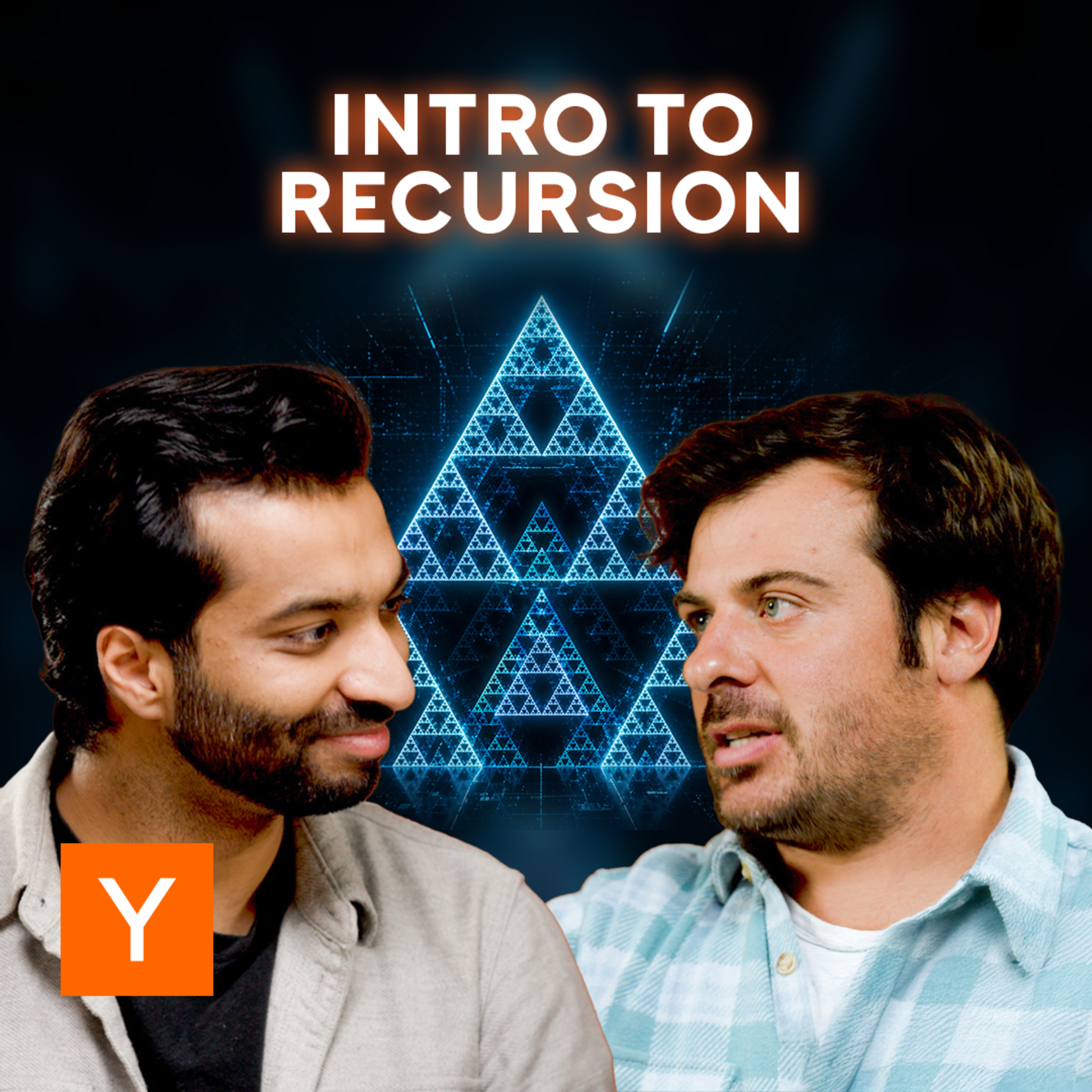
Beyond Bigger Models: Recursion As The Next Scaling Law In AI
1 May 202638 min<p>A 7-million parameter model outperforming models a thousand times its size on tasks like ARC Prize. That's what recursive reasoning unlocks.In this episode of Decoded, YC's Ankit Gupta and Francois Chaubard break down two recent papers on recursive AI models, HRMs and TRMs, that are achieving state-of-the-art results with a fraction of the parameters of today's largest models.They explain why standard LLMs hit a fundamental ceiling on certain reasoning tasks, how recursion at inference time gives small models the compute depth to break through it, and what happens when you combine these ideas with the power of large-scale foundation models.</p>
How to Build the Future: Demis Hassabis
29 Nis 202641 min<p>Demis Hassabis has had one of the most extraordinary careers in tech. He started as a chess prodigy and video game designer at 17 before getting a PhD in neuroscience and going on to found DeepMind. His lab cracked Go, solved protein structure prediction with AlphaFold, and then gave it away free to every scientist on earth. That work won him the 2024 Nobel Prize in Chemistry. Today he leads Google DeepMind, pushing toward the same goal he set as a teenager: AGI. On this special live episode of How to Build the Future, he sat down with YC's Garry Tan to talk about what still needs to happen to get us to AGI, his advice for founders on how to stay ahead of the curve and what the next big scientific breakthroughs might be. Chapters:00:00 — Intro00:46 — Demis Hassabis: From Chess Prodigy to DeepMind01:48 — What’s Missing Before We Get To AGI?03:36 — Why Memory Is Still Unsolved06:14 — How AlphaGo Shaped Gemini08:06 — Why Smaller Models Are Getting So Powerful10:46 — The 1000x Engineer12:40 — Continual Learning and the Future of Agents13:32 — Why AI Still Fails at Basic Reasoning15:33 — Are Agents Overhyped or Just Getting Started?18:31 — Can AI Become Truly Creative?20:26 — Open Models, Gemma, and Local AI22:26 — Why Gemini Was Built Multimodal24:08 — What Happens When Inference Gets Cheap?25:24 — From AlphaFold to the Virtual Cells28:24 — AI as the Ultimate Tool for Science30:43 — Advice for Founders33:30 — The AlphaFold Breakthrough Pattern35:20 — Can AI Make Real Scientific Discoveries?37:59 — What to Build Before AGI ArrivesApply to Y Combinator: https://www.ycombinator.com/applyWork at a startup: https://www.ycombinator.com/jobs</p>
The $9B Startup That Wants to Create a Billion New Developers
25 Nis 202639 min<p>Replit is the leading no-code app builder for consumers and enterprise, letting anyone with an idea build real, deployed software using natural language. The company just raised a $400 million Series D at a $9 billion valuation.In this episode of Founder Firesides, co-founder and CEO Amjad Masad sat down with YC's Andrew Miklas to talk about Replit's 10-year journey from browser IDE to vibe coding platform, why the people getting the most value aren't traditional developers but founders and domain experts closest to the problem, and what Agent 4 unlocks with parallel agents, built-in design, and the ability to run your entire company on Replit.</p>
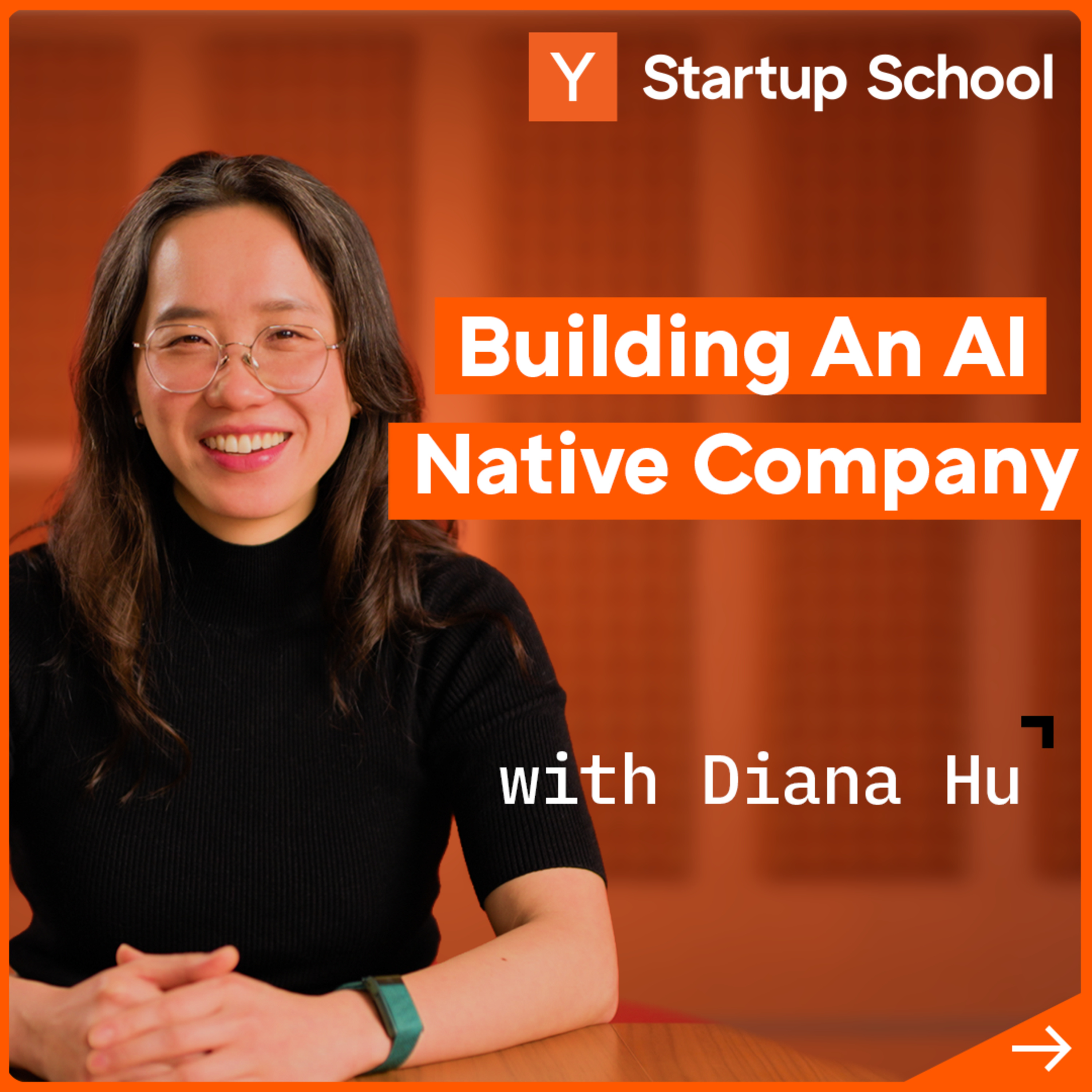
The Playbook For Building An AI Native Company
24 Nis 202610 min<p>AI isn't just making teams more productive. It's changing how companies should be built.</p><p>In this episode of Startup School, YC Partner Diana Hu explains what it means to build an AI-native company, where AI isn't just a tool but the operating system your company runs on.</p><p>She breaks down how to make your company queryable so agents can improve across every function, why management hierarchies break down when an intelligence layer replaces human middleware, and why early-stage founders have a massive edge in building this way from day one. </p>
Stripe Head of Design Katie Dill Breaks Down Their New Website
22 Nis 202644 min<p>Even the most successful websites eventually need a redesign. Take Stripe for example. After six years with the same homepage, they recently unveiled a brand new site that reflects how the fintech giant has evolved over the past few years. So when is the time right for a new landing page? And what should you prioritize in the redesign? In this episode of Design Review YC’s Aaron Epstein sat down Stripe’s Head of Design Katie Dill to pull the curtain back on their high profile redesign and to discuss how their team is evolving in a world dominated by new AI design tools.</p><p><br></p>
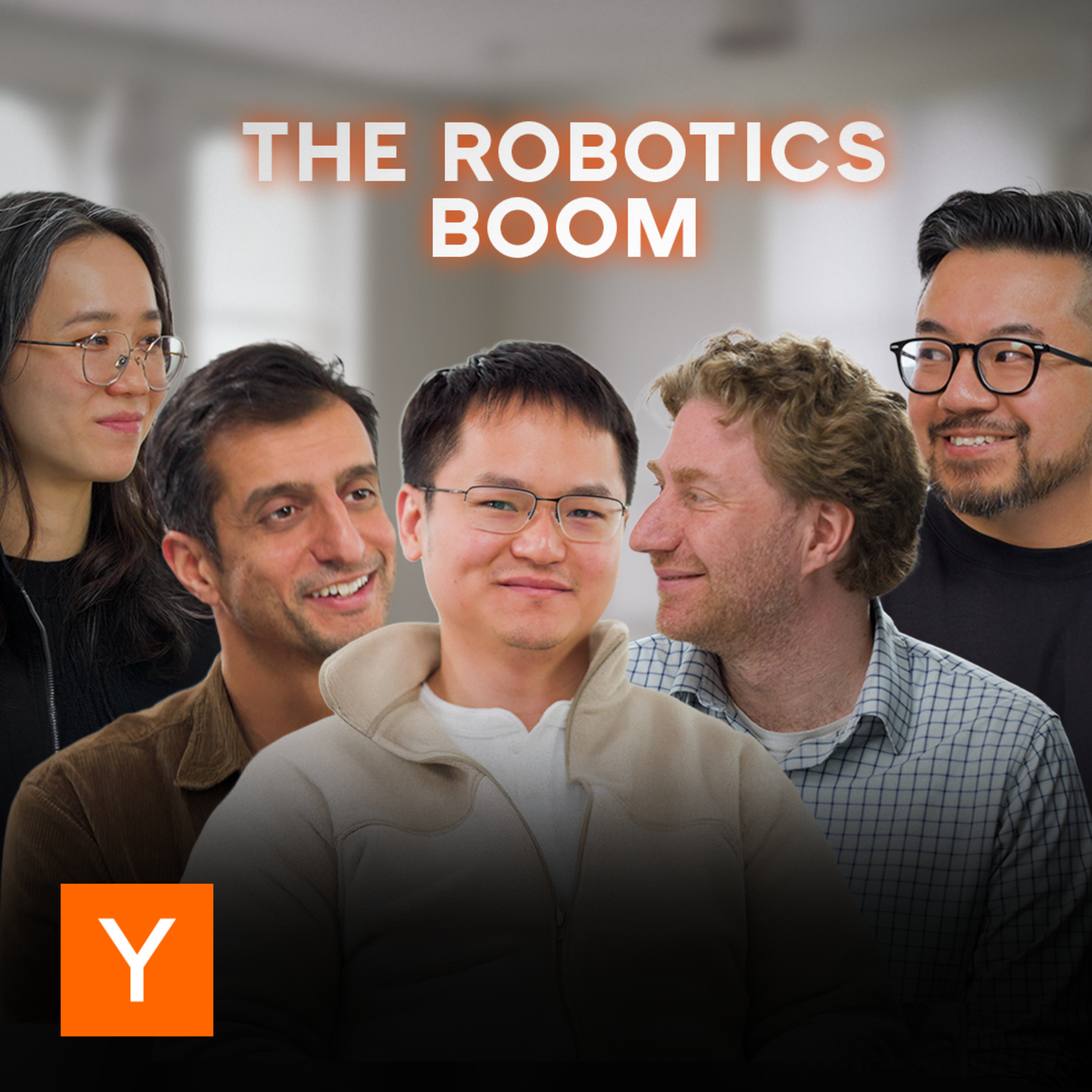
The GPT Moment for Robotics Is Here
16 Nis 202649 min<p>Physical Intelligence is building a foundation model that can control any robot to do any task — what the team describes as the GPT-1 moment for robotics.</p><p>The company's cross-embodiment approach trains across many different robot platforms, and recent results show tasks being performed zero-shot that last year required hundreds of hours of data collection.</p><p>In this episode of The Lightcone, co-founder Quan Vuong sat down with Garry, Jared, Diana, and Harj to talk about why robotics is finally ready for its scaling moment, how PI runs its models in the cloud rather than on-device, and the playbook for what Quan sees as a Cambrian explosion of vertical robotics companies.</p>

This Startup Wants To Catch Cancer Before It Spreads
6 Nis 202621 min<p>1 in 11 babies born in America this year will be screened by a genetic test that didn't exist a decade ago.Biotech startup BillionToOne turned a simple but radical idea—detecting rare fragments of fetal DNA in a mother's blood—into one of the most widely used prenatal tests in the U.S. And they're not stopping there. The same approach could unlock something even bigger: early-stage cancer detection from a blood test, a breakthrough that could one day save millions of lives.In this episode of Hard Tech, YC's Jared Friedman sits down with David Tsao and Oguzhan Atay to hear how they went from half a lab bench to a $4B biotech company—and why they believe this is just the beginning of what their technology can do.</p><p><br></p>
This Startup Secretly Detects Fraud For Fortune 500s
31 Mar 202631 min<p>In this episode of Founder Firesides, YC Managing Partner Jared Friedman talks to Karine Mellata, co-founder of Variance (W23), who is coming out of stealth and announcing their $21 million Series A. </p><p><br></p><p>Variance builds purpose-built AI agents for risk and compliance — automating fraud detection, content review, and identity verification for Fortune 500 companies and platforms like GoFundMe. They discuss why Variance built in the shadows for three years, detecting state-sponsored fraud rings, and the accident that nearly ended the company.</p>
How François Chollet Is Building A New Path To AGI
27 Mar 202657 min<p>François Chollet has spent years asking a different question than most of the AI world. Instead of scaling what already works, he’s trying to understand what intelligence actually is—and how to build it from first principles. In this episode of Lightcone, he traces that path from his early work on deep learning to the creation of the ARC prize, and the launch of ARC V3, a new benchmark designed to measure something deeper than performance: the ability to learn, adapt, and reason efficiently in entirely new environments. He explains why today’s systems may be hitting limits, what recent breakthroughs really mean, and why reaching true general intelligence may require a fundamentally different approach.00:00 - AGI by 2030?00:31 - Introducing Ndea: A New Path Beyond Deep Learning01:08 - A New ML Paradigm 01:30 - Replacing neural nets with compact symbolic programs03:04 - Why Ndea Isn’t Competing With Coding Agents05:20 - Why Everyone Might Be Wrong About Scaling LLMs07:22 - Why Coding Agents Suddenly Work So Well08:50 - The Limits of LLMs in Non-Verifiable Domains10:48 - What AGI Actually Means (And Why Most Definitions Are Wrong)13:30 - Why Deep Learning Hits a Wall 14:00 - ARC’s Origin Story18:20 - ARC Benchmarks Explained: From V1 to V322:49 - The RL Loop Powering Coding Agents Today27:03 - ARC-AGI V3: Measuring “Agentic Intelligence”31:14 - Inside the ARC Game Studio35:31 - Could AGI Fit in 10,000 Lines of Code?44:01 - Building Ndea: From Idea to Compounding Research Stack46:46 - The Future of ARC: Benchmarks That Evolve With AI47:21 - Why There’s Still Huge Opportunity for New AI Paradigms53:37 - How to Build a Breakout Open Source Project - Lessons From Kera56:39 - Advice For How To Think About AIApply to Y Combinator: https://www.ycombinator.com/applyWork at a startup: https://www.ycombinator.com/jobs</p>

Inside The Startup Reinventing America’s Trillion Dollar Chemical Industry
20 Mar 202613 min<p>Solugen is reinventing the trillion-dollar chemical manufacturing industry by combining biology and chemistry in a new way. In this episode of Hard Tech, YC's Jared Friedman visits co-founders Gaurab Chakrabarti and Sean Hunt at their Houston HQ to see how they went from a $7,000 PVC reactor to a billion-dollar company competing with industry giants. They cover the breakthrough behind their enzymatic + catalytic production, how they found their first customers, and why starting small and staying close to customers let them win in a capital-intensive industry.</p><p><br /></p><p>Chapters:00:00 - A New Kind of Chemical Plant01:02 - Fusing Biology + Chemistry In a New Way02:23 - The Eureka Moment: From Pancreatic Cancer to Hydrogen Peroxide03:30 - Using A Sugar Feedstock Over Oil and Gas 04:22 - Proving Enzymes Work at Scale In Chemical Manufacturing05:16 - The $7K PVC Reactor06:44 - Finding First Customers at YC08:12 - What The Co-founders Got Out of YC09:33 - Seed Round to Bio Forge10:32 - Scaling to a Full-Size Plant (Bioforge)11:57 - The Future of American Manufacturing12:29 - The Next Decade of Solugen</p><p><br /></p><p>Apply to Y Combinator: https://www.ycombinator.com/applyWork at a startup: https://www.ycombinator.com/jobs</p>
Building A Global AI Startup From India
16 Mar 202640 min<p>In this episode of The Lightcone, we talk with Mukund and Madhav Jha, the founders of Emergent - an AI platform that lets anyone build and ship production-ready software. In just eight months, users have created more than 7 million apps on Emergent, with the number doubling in just the last 45 days. We discuss how they built one of the most powerful AI coding agents, why they focused on non-technical users and what it's like building in India for a global audience.</p><p><br></p><p>Apply to Y Combinator: https://www.ycombinator.com/apply</p><p><br></p><p>Chapters:</p><p>00:00 - Intro</p><p>01:06 - What Is Emergent?</p><p>01:18 - Founder Backstory</p><p>02:09 - From AI Testing to General Coding Agents</p><p>02:52 - Getting Ahead of the Market</p><p>04:18 - The Pivot to Non-Technical Users</p><p>05:22 - Why Second Movers Can Win in AI</p><p>09:04 - Building for Production, Not Just Prototypes</p><p>18:21 - Live Demo: Building Apps with Emergent</p><p>24:40 - How Emergent Hires and Runs a Lean Team</p><p>29:04 - Is SaaS Dead? The Rise of Personalized Software</p><p>34:04 - The Future: Niche Apps, Solo Builders and AI Agency</p>

The Future Of Brain-Computer Interfaces with Science's Max Hodak
9 Mar 202653 min<p>YC alum Max Hodak is the co-founder of Neuralink and founder of Science, a company building brain-computer interfaces that can restore sight.Science has developed a tiny retinal implant that stimulates cells in the eye to help blind patients see again. More than 40 patients have already received the treatment in clinical trials, including one who recently read a full novel for the first time in over a decade.In this episode of How to Build the Future, Max joined Garry to discuss how BCIs work, what it takes to engineer the brain, and why brain-computer interfaces may become one of the most important technologies of the next decade.</p>
How To Avoid AI Design Slop
6 Mar 202637 min<p>As no-code design tools become more common, so do the pitfalls. You know what they look like - the purple gradients, annoying hover effects, sections that fade as you scroll. So how do you avoid a site that feels vibe coded while still taking advantage of these new tools? In this episode of Design Review, YC’s Aaron Epstein is joined by Visiting Partner Raphael Schaad, the founder and designer of Cron (now Notion Calendar). Together they’ll review user submitted sites with an eye for how to leverage these tools and avoid the common vibe coding mistakes.</p>
The Fastest Path To Super Intelligence
27 Şub 202620 min<p>Poetiq is a new startup founded by former DeepMind researchers that recently achieved a major jump on the ARC-AGI and Humanity's Last Exam benchmark by layering a recursive self-improvement system on top of existing models. In this episode of Lightcone, Poetiq's Founder & CEO Ian Fischer joined us to discuss how small teams can build “reasoning harnesses” that outperform base models, what that means for startups and why automating prompt engineering may be one of the most powerful levers in AI today.Chapters:00:00 – Intro00:40 – What Is Poetiq?01:07 – Recursive Self-Improvement Explained02:07 – The Fine-Tuning Trap02:59 – “Stilts” for LLMs03:14 – Recursive Self-Improvement vs. Fine-Tuning05:05 – Taking the Top Spot on ARC-AGI06:37 – Beating Claude on Humanity’s Last Exam08:40 – How the Meta-System Works10:26 – Beyond RL: A New S-Curve11:32 – Automating Prompt Engineering13:37 – From 5% to 95% Performance14:50 – Early Access & Putting Your Agent on Stilts16:17 – From YC Founder to DeepMind Researcher18:29 – Advice for Engineers in the AI EraApply to Y Combinator: https://www.ycombinator.com/applyWork at a startup: https://www.ycombinator.com/jobs</p>

The AI Agent Economy Is Here
21 Şub 202623 min<p>With the takeoff of OpenClaw and MoltBook, a new agent-driven economy is taking shape.</p><p><br></p><p>In this episode of the Lightcone, we took a look at the explosive growth of AI dev tools and whether the time has come for builders to make something agents want.</p>
Inside Claude Code With Its Creator Boris Cherny
17 Şub 202650 min<p>A very special guest on this episode of the Lightcone! Boris Cherny, the creator of Claude Code, sits down to share the incredible journey of developing one of the most transformative coding tools of the AI era. </p>

The New Way To Build A Startup
14 Şub 20268 min<p>In the AI era, startups aren't winning by hiring faster — they're winning by automating as many internal functions as possible. In this episode of Main Function, Garry breaks down how tiny teams are beating companies 20x their size by building automations into every workflow, from engineering to ops to customer support.</p>
OpenClaw And The Future Of Personal AI Agents
7 Şub 202623 min<p>You’ve probably already heard all about OpenClaw (formerly Clawdbot/Moltbot). The viral sensation is an open-source AI assistant that runs on your own device, connects with messaging apps you already use, and goes beyond chat to actually execute tasks like managing your email, calendars, files, workflows, and more. Now meet the man behind it. YC’s Raphael Schaad sat down with Peter Steinberger, the creator of OpenClaw, to discuss the “aha” moment behind the viral personal AI agent, why local-first agents could replace many of today’s apps, and how personal agents will reshape the future of software.</p><p>Chapters:</p><p>00:00 – OpenClaw takes over the internet</p><p>00:44 – Life after going viral</p><p>01:28 – Why OpenClaw took off, what sets it apart</p><p>02:56 – Bots talking to bots (and hiring humans)</p><p>04:11 – From “God AI” to swarm intelligence</p><p>05:07 – Peter’s original “aha” moment</p><p>06:38 – Rebuilding the agent as a conversation</p><p>07:38 – The moment it exceeded expectations</p><p>10:21 – Are apps going to disappear?</p><p>12:31 – Memory, data silos, and ownership</p><p>14:39 – The privacy reality of personal agents</p><p>15:05 – Letting the bot loose in public Discord</p><p>16:55 – Giving an agent a personality</p><p>18:19 – Contrarian building philosophy</p><p>20:09 – CLIs vs MCPs</p><p>21:28 – Building for humans first</p><p>21:46 – The road ahead</p><p>Apply to Y Combinator:<a href="https://www.youtube.com/redirect?event=video_description&redir_token=QUFFLUhqbTZ3OERsWV9JSi1YdHl5b2x6djc0Z0hXZWltd3xBQ3Jtc0tuYmNuUmhhOE9oSlpEeDJZR21HV3pZeXQwZGR0Q2RvbEhhWS1vTzBQTUVMcUxMaldGbWZBZkpuNlNfempOWThzLWcxaWJlVC1MSG5yM0ZIZzhLVTZTakpiUXh2dnBnZUlOSkwtOTM5NlhBa1FuUklIaw&q=https%3A%2F%2Fwww.ycombinator.com%2Fapply&v=qwmmWzPnhog"> https://www.ycombinator.com/apply</a></p><p>Work at a startup:<a href="https://www.youtube.com/redirect?event=video_description&redir_token=QUFFLUhqbDV6UUplM3ZfMW1td2RORWpfaXVHN1BpdWt0Z3xBQ3Jtc0ttX0VqQ1FNRXZuQ09wRlMxZGVBME41VFN2ellJYk9wbVlVeE54SFRnbW85LUdHa21yTUZ3aHZOME1UQkI0OFM0STdOajRKemxNVmhPM1drTWdrS2hkSnNOSEVhbllHdmRBaXVGb1JCOXc3N1RvVlVJcw&q=https%3A%2F%2Fwww.ycombinator.com%2Fjobs&v=qwmmWzPnhog"> https://www.ycombinator.com/jobs</a></p><p><br></p>

We're All Addicted To Claude Code
6 Şub 202646 min<p>Wondering why your maker-turned-manager suddenly seems distracted in meetings? Maybe they're addicted to coding agents! In this episode of Lightcone, Calvin French-Owen — a co-founder of Segment and former engineer on OpenAI's Codex team — joins us to talk about why coding agents suddenly feel so powerful, the differences between Codex, Claude Code, and Cursor, and what the future of work will look like.</p>
How To Get Your First Customers
14 Oca 20266 min<p>When you're starting out, it isn’t enough to just build a minimum viable product. You also need a minimum evolvable product - one that can adapt to the needs of those critical early customers. In this episode of Main Function, YC General Partner Ankit Gupta offers an update to the classic MVP playbook. He’ll outline strategies for getting your first customers, the power of adaptability and how feedback from early users will ultimately shape the future of your product and your company.</p><p>Apply to Y Combinator: https://www.ycombinator.com/apply</p><p>Work at a startup: https://www.ycombinator.com/jobs</p><p>Chapters:</p><p>00:00 – The Minimum Evolvable Product</p><p>00:46 – Finding the First Believers</p><p>01:29 – Counterintuitive Rules To Get Early Users</p><p>02:10 – Learn Fast, Don’t Fear Churn</p><p>02:52 – How Early Users Shape the Market You Enter</p><p>04:22 – Tesla Case Study</p><p>05:14 – How To Build To Evolve</p>

Inside The Startup Building Reusable Rockets
8 Oca 202616 min<p>Stoke Space is racing to build the world's first fully reusable rockets that can launch, survive reentry, and fly again and again. In this episode of Hard Tech, YC’s Aaron Epstein sits down with Stoke Space co-founders Andy Lapsa and Tom Feldman to find out why they chose to take on one of the hardest problems in rocket science, how an obsession with efficiency gives them an edge, and what full reusability could unlock for the future of spaceflight.</p><p>Apply to Y Combinator: https://www.ycombinator.com/apply</p><p>Work at a startup: https://www.ycombinator.com/jobs</p><p><br></p><p><br></p>

What Surprised Us Most In 2025
22 Ara 202530 min<p>2025 was the year AI stopped feeling chaotic and started feeling buildable. In this Lightcone episode, the YC partners break down the surprises of the year, from shifting model dominance to why the real opportunity is moving back to the application layer, and why the next wave of AI startups may be just getting started.</p>
How Intelligent Is AI, Really?
17 Ara 202512 min<p>ARC-AGI is redefining how to measure progress on the path to AGI - focusing on reasoning, generalization, and adaptability instead of memorization or scale.</p><p><br></p><p>During this month's NeurIPS 2025 conference, YC's Diana Hu sat down with ARC Prize Foundation President Greg Kamradt to find out why most AI benchmarks fail, how ARC-AGI reveals the limits of today’s models, and why measuring intelligence may be harder than building it.</p>
The End of the Designer–Engineer Divide
12 Ara 202542 min<p>Head of Design Ryo Lu helped transform Cursor from a feature-layer on top of VS Code into one of the world's leading AI code editors.He joins YC's Aaron Epstein on Design Review to talk about the path that brought him to Cursor, how rapid prototyping reshaped the core product and how he's breaking down the barriers that once separated designers and coders.</p>
From Pivot Hell To $1.4 Billion Unicorn
10 Ara 202539 min<p>In just a few years, James Hawkins took PostHog from an idea hacked together right before YC's W20 deadline to a unicorn powering product analytics for thousands of teams.</p><p><br></p><p>He joins YC's Brad Flora to talk about surviving six months of "pivot hell," why open-source analytics was the breakthrough, and how PostHog grew from fighting for its first users to launching full product lines—plus what he's learned about momentum, staying close to customers, and using transparency and humor to build a company that stands out.</p>

The Best Consumer Startup Ideas Were "Impossible" Until Now
28 Kas 202540 min<p>Every major shift in consumer tech has a moment when it suddenly becomes accessible to millions. Michael Mignano helped spark one of those moments with Anchor, making podcast creation something anyone could do with a tap. Now at Lightspeed, he sees AI bringing a similar leap to music, media, and everyday apps.In this conversation, he and Garry trace the arc from the early days of social audio to today's consumer AI boom—and dig into what founders should focus on as the next generation of creative tools takes shape.</p>
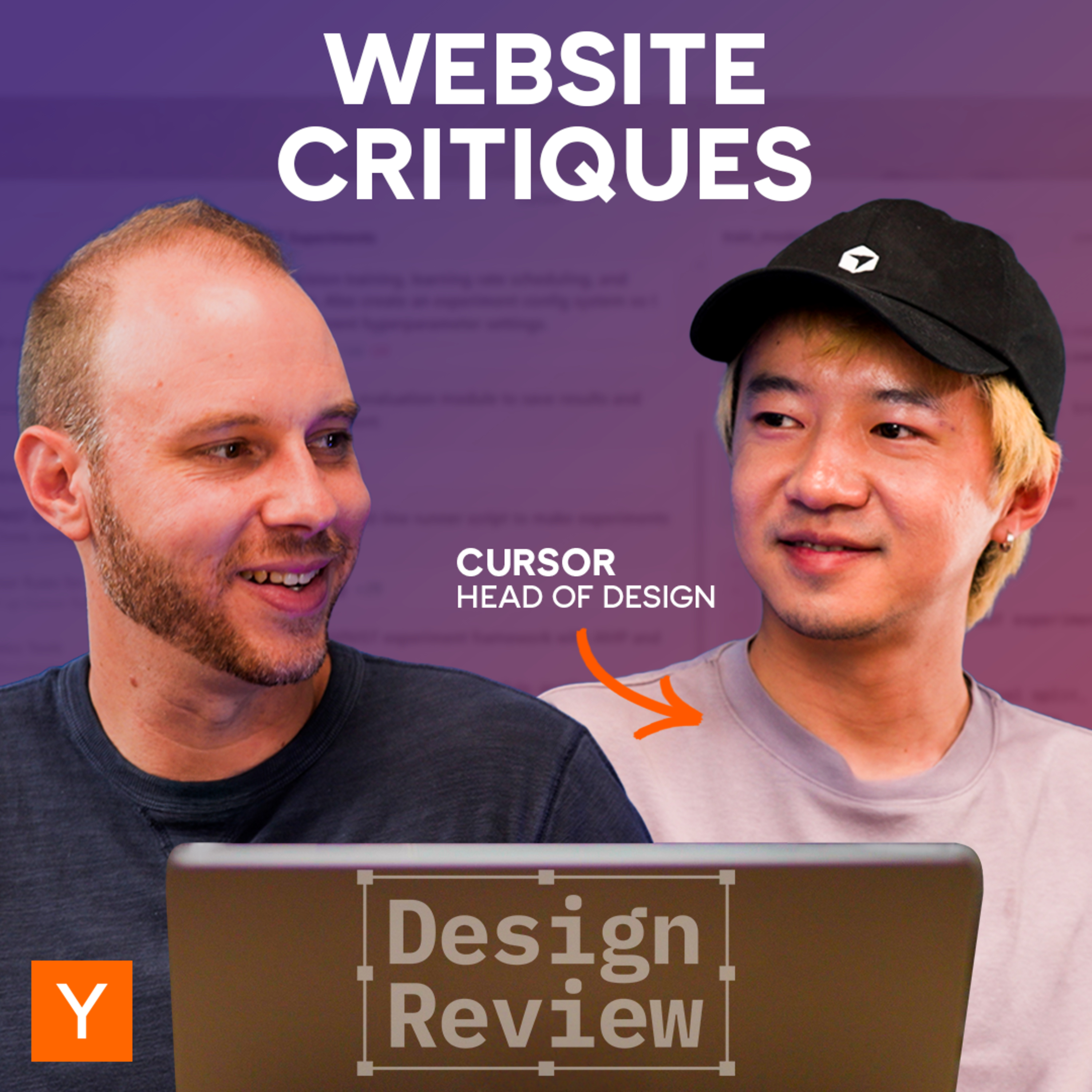
Cursor Head of Design Reviews Startup Websites
20 Kas 202536 min<p>Cursor Head of Design Ryo Lu has spent his career at the intersection of design and engineering—from building fan sites as a kid to designing products at Stripe, Asana, and Notion. Now he's rethinking how software itself gets made.</p><p><br></p><p>On this episode of Design Review, Ryo joins YC's Aaron Epstein to break down how great product websites communicate what a company does. They walk through sites from early-stage startups, calling out the small choices in structure, clarity, and brand that help users understand a product instantly — and the ones that get in the way.</p>

Inside The Startup Launching AI Into Space
13 Kas 202513 min<p>Starcloud recently made history by launching a satellite with an NVIDIA H100 into orbit — the first time a GPU that powerful has ever operated in space. It's the first step toward building AI data centers in orbit, powered by continuous sunlight and cooled by radiating heat into deep space.Their approach could one day rival the world's biggest data centers while using less energy, zero fresh water, and far lower emissions.In this episode of Hard Tech, YC's Aaron Epstein visits Starcloud's HQ, where co-founders Philip Johnston, Ezra Feilden, and Adi Oltean explain how they built a working prototype in just 15 months — and why big tech is racing to space for AI compute.</p>
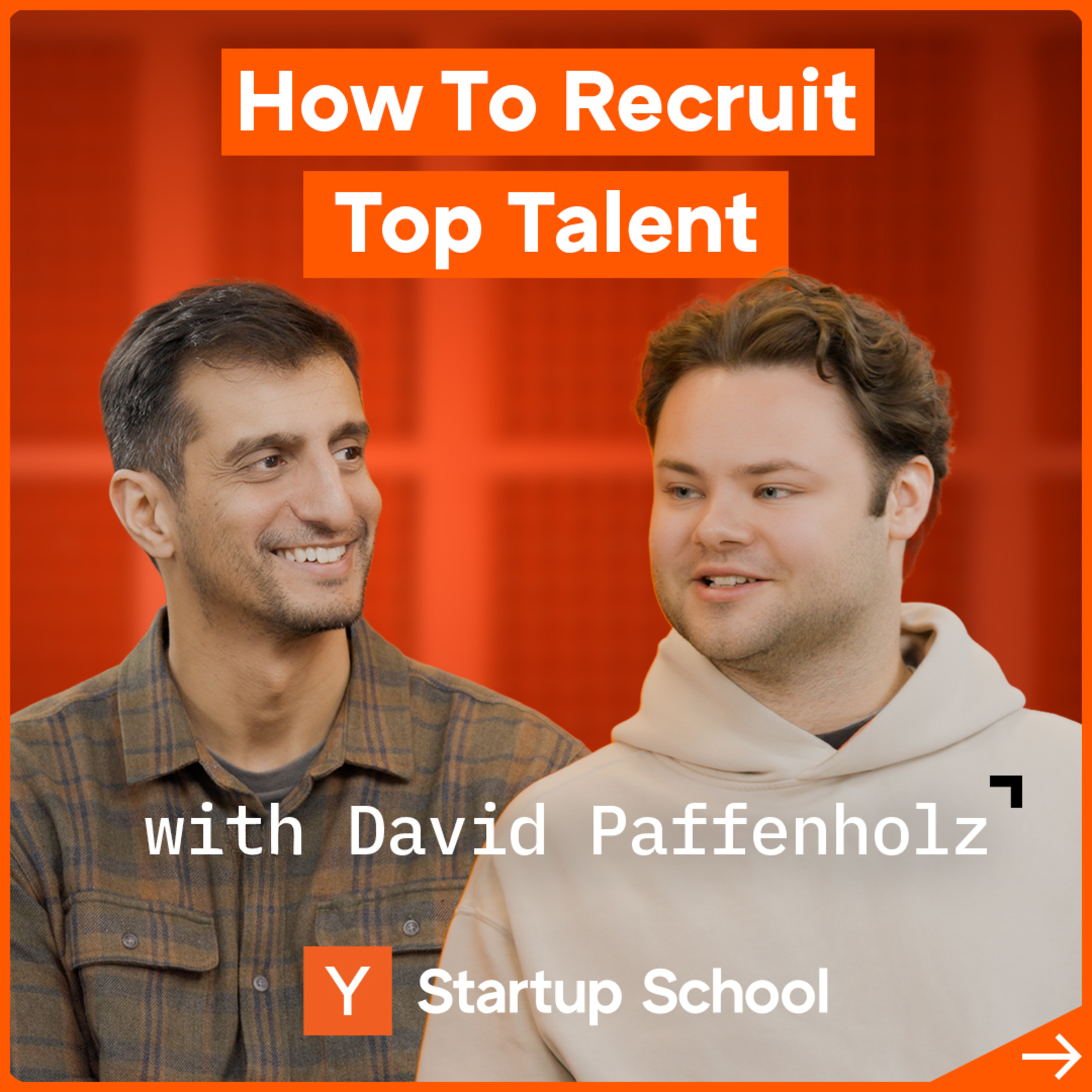
How To Recruit The Best Engineers And Sales Reps
7 Kas 202543 min<p>Most founders think hiring is about interviewing. But it's actually about selling.For Startup School, Juicebox co-founder & CEO David Paffenholz joins YC's Harj Taggar to share how early-stage founders can find, pitch, and close top engineering and sales talent— from crafting better outreach to winning great hires from Big Tech— even when you're an unknown startup.</p>

From Idea to $650M Exit: Lessons in Building AI Startups
28 Eki 202539 min<p>Jake Heller is the co-founder & CEO of Casetext, the AI legal startup behind CoCounsel, which was acquired by Thomson Reuters for $650 million.In his talk at AI Startup School on June 17th, 2025, he shared how his team did it—from picking the right idea to building AI products that actually work—and how founders can turn a cool demo into a reliable tool used by real customers.</p>