
 Відкрити в Hinto
Епізоди для вивчення англійської853
How do cats find their way home?
6 лист. 2017 р.26 min<p>“How on earth do cats find their way back to their previous home when they move house?" asks Vicky Cole from Nairobi in Kenya. </p><p>Our enduring love for our feline friends began when Egyptian pharaohs began to welcome domesticated moggies into their homes. Pictured reclining in baskets at the feet of royalty, pet cats soon became fashionable throughout society in Egypt. Today they are the most popular pet in the world, and home is definitely where their hearts lie. </p><p>"Whereas dogs are bonded to people, cats are bonded to place," explains zoologist Dr John Bradshaw. "It's very typical for them to try and find their way back to their old house when you move." </p><p>But how do they do it? And if their navigational skills are so good, why do they get lost? Prof Matthew Cobb reveals the super-senses that cats possess, and how to spot when your pet is deploying them.</p><p>Itchy and Scratchy "What is an itch and how does scratching stop it? Why does scratching some itches feel so good?!" asks Xander Tarver from West Sussex in England.</p><p>Our doctors set off to probe the mysteries of itch, and discover that this overlooked area of medicine is revealing surprising results about the human brain. From why itching is contagious to why scratching is pleasurable, we get under the skin of this medical mystery. </p><p>The programme features interviews with neuroscientist Prof Francis McGlone from Liverpool John Moores University and dermatologist Dr Brian Kim from the Center for the Study of Itch at Washington University. Yes, that is a real place.</p><p>If you have any Curious Cases for the team to solve please email <a href="mailto:curiouscases@bbc.co.uk">curiouscases@bbc.co.uk</a>.</p><p>Presenters: Adam Rutherford, Hannah Fry Producer: Michelle Martin</p><p>(Photo: Cat, Credit: Chris J Ratcliffe/Getty Images)</p>
How much of my body is bacteria?
30 жовт. 2017 р.26 min<p>Science sleuths Drs Rutherford & Fry take on everyday mysteries and solve them with the power of science. Two cases in this episode concerning the inner workings of our bodies, and not for the faint hearted! The Broken Stool "Science tells us that our body houses microbial organisms. Then how much our weight is really our weight? If I am overweight, is it because of my own body cells or excess microflora?" asks Ajay Mathur from Mumbai in India.</p><p>Adam bravely sends off a personal sample to the 'Map My Gut' project at St Thomas' Hospital to have his microbes mapped. Prof Tim Spector reveals the shocking results - a diet of fried breakfasts and fizzy drinks has left his guts in disarray. But help is at hand to makeover his bacterial lodgers.</p><p>Science writer Ed Yong, author of 'I Contain Multitudes', reveals how much our microbes weigh. We're just beginning to discover the vast array of vital functions they perform, from controlling our weight, immune system and perhaps even influencing our mood and behaviour. A Code in Blood "Why do we have different blood types?" asks Doug from Norfolk in the UK.</p><p>The average adult human has around 30 trillion red blood cells, they make up a quarter of the total number of cells in the body. </p><p>We have dozens of different blood groups, but normally we're tested for just two - ABO and Rhesus factor. Adam and Hannah delve into the gory world of blood and the early history of blood transfusions, to discover why we have blood groups and how they differ around the world.</p><p>Featuring interviews with Dr Jo Mountford, from the Scottish National Blood Transfusion Service and immunologist Dr Sheena Cruikshank from the University of Manchester.</p><p>If you have any Curious Cases for the team to solve please email <a href="mailto:curiouscases@bbc.co.uk">curiouscases@bbc.co.uk</a>.</p><p>Presenters: Adam Rutherford, Hannah Fry Producer: Michelle Martin</p><p>Image: Illustration of red blood cells in a blood vessel. Copyright: Science Photo Library</p>
Sydney Brenner: A Revolutionary Biologist
23 жовт. 2017 р.26 min<p>Sydney Brenner was one of the 20th Century’s greatest biologists. Born 90 years ago in South Africa to impoverished immigrant parents, Dr Brenner became a leading figure in the biological revolution that followed the discovery of the structure of DNA by Crick and Watson, using data from Rosalind Franklin, in the 1950s. Brenner’s insights and inventive experiments laid foundation stones for new science of molecular biology and the genetic age in which we live today, from the Human Genome Project to gene editing. Sydney Brenner talks to biologist and historian Matthew Cobb of the University of Manchester about this thrilling period in biological science, and Dr Brenner’s 20 year-long collaboration with DNA pioneer Francis Crick: a friendship which generated some of their most creative research. </p><p>Producer: Andrew Luck-Baker</p><p>Picture: Sydney Brenner, Credit: Cold Spring Harbor Lab Archive</p>
SOS Snail
16 жовт. 2017 р.27 min<p>This is a big story about a little snail. Biologist Helen Scales relates an epic tale that spans the globe and involves calamity, tragedy, extinction and we hope, salvation. It stars the tiny tree-dwelling mollusc from French Polynesia, Partula, a snail that has captivated scientists for centuries. Like Charles Darwin studied finches on the Galapagos, Partula became an icon of evolution because, in the living laboratories of the Pacific islands, it had evolved into multiple species. But a calamity drove Partula to extinction, when a botched biological control, the predatory Rosy Wolf Snail, was introduced. It was supposed to eat another problem mollusc, but in a cruel twist, devoured tiny Partula instead. An international rescue mission was scrambled to save a species and from just one or two rescued individuals, populations of this snail species have been built up over thirty years in captive breeding programmes in zoos around the world. And now, in the nailbiting sequel, we track Partula’s journey home.</p><p>Picture: Reintroduced Partula dispersing on Moorea in French Polynesia, Credit: ZSL</p><p>Presenter: Helen Scales Producer: Fiona Hill</p>
Indian Science – The Colonial Legacy
9 жовт. 2017 р.26 min<p>For more than 200 years Britain ruled India, bringing many aspects of British culture to India - including European science developed during the enlightenment. However centuries earlier India had already pioneered work in astronomy, mathematics and engineering. </p><p>How was India’s scientific progress affected by colonialism? Did British rule hold the country back, or did it drive it forward? Presented by Angela Saini.</p><p>Picture: The Indian Space Research Organisation (ISRO) communication satellite GSAT-19, carried onboard the Geosynchronous Satellite Launch Vehicle (GSLV-mark III ), launches at Sriharikota on June 5, 2017, Credit: ARUN SANKAR/AFP/Getty Images</p>
India's Ancient Science
2 жовт. 2017 р.26 min<p>We go behind the scenes of a new exhibition on India at London’s Science Museum. What can historical objects tell us about India’s rich, and often hidden scientific past? We look at the influential mathematics, metallurgy and civil engineering of ancient India.</p><p>The exhibition also contain artefacts from India’s time under the British Empire. We ask how the many years of colonial rule shaped the more recent scientific development of India. </p><p>Science journalist Angela Saini presents.</p><p>Image: Bakhshali manuscript, Credit: Bodleian Library</p>
Africa’s Great Green Wall
25 вер. 2017 р.26 min<p>Can Africa’s Great Green Wall beat back the Sahara desert and reverse the degrading landscape? The ambitious 9 miles wide and 5000 miles long line of vegetation will stretch all the way from Dakar in the west to Djibouti in the east. </p><p>Thomas Fessy is in Senegal where the wall has already begun to evolve into a series of forests and garden communities. He meets the planners, planters, ecologists and local villagers to hear how its early progress is reversing years of poor land use, turning nomads back to farmers, empowering women and creating healthy ecosystems for rain fed agriculture.</p><p> But can it meet its ambition to stabilize an unstable region, reverse the growing trend of migration, fight the effects of climate change and ensure this big African dream doesn’t die in the sand?</p><p>Picture: The Great Green Wall, credit: BBC </p><p>Producer Adrian Washbourne</p>
Internet of Things
18 вер. 2017 р.27 min<p>Can we Control the Dark Side of the Internet?</p><p>The Internet is the world's most widely used communications tool. It’s a fast and efficient way of delivering information. However it is also quite dumb, neutral, treating equally all the data it passes around the world. From data that forms scientific research papers, the wealth of social media to keep us all connected with friends and relatives, entertainment or material we would rather not see- from political propaganda to horrific violence, the Internet makes no distinction. </p><p>Is it time to change that? And can we? In this programme Aleks Krotoski looks at whether it’s possible to use technological fixes to regulate the internet or whether a more political approach is needed to governance of this vital but flawed communications medium.</p><p>Picture: Human Hand Using Application on Mobile Phone, Credit: Onfokus</p>
Dark Side of the World Wide Web
11 вер. 2017 р.27 min<p>With the coming of the World Wide Web in the 1990s internet access opened up to everybody, it was no longer the preserve of academics and computer hobbyists. Already prior to the Web, the burgeoning internet user groups and chat rooms had tested what was acceptable behaviour online, but access was still limited. </p><p>Aleks Krotoski asks whether the Web through enabling much wider use of the internet is the villain of the piece in facilitating not just entertainment and commerce, but all aspects of the darker side, from malicious computer hacking attacks, worms and viruses, to new channels for criminality, online extortion and identity theft.</p><p>(Photo: Internet sign. Credit: code6d)</p>
The Origin of the Internet
4 вер. 2017 р.27 min<p>Just how did the Internet become the most powerful communications medium on the planet, and why does it seem to be an uncontrollable medium for good and bad? With no cross border regulation the internet can act as an incredible force for connecting people and supporting human rights and yet at the same time convey the most offensive material imaginable. It has become the most useful research tool on earth but also the most effective way of delivering threats to the security of governments, the health service and on a personal level our own identities.</p><p>In this series Aleks Krotoski unravels the complexity of the internet, meeting the people who really invented it, looking behind the myths and cultural constructs to explain what it actually is and how it came to exist outside of conventional regulation. We’ll ask whether the nature of the net itself really is cause for concern - and if so what can be done to reign in the negatives of the internet without restricting the positives? </p><p>In this first episode we go back to the days before the internet to look at the cultural and technological landscape from which it grew, and unravel some of the key moments - now lost in time and obscured by technology folklore, which mark when the internet lost its innocence.</p><p>Picture: Mechanical computer keyboard blurred, credit: OSchaumann/Getty</p>
Silicon - The World's Building Block
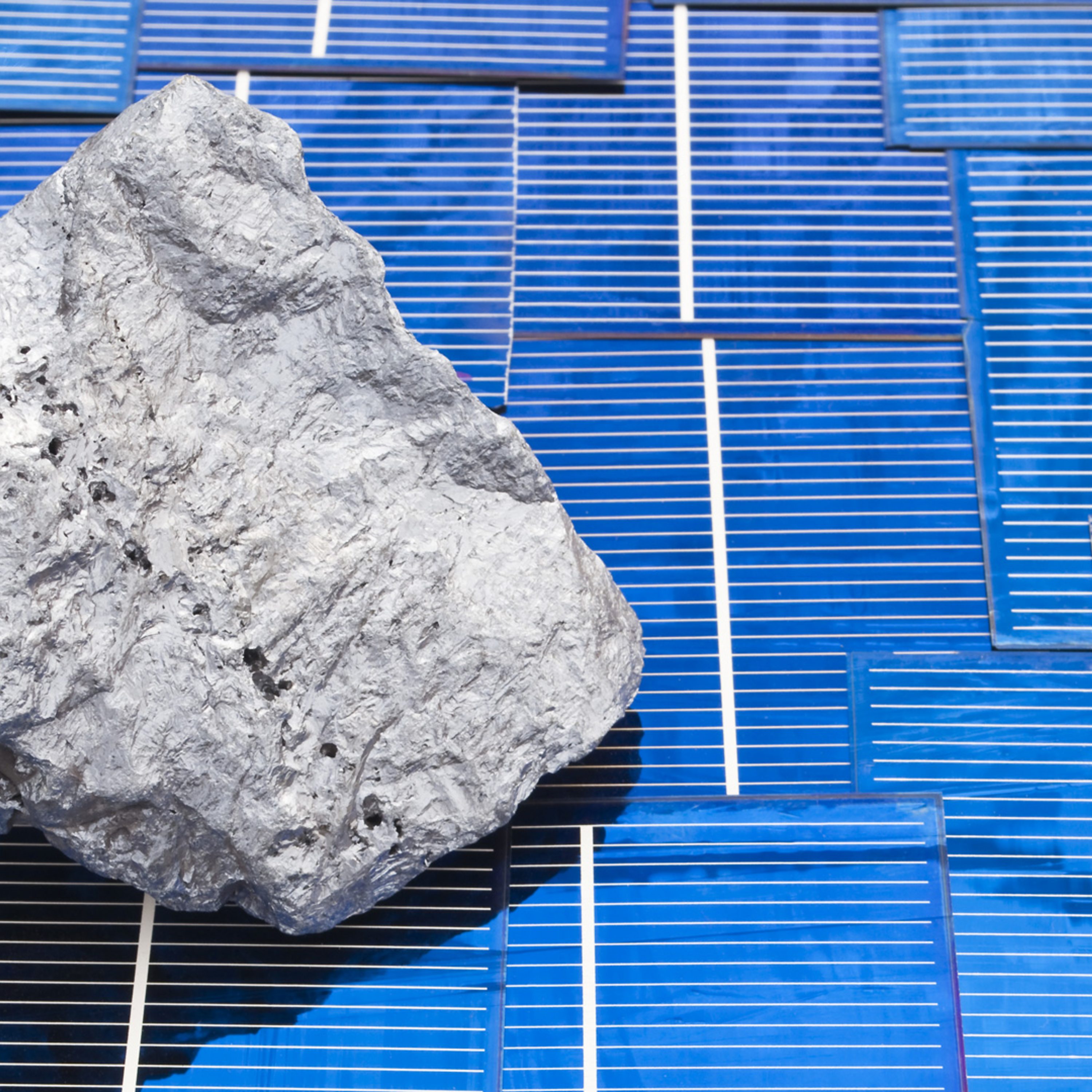
28 серп. 2017 р.27 min<p>Silicon is literally everywhere in both the natural and built environment, from the dominance of silicate rocks in the earth crust, to ubiquitous sand in building materials and as the basis for glass. </p><p>We've also harnessed silicon's properties as a semiconductor to build the modern electronics industry - without silicon personal computers and smartphones would simply not exist.</p><p>Silicon is also found widely across the universe. It is formed in stars, particularly when they explode. And the similarities between how silicon and carbon form chemical bonds has led many to wonder whether there could be silicon based life elsewhere - perhaps in some far flung part of the galaxy where carbon is not as abundant as here on earth. </p><p>As well as discussing the potential for silicon based life on other planets, Birkbeck University astrobiologist Dr Louisa Preston considers the varied uses of silicon here on earth, from its dominance in our built environment to its driving role in artificial intelligence and its ability to harness the sun's energy.</p><p>Image: Lump of silicon on solar panels Credit: wloven/Getty Images</p>
The Day the Sun Went Dark
21 серп. 2017 р.27 min<p>For the first time in almost 100 years the USA is experiencing a full solar eclipse from coast to coast on August 21st 2017.</p><p>Main image: Totality during the solar eclipse at Palm Cove on November 14, 2012 in Palm Cove, Australia. Credit: Ian Hitchcock / Getty Images</p>
Carbon - the backbone of life
14 серп. 2017 р.27 min<p>Carbon is widely considered to be the key element in forming life. It's at the centre of DNA, and the molecules upon which all living things rely.</p><p>Monica Grady, Professor of Planetary Science at the Open University, explores the nature of carbon, from its formation in distant stars to its uses and abuses here on earth. </p><p>She looks at why it forms the scaffold upon which living organisms are built, and how the mechanisms involved have helped inform the development of new carbon based technology, and products - from telephones to tennis rackets.</p><p>One form of carbon is graphene which offers great promise in improving solar cells and batteries, and introducing a whole new range of cheaper more flexible electronics.</p><p>Carbon is also the key component of greenhouse gases, carbon dioxide and methane. To counter some of the effects of man-made climate change, Scientists are now developing novel ways to speed up this mechanism - using waste materials created from mining and industry.</p><p>Monica Grady also looks to space, and the significance of carbon in the far reaches of the universe. There is lots of carbon in space, some in forms we might recognise as the precursors to molecules. As elemental carbon seems to be everywhere what are the chances of carbon based life elsewhere?</p><p>Image: Steam and exhaust rise from the chemical company Oxea (front) and the coking plant January 6, 2017 in Oberhausen, Germany. Photo by Lukas Schulze Getty Images</p>
And then there was Li
7 серп. 2017 р.27 min<p>From the origins of the universe, though batteries, glass and grease to influencing the working of our brains, neuroscientist Sophie Scott tracks the incredible power of lithium.</p><p>It's 200 years ago this year that lithium was first isolated and named, but this, the lightest of all metals, had been used as a drug for centuries before. </p><p>From the industrial revolution it proves its worth as a key ingredient in glass and grease, and as the major component in lithium ion batteries it powers every smartphone on the planet. </p><p>In mental health lithium has proved one of the most effective treatments. And its use to treat physical ailments is now making a comeback.</p><p>We explore how the chemistry of lithium links all these apparently unrelated uses together.</p><p>Main Image: Lights from mobile phones in Bucharest on February, 2017. Credit: ANDREI PUNGOVSCHI / AFP / Getty Images )</p>
Oxygen: The breath of Life
1 серп. 2017 р.27 min<p>Oxygen appeared on Earth over two billion years ago and life took off. Now it makes up just over a fifth of the air. Trevor Cox, professor of acoustic engineering at the University of Salford, England, tells the story of oxygen on Earth and in space. </p><p>Without oxygen, there would be no life on Earth, yet it was not discovered until late in the 18th Century. During the Great Oxidation Event, three billion years ago, cyanobacteria, thought to be the earliest forms of life on our planet, started to photosynthesise and these tiny creatures were responsible for putting the oxygen into our atmosphere, so we can breathe today. But it is not just for breathing. Ozone is three atoms of oxygen, and when it is in the stratosphere it stops harmful UVB rays from the sun reaching us. And if we are ever to leave our home planet, we will need to find a way to generate enough oxygen to keep us alive. </p><p>Trevor visits the Science Museum in London, to discover how astronauts on the space station get their oxygen. Trevor Cox is not only an acoustic engineer, he also plays the saxophone. When he finds out the role that oxygen, in the air, has on the sound of his playing he gets a surprise.</p><p>(Photo: Hovering clouds near Nagqu, approx 4,500 meters above sea level, north of Lhasa on the Tibetan plateau. Credit: Frederic J Brown/ AFP/Getty Images)</p>
Mercury - Chemistry's Jekyll and Hyde
24 лип. 2017 р.31 min<p>The most beautiful and shimmering of the elements, the weirdest, and yet the most reviled.</p><p>Chemist Andrea Sella tell the story of Mercury, explaining the significance of this element not just for chemistry, but also the development of modern civilisation. </p><p>It's been a a source of wonder for thousands of years - why is this metal a liquid? and what is its contribution to art, from the Stone Age to the Renaissance? </p><p>We look at how Mercury is integral to hundreds of years of scientific discoveries, from weather forecasting to steam engines and the detection of atomic particles it has a key role.</p><p>However Mercury is highly toxic in certain forms and ironically the industrial processes it helped create have led to global pollution which now threatens fish, wildlife and ourselves. </p><p>We ask is it time to say goodbye to Mercury?</p><p>Picture: Hg, mercury metal drops, credit: AlexeyVS/Getty Images</p>
Eating Well in Lyon: Healthy Diets to prevent Bowel Cancer
17 лип. 2017 р.27 min<p>Anu Anand is in Lyon, looking at what we eat and drink and the risk of bowel cancer</p>
Catching Prostate Cancer Early in Trinidad
10 лип. 2017 р.27 min<p>Anu Anand on detecting and treating prostate cancer in Trinidad and Tobago.</p>
The USA’s Deadly Racial Divide: Black Women & Breast Cancer
3 лип. 2017 р.26 min<p>Anu Anand explores why more black women are more likely to die of breast cancer in the US</p>
Screening and Treating Cervical Cancer in Tanzania
26 черв. 2017 р.26 min<p>Anu Anand on how vinegar and a head torch are used to tackle cervical cancer in Tanzania</p>
Taking On Tobacco - Lung Cancer in Uruguay
21 черв. 2017 р.26 min<p>For more than 65 years we have known that smoking kills. So how can it be that a Mexican wave of tobacco use, disease and death is heading at breakneck speed towards the world’s poorest people? Millions will die of lung cancer and it is hard to grasp that this is a largely preventable disease. </p><p>Uruguay in South America could hold the key to breaking this wave. Under a President who is a cancer specialist they introduced some of the most radical tobacco control policies in the world and attracted the wrath of corporate tobacco giant, Philip Morris, in the process. Anu Anand reports on Uruguay’s crusade to save its citizens.</p><p>Image: Roberto, life long smoker who has lung cancer Credit: Anu Anand</p>
Dying in Comfort in Mongolia
16 черв. 2017 р.26 min<p>The Mongolian matriarch who is helping people with terminal liver cancer die in comfort</p>
Can Robots be Truly Intelligent?
5 черв. 2017 р.27 min<p>From Skynet and the Terminator franchise, through Wargames and Ava in Ex Machina, artificial intelligences pervade our cinematic experiences. But AIs are already in the real world, answering our questions on our phones and making diagnoses about our health. Adam Rutherford asks if we are ready for AI, when fiction becomes reality, and we create thinking machines.</p>
Robots - More Human than Human?
29 трав. 2017 р.27 min<p>Robots are becoming present in our lives, as companions, carers and as workers. Adam Rutherford explores our relationship with these machines. Have we made them to be merely more dextrous versions of us? Why do we want to make replicas of ourselves? Should we be worried that they could replace us at work? Is it a good idea that robots are becoming carers for the elderly? </p><p>Adam Rutherford meets some of the latest robots and their researchers and explores how the current reality has been influenced by fictional robots from films. He discusses the need for robots to be human like with Dr Ben Russell, curator of the current exhibition of robots at the Science Museum in London. In the Bristol Robotics Laboratory Adam meets Pepper, a robot that is being programmed to look after the elderly by Professor Praminda Caleb-Solly. He also interacts with Kaspar, a robot that Professor Kerstin Dautenhahn at the University of Hertfordshire has developed to help children with autism learn how to communicate better. </p><p>Cultural commentator Matthew Sweet considers the role of robots in films from Robbie in Forbidden Planet to the replicants in Blade Runner. Dr Kate Devlin of Goldsmiths, University of London, talks about sex robots, in the past and now. And Alan Winfield, Professor of Robot Ethics at the Bristol Robotics Laboratory, looks ahead to a future when robots may be taking jobs from us.</p><p>Image; BBC ©</p>
History of the Rise of the Robots
22 трав. 2017 р.27 min<p>The idea of robots goes back to the Ancient Greeks. In myths Hephaestus, the god of fire, created robots to assist in his workshop. In the medieval period the wealthy showed off their automata. In France in the 15th century a Duke of Burgundy had his chateau filled with automata that played practical tricks on his guests, such as spraying water at them. By the 18th century craftsmen were making life like performing robots. In 1738 in Paris people queued to see the amazing flute playing automaton, designed and built by Jacques Vaucanson. </p><p>With the industrial revolution the idea of automata became intertwined with that of human workers. The word robot first appears in a 1921 play, Rossum's Universal Robots, by Czech author Carel Chapek. </p><p>Drawing on examples from fact and fiction, Adam Rutherford explores the role of robots in past societies and discovers they were nearly always made in our image, and inspired both fear and wonder in their audiences. He talks to Dr Elly Truitt of Bryn Mawr College in the US about ancient and medieval robots, to Simon Shaffer, Professor of History of Science at Cambridge University and to Dr Andrew Nahum of the Science Museum about !8th century automata, and to Dr Ben Russell of the Science Museum about robots and workers in the 20th century. And Matthew Sweet provides the cultural context.</p><p>Picture credit: BBC</p>
Quantum Supremacy
15 трав. 2017 р.28 min<p>IBM is giving users worldwide the chance to use a quantum computer; Google is promising "quantum supremacy" by the end of the year; Microsoft's Station Q is working on the hardware and operating system for a machine that will outpace any conventional computer. Roland Pease meets some of the experts, and explores the technology behind the next information revolution.</p><p>Picture: Bright future for Quantum Computing, credit: Jonathan Home @ETH</p>
Re-engineering Life
8 трав. 2017 р.27 min<p>Synthetic biology, coming to a street near you. Engineers and biologists who hack the information circuits of living cells are already getting products to the market. Roland Pease meets the experts who are transforming living systems to transform our lives.</p><p>Picture: MIT spinout Synlogic is re-programming bacteria found in the gut as "living therapeutics" to treat major diseases and rare genetic disorders, courtesy of Synlogic</p>
Hunting for Life on Mars
1 трав. 2017 р.27 min<p>As a small rocky planet, Mars is similar in many respects to the Earth and for that reason, many have thought it may harbour some kind of life. A hundred years ago, there was serious talk about the possibility of advanced civilisations there. Even in early 1970s, scientists mused that plant-like aliens might grow in the Martian soil. The best hope now is for something microbial. But the discovery that even simple life survives there or did some time in its history would be a profound one. We would know that life is not something special to Earth.</p><p>NASA’s Curiosity rover has discovered that 3.7 billion years ago, there were conditions hospitable to life on Mars – a sustained period of time with lakes and rivers of water. The earlier rover Spirit found deposits of silica from ancient hot springs which some planetary scientists argue bear the hallmarks of being shaped by microbes - possibly. </p><p>The next five years may dramatically advance the hunt for life on Mars. In 2020 the European and Russian space agencies will send their ExoMars rover. That will drill two metres into the Red Planet’s surface and sample material shielded from the sterilising radiation. It will analyse for life both extant and extinct. In the future, robotic or possibly human missions may even explore Martian cave systems in Mars' vast volcanoes. Monica talks to Nasa's Penny Boston whose adventures in some of the world's most dangerous caves have convinced her that underground is the best place to look. </p><p>Monica Grady is Professor of Planetary and Space Science at the Open University.</p><p>Credit: Curiosity in Gale Crater, credit NASA-JPL</p><p>Producer: Andrew Luck-Baker</p>
Lifechangers: Charles Bolden
24 квіт. 2017 р.27 min<p>In Lifechangers, Kevin Fong talks to people about their lives in science.</p><p>Major General Charles Bolden – a former NASA administrator – talks to Kevin Fong about his extraordinary life, from childhood in racially segregated South Carolina to the first African American to command a space shuttle. He had originally hoped to join the Navy, but was unable to as an African American. Although Charles refused to take no for an answer and after much petitioning he was accepted. From there he reached for the stars.</p><p>Image: Charlie Bolden, © Alex Wong/Getty Images</p>
Lifechangers: Neil deGrasse Tyson
17 квіт. 2017 р.27 min<p>In Lifechangers, Kevin Fong talks to people about their lives in science.</p><p>Astrophysicist and Director of the Hayden Planetarium in New York City, Neil deGrasse Tyson is well known in the US since he presented the TV series Cosmos: a spacetime odyssey. He talks to Kevin Fong about growing up in Brooklyn, becoming obsessed with the night sky and how he became a broadcaster and writer.</p><p>Image: Neil deGrasse Tyson, © Cindy Ord/Getty Images for FOX</p>