
Wissenschaft
NASA's Curious Universe
National Aeronautics and Space Administration (NASA)
Come get curious with NASA. As an official NASA podcast, Curious Universe brings you mind-blowing science and space adventures you won't find anywhere else. Explore the cosmos alongside astronauts, scientists, engineers, and other top NASA experts who are achieving remarkable feats in science, space exploration, and aeronautics. Learn something new about the wild and wonderful universe we share. All you need to get started is a little curiosity. NASA's Curious Universe is an official NASA podcast hosted by Padi Boyd and Jacob Pinter. Discover more original NASA shows at nasa.gov/podcasts
 In Hinto öffnen
Folgen zum Englischlernen108

Roman Series: Liftoff!
5. Sept. 202622 minNASA’s Nancy Grace Roman Space Telescope is in space, taking its first steps to explore the cosmos. Relive Roman’s launch—and the emotion that goes along with the roar of a rocket—with NASA experts who worked on the telescope for years. Plus, learn what happens next and when to expect Roman’s first images.    Learn more about the Nancy Grace Roman Space Telescope at nasa.gov/roman.
Roman Series: Why NASA’s Roman Space Telescope Will Make Unexpected Discoveries
27. Aug. 202627 minTake a deep dive into the science of NASA’s Nancy Grace Roman Space Telescope with Julie McEnery, Roman's senior project scientist. Learn why Roman’s survey data will be so detailed that they could cover a 4K screen the size of dozens of city blocks and why Julie says she doesn’t hope Roman changes our understanding of the universe—she knows it will.  A video version of this episode is available on YouTube.
Roman Series: The Technology Inside NASA’s Newest Space Telescope
25. Aug. 202633 minWhat makes NASA’s Nancy Grace Roman Space Telescope a powerful tool with an unprecedented wide view of the cosmos? NASA engineers who designed, built, and tested Roman pop the hood to explain the unique technology inside. Go inside the huge NASA clean room where Roman was built, and get an up-close look at the testing campaign that ensures Roman will succeed in the cold, inhospitable conditions of space.   Learn more about the Nancy Grace Roman Space Telescope at nasa.gov/roman
Roman Series: Jupiters Around Other Suns
18. Aug. 202632 minNASA’s Nancy Grace Roman Space Telescope is on a quest to discover planets outside our solar system. NASA scientists Bertrand Mennesson and Vanessa Bailey explain how Roman’s wide view will spot as many as 100,000 new exoplanets in a galactic census that will change how we understand planetary system formation. And we’ll learn about an experimental camera that will allow scientists to take direct pictures of Jupiter-sized exoplanets around Sun-like stars – and analyze their atmospheres.   Learn more about the Nancy Grace Roman Space Telescope at nasa.gov/roman
Roman Series: NASA’s New View of the Dark Universe
11. Aug. 202639 minMeet NASA’s newest space telescope: Roman. With similar resolution to Hubble but a field of view 100 times larger, the Nancy Grace Roman Space Telescope will settle essential questions in astronomy. NASA scientists Josh Schlieder and Alina Kiessling explain how that wide view will help us understand dark energy, one of the most puzzling mysteries in space. We’ll also meet Nancy Grace Roman, who joined NASA at the dawn of the space age and pushed for large space telescopes, which have revolutionized our understanding of the universe.  Learn more about the Nancy Grace Roman Space Telescope at nasa.gov/roman

Launching Soon: NASA’s Roman Space Telescope
4. Aug. 20265 minNASA is about to launch the Nancy Grace Roman Space Telescope, which will change the way we see the universe and settle essential questions about some of the biggest mysteries out there. In a new limited series, Curious Universe takes you behind the scenes with NASA scientists and engineers who made Roman a reality—no Ph.D. required. Learn more about the Roman Space Telescope at nasa.gov/roman
There’s More Space in Your Life Than You Think
21. Juli 202633 minIn its mission to explore the unknown in air and space, NASA ends up inventing a lot of new things. Then, the agency “spins off” those inventions to companies that produce products to make our lives easier and safer here on Earth. From memory foam mattresses and cordless power tools to wireless headphones and dating apps, NASA Technology is all around you, even if you’re not an astronaut. To read NASA's Spinoff publication, visit spinoff.nasa.gov.
Meet the Artemis III Crew
12. Juni 202652 minMeet the astronauts who will fly on Artemis III: Commander Randy Bresnik, Pilot Luca Parmitano, and Mission Specialists Frank Rubio and Andre Douglas. In this special presentation of Houston We Have a Podcast, the Artemis III astronauts discuss their backgrounds and training ahead of them to prepare for one of the most complex human spaceflight missions in history. For more information about Artemis III, visit nasa.gov/artemis-iii
Catching Up With Perseverance on Mars
2. Juni 202640 minNASA’s robotic explorers are looking for signs of ancient life on Mars. In its five years and counting on the surface of the Red Planet, the Perseverance rover has collected dozens of rock samples, including tantalizing features that could be signs of past life. Scientists want to keep studying Mars. That’s why NASA plans to send a fleet of next-generation helicopter drones and—one day—astronauts. In this episode, catch up on Perseverance’s biggest discoveries with project scientist Katie Stack Morgan and fly along with Håvard Grip, the pilot for the first-ever flight of NASA’s Ingenuity helicopter. For more information, visit nasa.gov/perseverance

Bonus: Behind the Scenes of Artemis II with NASA Experts
2. Mai 202631 minIn this bonus episode, go behind the scenes of key moments from Artemis II with NASA experts who made them possible. Engineers who launched the rocket describe the hours-long process that led to a successful liftoff. The leader of the closeout crew recalls his sendoff message as the astronauts were sealed inside their spacecraft. And the Artemis II lunar science lead—aka “Science Lady” in some viral social media posts—explains why the astronauts’ description of the Moon put a huge grin on her face. For more information about Artemis II, visit nasa.gov/artemis-ii

Update: Artemis II Crew Comes Home
15. Apr. 202616 minNASA’s Artemis II astronauts are back home. Hear reactions from the Artemis II crew—Reid Wiseman, Victor Glover, Christina Koch, and Jeremy Hansen—as they returned to Earth. For more information about Artemis II, visit nasa.gov/artemis-ii

Update: Artemis II Crew Flies Around the Moon
8. Apr. 202640 minNASA’s Artemis II mission has flown around the Moon, and its four astronauts traveled farther from Earth than anyone in history. Relive this historic mission through the astronauts’ own words, including their scientific descriptions of the Moon’s surface, as well as the role of “space plumber” troubleshooting the toilet and the astronauts’ unifying message for humanity. For Artemis II news, visit nasa.gov/artemis-ii

Artemis II: How NASA’s Moon Mission Returns to Earth
2. Apr. 202626 minLiftoff! NASA’s Artemis II mission launched on April 1, 2026, carrying four Moonbound astronauts. After an approximately 10-day mission, Artemis II ends with a splash. Lili Villarreal, the recovery and landing director for Artemis II, leads the team that will bring home the astronauts and their spacecraft. She describes the recovery playbook, which includes many contingency plans, and the rehearsals that have prepared her team for the mission. For Artemis II news and the latest launch information, visit nasa.gov/artemis-ii
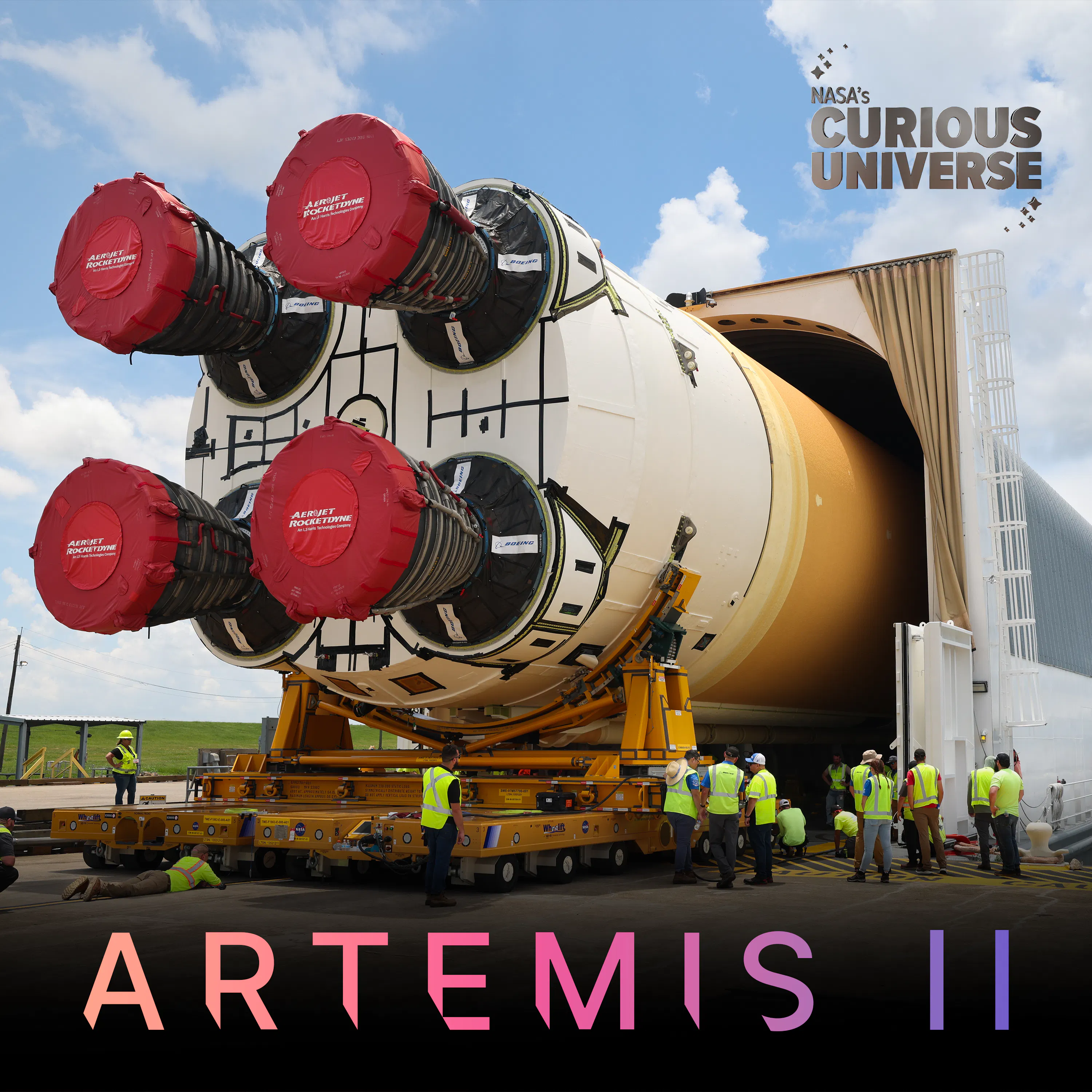
Artemis II: The Ground Teams Powering NASA's Moon Mission
17. Feb. 202633 minBehind NASA’s Artemis II mission and the astronauts who will fly around the Moon, teams on the ground are essential. Explore some of the epic equipment that makes Artemis II possible—the mobile launcher, crawler-transporter, and NASA’s barge Pegasus—and meet a few of the many specialists who act as the shoulders lifting astronauts into space. For Artemis II news and the latest launch information, visit nasa.gov/artemis-ii

Artemis II: How NASA Will Study the Moon—And the Astronauts Going There
3. Feb. 202653 minDuring Artemis II, four astronauts will see the lunar surface as few humans have—and possibly, parts of the Moon’s far side that no one has seen before. Learn what lunar science questions NASA hopes to answer through the astronauts' eyes with lunar geologist Kelsey Young. And those astronauts will also be subjects of science. Jancy McPhee, associate chief scientist of NASA’s Human Research Program, explains how studying human health on Artemis II will prepare us for exploration deeper into space than ever before. For Artemis II news and the latest launch information, visit nasa.gov/artemis-ii
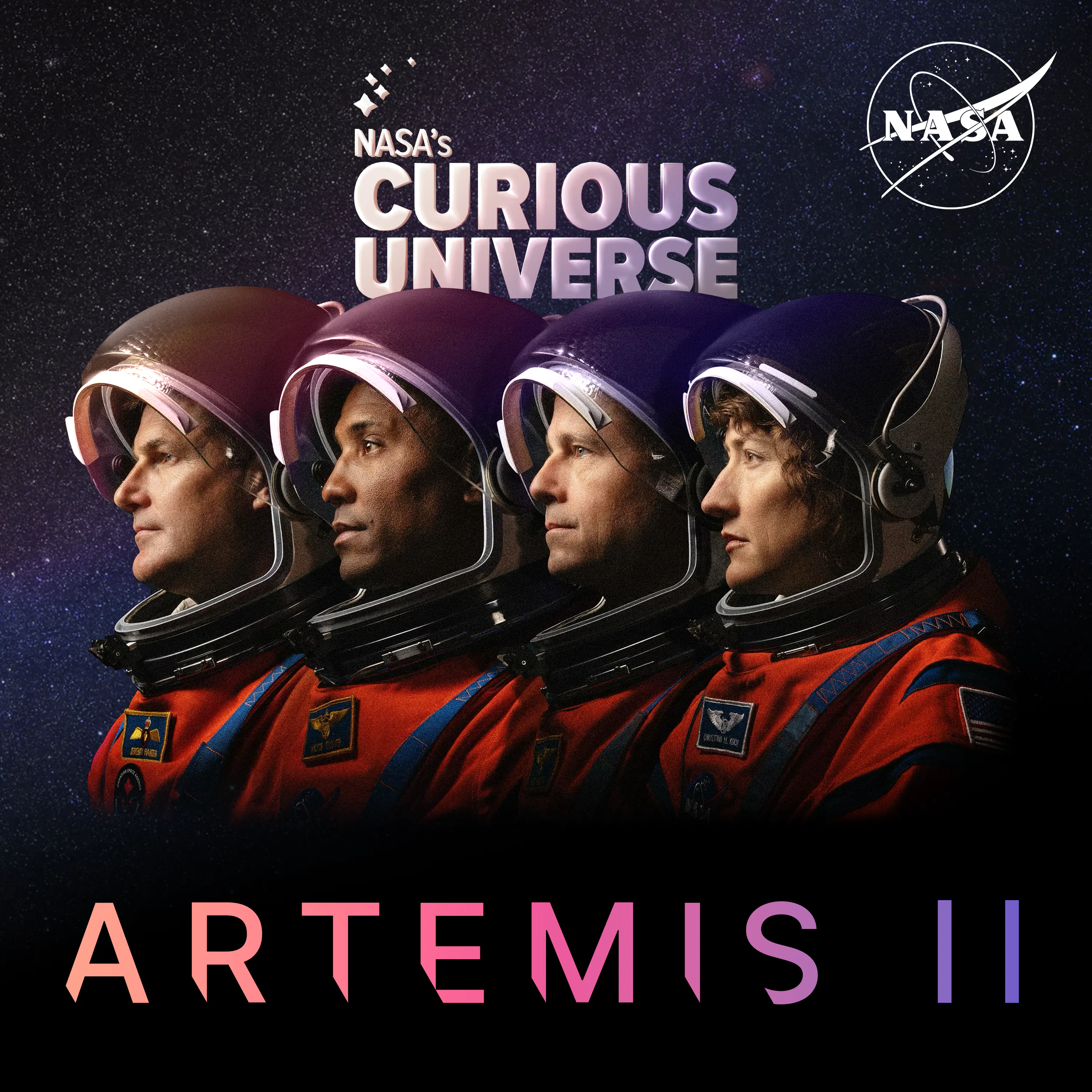
Artemis II: Inside NASA’s New Ride to the Moon
27. Jan. 202635 minDuring Artemis II, humans will fly Orion—NASA’s next-generation spaceship designed to take us to the Moon and beyond—for the first time. Tour Orion with Branelle Rodriguez, the vehicle manager for Artemis II, to hear about the support systems that keep astronauts alive and how exactly you use the bathroom en route to the Moon. Then, pop the hood of NASA’s most powerful rocket, the Space Launch System, with David Beaman, one of its key architects. For Artemis II news and the latest launch information, visit nasa.gov/artemis-ii

Artemis II: What NASA Learned From Launching Artemis I
20. Jan. 202630 minIn 2022, NASA launched Artemis I, an uncrewed test flight of the rocket and spacecraft that will send humans to the Moon. Go inside Firing Room 1—the nerve center for Artemis launches—and hear from the engineers who launched Artemis I, including the intricate procedures they developed just to fuel the rocket correctly. Now NASA is preparing to launch Artemis II—and to send humans around the Moon. For Artemis II news and the latest launch information, visit nasa.gov/artemis-ii

Artemis II: Meet the Moonbound Astronauts
13. Jan. 202652 minThis year, four NASA astronauts will fly around the Moon and back for the first time since the Apollo program. Their mission is called Artemis II. It’s a key test flight that will set the stage for humans to land on the lunar South Pole for the first time and set up a long-term presence there. In this episode, meet your intrepid Artemis II crew: commander Reid Wiseman, pilot Victor Glover and mission specialists Christina Koch and Jeremy Hansen. For Artemis II news and the latest launch information, visit nasa.gov/artemis-ii
Launching Soon: Artemis II
8. Jan. 20264 minThis year, four NASA astronauts are flying around the Moon and back—and Curious Universe is bringing you along for the ride. The mission is called Artemis II. It’s a key test flight that will set the stage for future missions to land on the lunar South Pole for the first time and set up a long-term presence there. In this limited series, get to know your Artemis II astronaut crew, go behind the scenes at NASA facilities across the country and discover the teamwork, passion and problem-solving fueling humanity’s return to the Moon—and beyond. For Artemis II news and the latest launch information, visit nasa.gov/artemis-ii
Cosmic Dawn with Nobel Laureate John Mather
19. Dez. 202519 minThe James Webb Space Telescope is doing something astronomers dreamed about for decades: peering into our universe’s early past, a period known as cosmic dawn. A new NASA documentary—also called Cosmic Dawn—chronicles the inside story of Webb’s design, construction, and launch. John Mather, who won the 2006 Nobel Prize for Physics, proposed the telescope and led its science team for decades. In this interview, Mather talks about his life, his research, and the pre-dawn phone call telling him he had won the Nobel Prize. Find more at nasa.gov/cosmicdawn This episode was updated on Dec. 19, 2025, to provide a video version on platforms that support video.
Encore: A Day In Space
2. Dez. 202523 minHave you ever dreamed of spending a day in space? Humans have lived aboard the International Space Station for 25 years—or more than 9,000 consecutive days. In this episode originally published in 2021, experience a day in the life of astronauts Shane Kimbrough, Megan McArthur, and Thomas Pesquet living and working on the International Space Station.
How Webb Illuminates Stars’ Cloudy Origins
30. Sept. 202523 minIn the space between stars, dark clouds of gas, dust, and ice mingle in a chemical laboratory unlike any on Earth. Ewine van Dishoeck, an astronomer who studies molecules in space and who helped develop an instrument aboard NASA’s James Webb Space Telescope, explains how Webb is revealing new details about the formation of stars and planets. This research could help unlock a key question about Earth: how did our planet end up with water and the ingredients for life?
What Webb Is Teaching Us About Our Solar System
23. Sept. 202528 minNASA’s James Webb Space Telescope is hard at work answering our biggest questions about the birth of our universe and faraway galaxies. But some astronomers are pointing its powerful eyes much closer to home. In this episode, Caltech astronomer Katherine de Kleer explains how Webb is rewriting our understanding of objects within our solar system–from space rocks in the asteroid belt to the icy and volcanic moons of Jupiter and Saturn.
Webb's Exoplanet Research Sounds Like Sci-Fi—But It's Real
3. Sept. 202524 minSome exoplanets—like a gas giant with rain made of glass and 5,000-mile-per-hour winds—sound like worlds dreamed up by a science fiction writer. But they’re real. From light-years away, scientists can uncover details about planets orbiting distant stars and even ask whether some exoplanets could support life. Néstor Espinoza, an astronomer at the Space Telescope Science Institute, explains how NASA’s James Webb Space Telescope is revealing new details about exoplanets, especially rocky worlds like Earth.
Why Webb's Earliest Galaxies Are Blowing Scientists' Minds
4. Aug. 202528 minWith the James Webb Space Telescope, we are seeing the early universe like never before. Webb produces beautiful images and detailed scientific data that leave astronomers in awe. In this episode, Mic Bagley, a NASA scientist on the Webb team, guides us through new discoveries made possible by Webb. Mic tells the story of a remarkable galaxy discovered in the early days of Webb’s science mission and explains why Webb is teaching us “everything” about how galaxies form and evolve.
How Lying In Bed For 60 Days Helps Astronauts
24. Juni 202527 minIn space, microgravity changes the body. Body fluids shift from the legs toward the head, the back of our eyes flatten, we lose muscle strength, our bones lose some of their density, and even the amount of blood pumped by the heart with each beat drops. To learn more about how microgravity affects the human body and develop new ways to help astronauts stay healthy, scientists are asking dozens of volunteers to spend 60 days in bed with their heads tilted down at a specific angle. This research approach tricks the body into reacting very similarly to how it would if a person was aboard the International Space Station for a longer-term mission. Join Andreas Joshi, a volunteer who agreed to be part of this bedrest work, and two NASA scientists leading the study. They’re investigating different ways to combat space-based muscle loss and improve astronauts’ sense of balance by, among other things, teaching volunteers like Joshi to play video games with their feet.

Earth Series: What's Next for NASA Earth Science
20. Mai 202529 minNASA has a record of Earth observations going back more than 50 years. What might be in store for the next 50 years? In this finale of our Earth series, we hear from two scientists helping to chart the course of NASA Earth science. There are still many unanswered questions about our home planet. As the only planet that we know to have life, studying Earth is also crucial as NASA searches for other habitable worlds.

Earth Series: Monitoring the Air We Breathe
6. Mai 202539 minTake a deep breath, and you’re inhaling oxygen from Earth’s atmosphere. Take a walk outside, and the atmosphere is shielding you from harmful radiation. NASA research provides crucial data to understand air quality and the intricate processes happening in the sky above us. In this episode, hear the inside story of NASA’s research into the ozone layer. Left unchecked, our reliance on ozone-depleting chemicals threatened to expose the entire planet to dangerous UV radiation. We’ll also fly along with Laura Judd, a NASA scientist studying air quality in the U.S. and around the world.

Earth Series: From Space to Your Plate
29. Apr. 202532 minEarth has an incredibly varied and ever-changing landscape—jagged mountains, arid deserts, lush rainforests, rolling wheat fields. Before NASA came on the scene, no one was keeping a systematic eye on the ground from above. NASA scientist Brad Doorn explains how one long-running satellite program collects the data farmers need to grow the crops that feed the world.

Earth Series: The Ocean, Now in Full Color
22. Apr. 202536 minLife all over the planet—even far from the coasts—depends on the oceans. A pair of NASA satellites, PACE and SWOT, is giving us a fresh look at Earth’s water. PACE tracks color changes driven by tiny plankton, which give us a big-picture view of ocean life. By measuring sea level height from space, SWOT shows ocean currents and other features in new detail. NASA scientists Cecile Rousseaux, Kelsey Bisson, and Josh Willis dive into new research with a lot of color and a little bit of rock and roll.