
 Open in Hinto
Episodes to Learn English860
The Evidence: Maternal Health in Malawi
May 8, 202449 min<p>The process of childbirth can be painful yet amazing, but at times and in some places, also very dangerous. Recorded in Malawi, East Africa, Claudia Hammond is joined by a panel of maternal health experts to figure out why it is that the equivalent of a large jumbo jet full of women die every day due to pregnancy or childbirth. Together, they examine how so many women can still be at risk during this period despite a greater access to healthcare. They also look into whether an eighty-year-old drug could be a game-changer when it comes to haemorrhage. Plus, they consider a study of 1.3 million women which asked what it is that women actually want from maternal healthcare. With Owen Chikwaza from the Malawi Ministry of Health, Linda Mipando of Kamuzu University and Elimase Kamanga-Gama, Director of the White Ribbon Alliance Malawi, Claudia looks at the many challenges and successes within the field, drawing from local experiences to offer global insights. </p><p>Produced by: Margaret Sessa-Hawkins Editor: Holly Squire Production Coordinator: Siobhan Maguire Presenter: Claudia Hammond Studio Engineers: Andrew Saunderson and David Sproule </p><p>(Photo: Pregnant woman being examined by a doctor. Credit: Holly Squire BBC)</p>
Obsessed with the Quest: Humpback Heat Run
May 6, 202426 min<p>Underwater cameraman Roger Munns set himself and his team an incredible challenge. In 2008, they visited Tonga to film the biggest courtship ritual of the animal kingdom, the humpback heat run, for the very first time underwater and up close. </p><p>In the first few days, Roger had intimate encounters with the whales but most of the time, he was sat on the back of the boat, waiting to find a heat run. After two unsuccessful weeks, he started to wonder whether they would ever see one. </p><p>But a few days later somebody spotted a heat run, and everything sprang into action. Roger got in position and dove down ten meters underwater on a single breath. From then on, his job was just to wait and hold his camera ready. In a moment that seemed to stretch out time, he waited, nervously, for a group of 40-ton bus-sized whales to speed past him… </p><p>And Victor Vescovo describes his adventures into the deep, diving to the deepest parts of all five oceans. </p><p>Victor's longest dive was solo to the lowest point on Earth - the Challenger Deep at the bottom of the Marianas trench in the western Pacific. On reaching the bottom, some 35,853 feet below the ocean surface, should something have gone wrong, there was no hope of rescue. </p><p>Victor describes his feelings before making this historic descent and on the way down. Touching down on the sea bed, he was astounded by the abundance of marine life. Victor describes how he hopes that the mapping, observations and sample collections he has made on his dives will advance scientific understanding of the deep oceans, and where his eternal quest to explore might take him next. </p><p>Produced by Florian Bohr and Diane Hope </p><p></p><p>Credits: </p><p>Humpback whale mother and calf sounds - Acoustic Communications CNRS team & CETAMADA </p><p>Humpback whale calf sounds - Lars Bejder (MMRP Hawaii), Peter T. Madsen (Aarhus University) & Simone Videsen (Aarhus University)</p>
Obsessed with the Quest: Inside the Minds of Chimpanzees
Apr 29, 202426 min<p>Primatologist Catherine Hobaiter has spent more of her adult life in the rain forests of Uganda, with family bands of chimpanzees, than she has with her own human family members. For more than 20 years now she has spent 6 months every year at a remote field station, getting up before dawn every day to observe and collect behavioural data on family bands of chimps as they wake up and go about their daily lives. What is she trying to find out, that has gripped her for so long? </p><p>It turns out that life in a chimpanzee troupe is every bit as gripping as a soap opera. But there are many more moments of beauty, revelation and the joy of discovery, as Catherine pursues her continuing, multi-decadal quest to understand what it means to be a chimpanzee. </p><p>And when Sara Dykman set out to bicycle with the monarch butterfly migration, from the mountains of central Mexico, across the USA to Canada, she didn't think about the 10,201 miles that she would cover. Coping with headwinds, heavy rain storms, and everything from dirt roads to busy highways were not the challenge for Sara though. It was seeing how little of the Monarch's only food plant, milkweed, was left for them to feed on during their amazing, multigenerational, multinational migration. </p><p>However, Sara found solace in the many conservationists and backyard butterfly gardeners she met along the way, and in the 9000 schoolchildren she gave talks to en route. The most emotional part of the journey for Sara was the last three miles - arriving successfully back at the monarch's overwintering site in Mexico. </p><p>Produced by Diane Hope. </p><p>Credits: </p><p>Monarch butterfly recordings - Robert Mackay</p>
Wild Inside: The sea lion
Apr 22, 202426 min<p>Professor Ben Garrod and Dr Jess French get under the skin (and blubber) of the California sea lion, to crack the key to its success both on land and at sea. Its ability to dive hundreds of meters down, keep warm in icy waters, and run on land, can all be explained through its unique internal anatomy. They are joined by zookeeper and sea lion trainer Mae Betts, who adds insight into the intelligence of these sleek marine mammals.</p><p>Co-Presenters: Ben Garrod and Jess French Producer: Ella Hubber Editor: Martin Smith Production co-ordinator: Jana Bennett-Holesworth</p>
Wild Inside: The aphid
Apr 15, 202426 min<p>The tiny sap-sucking aphid, at just a few millimetres long, is the scourge of many gardeners and crop-growers worldwide, spreading astonishingly rapidly and inflicting huge damage as it seeks to outwit many host plants’ natural defences. With insights and guidance from aphid expert George Seddon-Roberts at the John Innes Centre, Norwich, some delicate dissecting tools, and a state of the art microscope, Prof Ben Garrod and Dr Jess French delve inside this herbivorous insect to unravel the anatomy and physiology that has secured its extraordinary reproductive success, whilst offering new clues as to how we could curtail its damaging impact in the future.</p><p>Co-Presenters: Ben Garrod and Jess French Executive producer: Adrian Washbourne Producer: Ella Hubber Editor: Martin Smith Production co-ordinator: Jana Bennett-Holesworth</p>
Wild Inside: The Bearded Vulture
Apr 8, 202426 min<p>Ominously called the lamb vulture, there are many myths and misconceptions surrounding the bearded vulture. Flying the mountainous ranges across central Asia and eastern Africa, with a wingspan of almost three meters, the bearded vulture is am impressive Old World vulture. Prof Ben Garrod and Dr Jess French are looking past the beautifully coloured plumage, and delving deep inside to learn what this bird of prey really eats and what keeps its great wings aloft.</p>
Wild Inside: The Red Kangaroo
Apr 2, 202426 min<p>Wild Inside returns for a new series to take a look at some of our planet’s most exceptional and unusual creatures from an entirely new perspective: the inside. Whilst we can learn a lot from observing the outside, the secrets to the success of any animal – whether they swim, fly, or hop – lies in their complex internal anatomy. How do these wild animals survive and thrive in harsh and changing environments? To truly understand we need to delve inside.</p><p>Professor Ben Garrod, evolutionary biologist from the University of East Anglia, and expert veterinary surgeon Dr Jess French, open up and investigate what makes each of these animals unique, in terms of their extraordinary anatomy, behaviour and their evolutionary history. Along the way, they reveal some unique adaptations which give each species a leg (or claw) up in surviving in the big, wild world.</p><p>The series begins with an icon of the outback – known best for its hopping, boxing, and cosy pouch – the red kangaroo. Despite the immense heat and lack of water, these marsupials dominate Australia, with their evolutionary history driving them to success. From the powerful legs which allow them to hop up to 40km an hour, to an unexpected reproductive system that keeps their populations plentiful, Ben, Jess and marsupial expert Dr Jack Ashby reveal a mammalian anatomy which holds many surprises.</p>
Uncharted: Access denied
Mar 25, 202427 min<p>Hannah Fry explores two tales of data and discovery.</p><p>A young researcher gains access to a secretive data set and discovers a system causing harm to the very people it is supposed to help. </p><p>One day a student makes a discovery which, if true, could shake the intellectual foundations of a global movement, and undermine politicians around the world.</p><p>Producer: Lauren Armstrong Carter</p>
The Evidence: The science of the menopause
Mar 21, 202449 min<p>Millions of women around the world experience the menopause each year; it’s an important milestone, which marks the end of their reproductive years.</p><p>But every individual's experience of it is personal and unique. In some cultures, there's a stigma about this life stage – it's viewed with trepidation and as something to be dreaded. In other cultures, it's considered to be a fresh start - a time of greater freedom when women no longer have to worry about their menstrual cycles.</p><p>In this edition, recorded at Northern Ireland Science Festival in Belfast, Claudia Hammond and her expert panel take a global look at the science of the menopause and debunk some myths along the way.</p><p>As Claudia and her guests navigate their way through the menopause maze, they look at the most recent academic research in this area. They also discuss the physical and psychological symptoms, the lifestyle changes women can make and the different treatments available, including Hormone Replacement Therapy.</p><p>Claudia also speaks to the American biological anthropologist who has dedicated an impressive 35 years of her life to studying the average age of the menopause in different countries - and finds out how hot flushes vary in different cultures. She also speaks to a doctor who is working hard to make women’s health less of a taboo subject in the community where she works. And she hears from a Professor of Reproductive Science who is setting up the UK's first menopause school.</p><p>Producer: Sarah Parfitt Co-ordinator: Siobhan Maguire Editor: Holly Squire Sound engineers: Andrew Saunderson and Bill Maul Mix engineer: Bob Nettles</p><p>Image used with permission of the Northern Ireland Science Festival</p>
Uncharted: The gossip mill
Mar 18, 202427 min<p>Hannah Fry explores two more tales of data and discovery.</p><p>Gossip and rumour are plaguing a tile manufacturing company. The chatter is pulling morale to new lows, and amid it all, a question hangs in the air: who is spreading it? Can the science of networks find out? </p><p>And, what is the secret to ageing well? One man believes he may have found the beginnings of an answer, and it is hiding in a convent.</p><p>Produced by: Ilan Goodman and Lauren Armstrong Carter</p>
Uncharted: The happiness curve
Mar 11, 202415 min<p>Hannah Fry explores two tales of data and discovery.</p><p>Do orangutans - or humans - experience a midlife crisis? Hidden deep in the data, two economists have found a surprising pattern: happiness is U shaped. </p><p>And, John Carter has a terrible choice to make. One path offers glory, the other to death. His decision hinges on one graph, but can it help him take the right road?</p><p>Produced by: Ilan Goodman and Lauren Armstrong Carter</p>
Uncharted: The doctor will see you now
Mar 4, 202427 min<p>Hannah Fry explores two tales of data and discovery.</p><p>Two couples are brought together by a tragedy and a tatty piece of paper, which reveals a serial murderer hiding in plain sight. </p><p>And, across the world in Singapore, a metro system is misbehaving wildly. The rail engineers and company officials are flummoxed. Can data save the day? </p><p>Produced by: Ilan Goodman and Lauren Armstrong Carter</p>
Uncharted: The returning soldier
Feb 26, 202427 min<p>Hannah Fry explores two tales of data and discovery.</p><p>In a few specific years across the 20th Century, the proportion of boys born, mysteriously spiked. We follow one researcher’s obsessive quest to find out why. </p><p>And next, a tale of science and skulduggery. Michael Mann was a respected climate scientist, unknown outside of a small academic circle, until he produced a graph that shocked the world and changed his life forever. </p><p>Producer: Ilan Goodman</p>
The Life Scientific: Michael Wooldridge
Feb 19, 202427 min<p>Humans have a long-held fascination with the idea of Artificial Intelligence (AI) as a dystopian threat - from Mary Shelley's Frankenstein, through to the Terminator movies. But somehow, we still often think of this technology as 'futuristic', whereas in fact, it's already woven into the fabric of our daily lives, from facial recognition software to translator apps. </p><p>And if we get too caught up in the entertaining sci-fi narrative around AI and the potential threat from machines, there is a more pressing danger that we overlook real and present concerns - from deep fakes to electoral disinformation. </p><p>Michael Wooldridge is determined to demystify AI and explain how it can improve our lives, in a whole host of different ways. A professor of Computer Science at the University of Oxford, and the director of Foundational AI Research at the Alan Turing Institute, Mike believes the most common fears around this technology are "misplaced". </p><p>In a special 300th edition of The Life Scientific, recorded in front of an audience at London's Royal Institution (RI), Mike tells Jim al-Khalili how he will use this year's prestigious RI Christmas Lectures to lift the lid on modern AI technology and discuss how far it could go in future. Mike also reminiscences about the days when sending an email was a thrilling novelty, discusses why people love talking to him about the Terminator at parties, and is even challenged to think up a novel future use of AI by ChatGPT.</p><p>Presenter: Jim al-Khalili Producer: Lucy Taylor Audio editor: Sophie Ormiston Production co-ordinator: Jonathan Harris</p>
The Life Scientific: Mercedes Maroto-Valer
Feb 12, 202427 min<p>How do you solve a problem like CO2? </p><p>As the curtain closes on the world’s most important climate summit, we talk to a scientist who was at COP 28 and is working to solve our carbon dioxide problem. </p><p>Professor Mercedes Maroto-Valer thinks saving the planet is still Mission Possible - but key to success is turning excess of the climate-busting gas, carbon dioxide, into something useful. And as Director of the Research Centre for Carbon Solutions at Heriot-Watt University and the UK’s Decarbonisation Champion, she has lots of innovative ideas on how to do this. </p><p>She also has a great climate-themed suggestion for what you should say when someone asks your age… </p><p>Presenter: Jim Al-Khalili Producer: Gerry Holt Audio editor: Sophie Ormiston Production Co-ordinator: Jonathan Harris</p>
The Life Scientific: Sir Harry Bhadeshia
Feb 5, 202429 min<p>The Life Scientific zooms in to explore the intricate atomic make-up of metal alloys, with complex crystalline arrangements that can literally make or break structures integral to our everyday lives. Professor Sir Harry Bhadeshia is Professor of Metallurgy at Queen Mary University of London and Emeritus Tata Steel Professor of Metallurgy at the University of Cambridge. He’s been described as a ‘steel innovator’ – developing multiple new alloys with a host of real-world applications, from rail tracks to military armour. Harry’s prolific work in the field has earned him widespread recognition and a Knighthood; but it's not always been an easy ride... From his childhood in Kenya and an enforced move to the UK as a teenager, to the years standing up to those seeking to discredit the new path he was forging in steel research - Jim Al-Khalili discovers that Harry's achievements have required significant determination, as well as hard work. </p><p>Presenter: Jim Al-Khalili Producer: Lucy Taylor Audio editor: Sophie Ormiston Production Co-ordinator: Jonathan Harris</p>
The Life Scientific: Cathie Sudlow
Jan 29, 202428 min<p>“Big data” and “data science” are terms we hear more and more these days. The idea that we can use these vast amounts of information to understand and analyse phenomena, and find solutions to problems, is gaining prominence, both in business and academia. Cathie Sudlow, Professor of Neurology and Clinical Epidemiology at the University of Edinburgh, has been at the forefront of enabling health-related research using ever-increasing datasets. She tells presenter Jim Al-Khalili why this type of research matters and how the COVID-19 pandemic changed attitudes towards data in healthcare. Over the course of her career, Cathie has held a variety of roles at different organisations, and she is currently Chief Scientist and Deputy Director at Health Data Research UK. She believes that there is no room for prima donnas in science, and wants her field to be open and collaborative, to have the most impact on patients’ lives.</p><p>Presenter: Jim Al-Khalili Producer: Florian Bohr Production Co-ordinator: Jonathan Harris</p>
The Life Scientific: Sir Michael Berry
Jan 22, 202427 min<p>Professor Jim Al-Khalili meets one of Britain's greatest physicists, Sir Michael Berry. His work uncovers 'the arcane in the mundane', revealing the science that underpins phenomena in the world around us such as rainbows, and through his popular science lectures he joyfully explains the role of quantum mechanics in phones, computers and the technology that shapes the modern world. He is famed for the 'Berry phase' which is a key concept in quantum mechanics and one Sir Michael likes to explain through an analogy of holding a cat upside down and dropping it, or parallel parking a car.</p><p>Presenter: Jim Al-Khalili Studio Producer: Tom Bonnett Audio Editor: Gerry Holt Production Co-ordinator: Jonathan Harris</p>
The Life Scientific: Sarah Harper
Jan 15, 202427 min<p>People around the world are living longer and, on the whole, having fewer children. What does this mean for future populations? Sarah Harper CBE, Professor in Gerontology at the University of Oxford, tells presenter Jim Al-Khalili how it could affect pensions, why it might mean we work for longer, and discusses the ways modern life is changing global attitudes to when we have children, and whether we have them at all. Fertility and ageing have been Sarah's life's work and she tells her story of giving up a career in the media to carry out in-depth research, and going on to study population change in the UK and China, setting up the Oxford Institute of Population Ageing and later becoming a Scientific Advisor to UK Government.</p><p>Presenter: Jim Al-Khalili Producer: Tom Bonnett Production Co-ordinator: Jonathan Harris</p>
The Life Scientific: Sarah Blaffer Hrdy
Jan 8, 202426 min<p>Our primate cousins fascinate us, with their uncanny similarities to us. Studying other apes and monkeys also helps us figure out the evolutionary puzzle of what makes us uniquely human. Sarah Blaffer Hrdy’s work brings a female perspective to this puzzle, correcting sexist stereotypes like the aggressive, philandering male and the coy, passive female. </p><p>Sarah is professor emerita of anthropology at the University of California, Davis, and studies female primate behaviour to create a richer picture of our evolutionary history, as well as what it means to be a woman or a parent today. Her overarching aim is to understand the human condition, a goal she initially planned to pursue by writing novels. Instead, she found her way into science: her ground-breaking study of infanticide among langur monkeys in northern India overturned assumptions about these monkeys’ murderous motivations. Later in her career, she looked into reproductive and parenting strategies across species. We humans are primed by evolution, she believes, to need a lot of support raising our children. And that is a concern she found reflected in her own life, juggling family commitments with her career ambitions as a field researcher, teacher, and science writer.</p>
The Life Scientific: Edward Witten
Jan 1, 202426 min<p>The Life Scientific returns with a special episode from the USA; Princeton, New Jersey, to be precise. Here, the Institute for Advanced Study has hosted some of the greatest scientific minds of our time - Einstein was one of its first professors, J. Robert Oppenheimer its longest-serving director - and today's guest counts among them. Edward Witten is professor emeritus at the institute and the physicist behind M-Theory, a leading contender for what is commonly referred to as ‘the theory of everything’, uniting quantum mechanics and Einstein’s theory of gravity. He talks to Jim al-Khalili about a career that’s spanned some of the most exciting periods in modern theoretical physics - and about one particular problem that has obsessed and eluded him since his days as a student.</p><p>Producer: Lucy Taylor</p>
What's stopping us from exercising in older age?
Dec 25, 202326 min<p>Exercise in older age is high on the agenda, but the idea that with age comes bags of time and a desire to ‘get out there’ isn’t true for a lot of us. How do you juggle exercise around caring for partners, grandchildren or staying in work? What if you haven’t exercised for years? What can your body take, and how has it changed with age? James Gallagher hears how octogenarian athlete ‘Irongran’ keeps going, he explores the mental and physical barriers that stop us exercising and he finds out what he might feel like in 40 years as he pulls on an ageing suit.</p><p>(Photo: Elderly man going for a run. Credit: Charday Penn / Getty Images)</p>
When does sitting become bad for health?
Dec 18, 202327 min<p>How many hours do you spend sitting down per day? Six? Maybe eight? Or 10? Between commuting, working and relaxing, sitting can soon add up to hours and hours. James Gallagher delves into the science to find out exactly how much sitting is too much; when does it become worrying for our health? James visits a lab to explore what prolonged sitting does to the body and he’ll find out whether there’s anything you can do to offset the effects of sitting a lot. We’ll hear about the origins of sitting research - and just because we like to explore every angle on a topic, we’ll hear all about why standing too much can also be a worry.</p><p>(Photo: Woman sitting at desk in office. Credit: Richard Drury / Getty Images)</p>
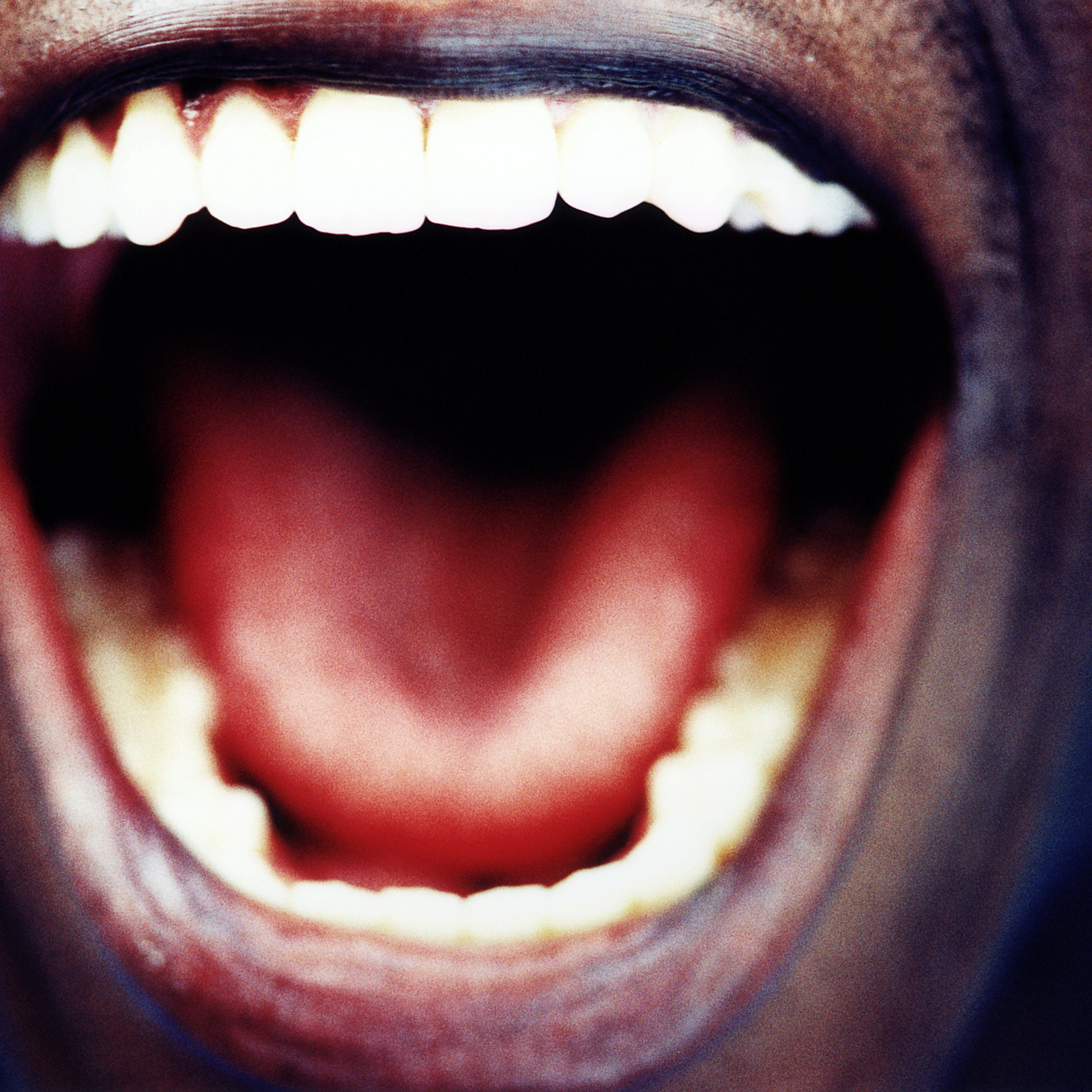
Putting the Mouth Back into the Body
Dec 12, 202350 min<p>A look at the evidence that links the health of our mouths with the rest of our bodies.</p>
Tooth and Claw: Cheetahs
Dec 11, 202327 min<p>Adam Hart investigates the fastest land animal in the world – the cheetah! Built for high-speed chases, these spotted cats are slender, with semi-retractable claws for good grip and a flexible spine plus a long tail for balance and manoeuvrability. Cheetahs rely on speed over brute strength when hunting – and can make tight, quick turns to shift course in fast pursuit of their prey. But with shrinking populations cheetahs are classified as vulnerable – so what’s being done in terms of conservation and are these projects having any success?</p><p>Adam hears how cheetahs differ from lions and leopards and learns about their relationships with other predators. He looks at their unique adaptions and behaviours, as well as the different approaches that conservationists are undertaking to try and reverse the population decline. And we also hear about the re-introduction of cheetahs to India. </p><p>Contributors:</p><p>Professor Sarah Durant is from the Zoological Society of London and is project leader of the Africa Range-Wide Cheetah Conservation Initiative.</p><p>Vincent van der Merwe is director of The Metapopulation Initiative and is cheetah metapopulation coordinator for Southern Africa and India.</p><p>Presenter: Professor Adam Hart Producer: Jonathan Blackwell Editor: Holly Squire Production Coordinator: Jonathan Harris Studio Manager: Andrew Garratt</p><p>(Photo: Cheetah, Credit: Paul & Paveena Mckenzie via Getty Images)</p>
Tooth and Claw: Piranhas
Dec 4, 202327 min<p>Adam Hart investigates a frenzied and voracious fish from South America – the piranha! Said to be able to strip their prey to the bone in mere minutes, there are plenty of gruesome tales about the bubbling bloodbaths that occur when shoals of these hardy fish feed in the freshwaters across South America - from up in Venezuela in the Orinoco River, to the Amazon and down to the Paraná River in Argentina. What role did former United States President Theodore Roosevelt have in creating the piranha’s fearsome reputation? And is this reputation misguided? </p><p>Adam hears what piranhas are really like, both in the wild and in captivity. He learns about how these fish hunt, the impact that humans are having on them and tries to establish if they really are as bloodthirsty as we’ve been led to believe. </p><p>Contributors: </p><p>Marcelo Ândrade is a professor at the Federal University of Maranhão in Brazil. He researches the environments that piranha live in and their behaviour, as well as plastic ingestion by piranhas. </p><p>Hannah Thomas is the aquarium team manager at Chester Zoo in the UK where they care for 40 red-bellied piranhas. </p><p>Presenter: Professor Adam Hart Producer: Jonathan Blackwell Editor: Holly Squire Production Coordinator: Jonathan Harris Studio Manager: Neva Missirian </p><p>(Photo: Red-Bellied Piranha, Credit: Ed Reschke via Getty Images)</p>
Tooth and Claw: Great White Sharks
Nov 27, 202327 min<p>Adam Hart investigates the most famous and feared predator in all the ocean – the great white shark! With rows of large, serrated teeth, it’s often thought of as a ferocious man-eater and was the villain of the film Jaws – which frightened a generation of beachgoers. This star of the silver screen may be the subject of fascination and fright for many, but is it really the ultimate predator of the ocean as Hollywood has led us to believe?</p><p>Adam hears what it’s like to see these sharks up-close and in person for the very first time. He learns more about how great whites detect and hunt their prey, as well as the challenges they’ve been facing due to another ocean predator. Contributors:</p><p>Dr Alison Towner is a postdoctoral researcher at Rhodes University in South Africa. She has a PhD in white shark ecology and has been studying the displacement of great whites due to orcas (killer whales) in South Africa.</p><p>Professor Gavin Naylor is Director of the Florida Program for Shark Research. He is a biologist who has specialised in evolutionary and population genetics, focusing on sharks.</p><p>Presenter: Professor Adam Hart Producer: Jonathan Blackwell Editor: Holly Squire Production Coordinator: Jonathan Harris Studio Manager: Jackie Margerum (Photo: Great White Shark, Credit: Todd Winner/Stocktrek Images via Getty Images)</p>
Tooth and Claw: Wolverines
Nov 20, 202327 min<p>Adam Hart investigates the largest terrestrial member of the weasel family – the wolverine. They’re far more than just a superhero played by Hugh Jackman! With a reputation for gluttony and ferocity, these solitary killers use snowstorms to hunt much larger prey. Found in the snowy tundra and boreal forests of the Northern Hemisphere, their future looks uncertain – they've come into conflict with Scandinavian farmers by hunting their reindeer and are threatened by climate change in North America and Mongolia. But have we misunderstood wolverines? And can we learn to co-exist with them? </p><p>Contributors:</p><p>Rebecca Watters is founder and director of the Mongolian Wolverine Project, as well as the executive director of the Wolverine Foundation, a non-profit that’s dedicated to advancing science-based conservation of wolverines.</p><p>Jenny Mattisson is a researcher at the Norwegian Institute for Nature Research, who is involved in the monitoring of wolverines in Scandinavia. She has studied interactions between wolverines and Eurasian lynx, as well as their predation of reindeer.</p><p>Presenter: Professor Adam Hart Producer: Jonathan Blackwell Editor: Holly Squire Production Coordinator: Jonathan Harris Studio Manager: Donald MacDonald (Photo: Wolverine, Credit: Arterra/Universal Images Group via Getty Images)</p>
The Life Scientific: Alex Antonelli
Nov 13, 202327 min<p>With the world's biodiversity being lost at an alarming rate, Alexandre Antonelli, Director of Science at the Royal Botanic Gardens, Kew, has made it his life's mission to protect it. He is a bio-geographer revealing how changes to the Earth's landscape, such as the formation of mountain ranges and rainforests, leads to the evolution of new species and causes plants, fungi and animals to move around the world.</p><p>His work is a masterclass in joined-up thinking, bringing together different fields of research by starting conversations between scientists who would rarely talk to one another. Together, they paint a more holistic picture of how our planet's biodiversity has developed in the hope of informing how we can protect it in the future.</p><p>Alex tells presenter Jim Al-Khalili about a life spent in the wild, beginning with his earliest memories of growing up in Brazil cataloguing life in the Atlantic Rainforest. That passion is still with him today. We've only scratched the surface of understanding what lives here on Earth, he says, more than 4,000 new species are found every year. Alex is passionate that we need to speed up the rate at which we document the richness of life, arguing if we don't identify what there is we can't protect it.</p>
The Life Scientific: Paul Murdin
Nov 6, 202328 min<p>Astronomer Paul Murdin believes a good imagination is vital for scientists, since they're so often dealing with subjects outside the visible realm.</p><p>Indeed, over a long and successful career his imagination has taken him on a journey through space, discovering various new and unusual celestial occurrences - notably the first successful identification of a black hole, Cygnus X-1.</p><p>Paul tells Jim Al-Khalili how he spent much of his career at the Royal Greenwich Observatory, working with astronomers around the world on some of the most advanced telescopes ever built. He headed up the Astronomy section of the UK’s Particle Physics and Astronomy Research Council, was Director of Science for the British National Space Centre and even has an asteroid named after him.</p><p>This list of achievements is testament to the fact that Paul has never let his disability hold him back; a leg brace and walking sticks have been part of his life since contracting polio in childhood. But he maintains that as long as you have curiosity and a vibrant imagination, nothing should stand in your way.</p><p>(Photo: Paul Murdin in 1971 next to the Isaac Newton Telescope at the time of the discovery with that telescope of Cygnus X-1. Credit: Paul Murdin)</p>


