
 Open in Hinto
Episodes to Learn English860
The Life Scientific: Bahija Jallal
Oct 30, 202328 min<p>Some of the most complex medicines available today are made from living cells or organisms - these treatments are called bio-pharmaceuticals and in this episode of The Life Scientific Dr Bahija Jallal, CEO of Immunocore, shares her story of leaving her home in Casablanca, Morocco to become a world leader in developing bio-pharmaceutical cancer treatments. She tells Professor Jim Al-Khalili that she has always found herself ahead of the curve. When she began in oncology, the study of cancer, the common treatment was chemotherapy which attacked all the cells in an affected area. Her first studies into cancer treatments were looking at how certain therapies could focus in on the cancerous cells and move away from what she describes as the 'sledgehammer' of traditional chemotherapy. It was an early step in what became known as targeted cancer therapies, and it set Bahjia on course for a career dedicated to developing innovative drugs to improve cancer patients' lives. Through a deep understanding of the science and a resolute commitment to putting treatments in the hands of people who need them, she has produced astonishing results.</p>
The Life Scientific: Chris Barratt
Oct 23, 202327 min<p>Reproductive science has come a long way in recent years, but there's still plenty we don't understand - particularly around male fertility. The reliability and availability of data in this field has become more of a concern in light of a study published this year, suggesting that sperm counts worldwide have dropped 62% in the past 50 years. As yet there is no clear answer as to why that is. Professor Chris Barratt is one of the scientists working to change that. He's the Head of Reproductive Medicine at Ninewells Hospital and the University of Dundee Medical School, and has dedicated his career to better understanding male infertility; driving breakthroughs in how to study sperm dysfunctions – and most recently spearheading advances in developing a male contraceptive pill. Chris talks to Professor Jim Al-Khalili about his academic struggles as a youngster, the lecture that changed his life, his research into 'head-banging sperm' and why he believes a new male contraceptive could be a game-changer.</p>
The Life Scientific: Gideon Henderson
Oct 16, 202327 min<p>We’re used to hearing the stories of scientists who study the world as it is now but what about the study of the past - what can this tell us about our future?</p><p>Gideon Henderson’s research focuses on trying to understand climate change by looking at what was happening on our planet thousands of years ago. His work has taken him all around the world - to the deepest oceans and the darkest caves - where he collects samples containing radioactive isotopes which he uses as “clocks” to date past ice ages and other major climate events.</p><p>As a geochemist and Professor of Earth Sciences at the University of Oxford, his work deals with the biggest questions, like our impact on the carbon cycle and climate, the health of our oceans, and finding new ways to remove greenhouse gases from the atmosphere.</p><p>But in his role as Chief Scientific Adviser at the Department of Environment, Food and Rural Affairs, he also very much works on the present, at the intersection between the worlds of research and policy. He has overseen the decision to allow gene-edited food to be developed commercially in England and a UK surveillance programme to spot the Covid-19 virus in our waste-water.</p><p>(Photo: Gideon Henderson. Credit: Gideon Henderson)</p>
The Life Scientific: Deborah Greaves
Oct 10, 202328 min<p>If you’ve ever seen the ocean during a storm, you’ll understand the extraordinary power contained in waves. On an island nation like Britain, that power could well be harnessed to produce clean energy; so why have we barely begun to tap this bountiful resource? Deborah Greaves is trying to change that. As Professor of Ocean Engineering at the University of Plymouth, she combines physical wave tanks with sophisticated computer modelling to test how well wave power devices respond to stormy seas. And as Director of the Supergen ORE Hub, she brings together researchers in offshore renewable energy to imagine a future of widespread, eco-friendly ocean power. Deborah tells Jim Al-Khalili about growing up in Plymouth fascinated by the sea, and about breaking from the norm in her arts-focused family, to pursue a degree in engineering. But she spent years as a civil engineer building tunnels for the London Underground - and going on expeditions to the Arctic with her husband - before undertaking a PhD at Oxford University, exploring what happens when waves crash into solid structures. She eventually returned to Plymouth and set up the institute’s Coastal, Ocean and Sediment Transport (COAST) Laboratory - a building with a swimming-pool-sized wave tank for testing new technologies. As Jim hears, these wave devices have an extraordinary diversity of uses - and could help to propel Britain into a greener energy future.</p><p>(Photo: Deborah Greaves. Credit: Deborah Greaves)</p>
Metamorphosis: Bee brains and the cockroach
Oct 2, 202327 min<p>Erica McAlister on the bee intellect and whether bigger brains are always better. Plus cockroaches may be reviled by many people, but Erica discovers the extraordinary flexibility of their simple nervous system led to the birth of neuroendocrinology.</p><p>(Photo: A honey bee feeding on nectar from Echinacea purpurea. Credit: Barnaby Perkins)</p>
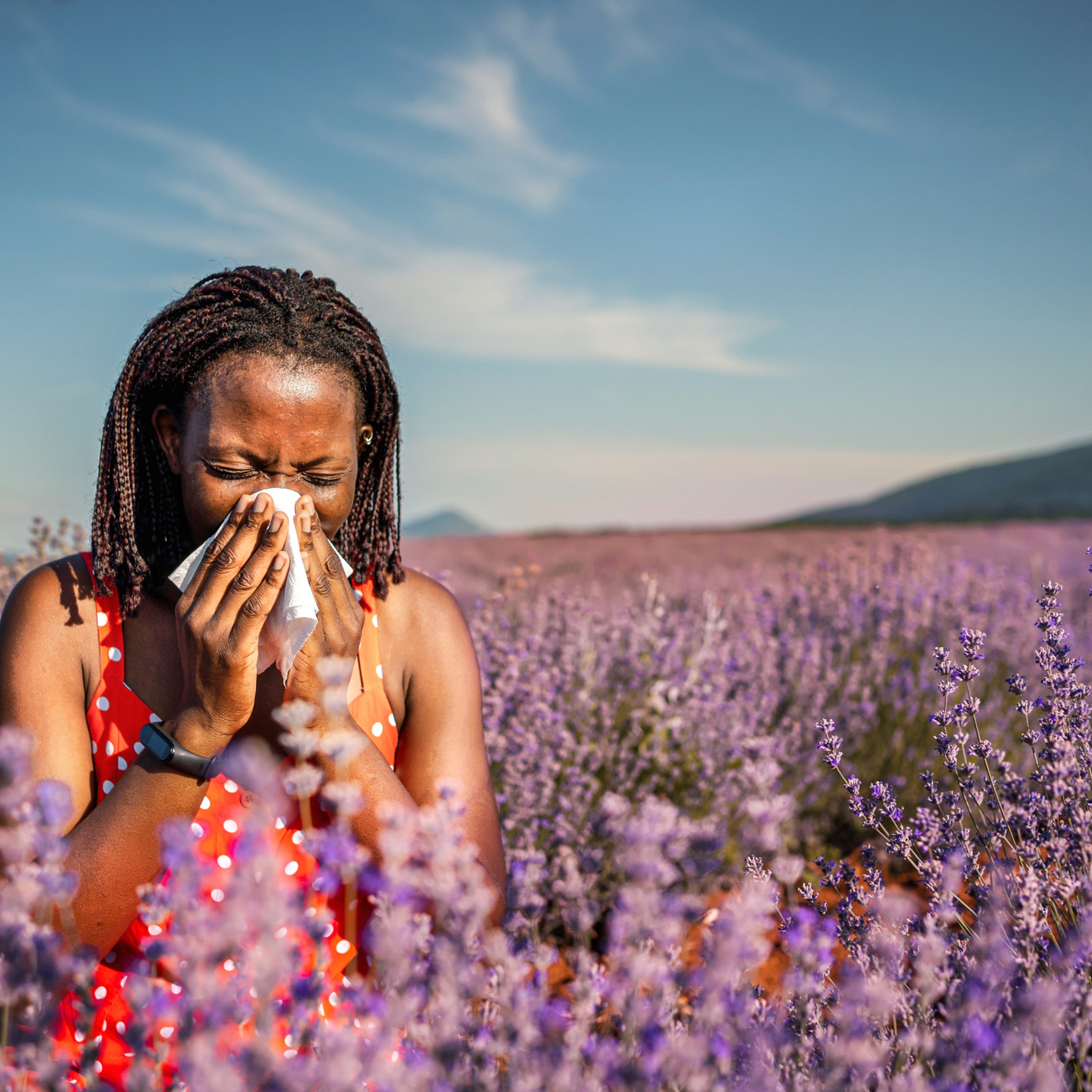
The Evidence: Is the world becoming more allergic?
Oct 2, 202349 min<p>What are allergies and what is the purpose of them? What can we do to try and prevent them? And what are the best ways of accurately and safely diagnosing them?</p>

Metamorphosis: Soldier fly and desert beetle
Sep 25, 202327 min<p>Erica McAlister on the innocuous wasp-like black soldier fly, a crown jewel of a fast-growing insect farming industry that's addressing the urgent need to find cheap clean protein. And how Namib Desert beetles have evolved in a very special environment, where the only source of water exists in the air.</p><p>(Image: Desert beetle in Namib desert. Credit: Martin Harvey/Getty Images)</p>

Metamorphosis: Blowflies and dazzling disguise
Sep 18, 202327 min<p>Blowflies may be some of the most reviled insects on the planet, but as Erica McAlister discovers, they are central to the surprisingly long tradition of forensic entomology and how there's more than meets the eye in the distinctive structural colour of the morpho butterfly wing, whose dazzling sheen is a key for camouflage and commerce.</p><p>(Photo: A fly on a leaf. Credit: Christina Bollen/Getty Images)</p>
Metamorphosis: Drosophila melanogaster, hoverfly
Sep 11, 202327 min<p>Dr Erica McAlister uncovers a treasure trove of remarkable insights from the insect world including the innocuous flies that are Drosophila melanogaster. More is known about these flies than any other animal on the planet, as a model for human genetics. And the hoverfly that arguably undergoes the biggest transformation of any animal and how insect metamorphosis could be a tool to track future climate change.</p><p>Producer: Adrian Washbourne Presenter: Dr Erica McAlister</p><p>(Photo: Drosophila melanogaster. Credit: nechaev-kon/Getty Images)</p>
Metamorphosis: Jumping fleas and mighty mouthparts
Sep 4, 202327 min<p>Dr Erica McAlister uncovers a treasure trove of remarkable insects from the humble flea whose jump enables them to fly without wings and the mystery of the hawkmoth’s tongue, whose varying length has offered the simplest and most effective proof of Charles Darwin's theory of natural selection in action.</p><p>Producer: Dr Adrian Washbourne Presenter: Dr Erica McAlister</p><p>(Photo: Dr Erica McAlister. Credit: Dr Erica McAlister)</p>
The Life Scientific: Harald Haas
Aug 28, 202327 min<p>Imagine a world in which your laptop or mobile device accesses the internet, not via radio waves – or WiFi – as it does today but by using light instead: LiFi.</p><p>Well, that world may not be as far away as you might think. In fact, the technology is already here; and it’s thanks in large part to the engineering ingenuity of Harald Haas, Distinguished Professor of Mobile Communications and Director of the Li-Fi Research and Development Centre at the University of Strathclyde.</p><p>He tells Jim Al-Khalili about the two decades he has spent researching optical wireless communications, building up to his LiFi breakthrough in 2011, where he made waves in the scientific community and beyond by showing how a simple desk lamp could be used to stream a video.</p><p>Harald’s research could well have a very real impact on people’s lives, reinventing the way we connect online – but, as Jim hears, his early life was dogged by a very real fear he may have the same devastating disease that took his mother's life at an early age; an experience that shaped his early years and which has driven him to succeed in his own life and career.</p><p>(Image: Harald Haas. Credit: Harald Haas)</p>
The Life Scientific: Anne-Marie Imafidon
Aug 21, 202327 min<p>Anne-Marie Imafidon passed her computing A-Level at the age of 11 and by 16, was accepted to the University of Oxford to study Maths and Computer Science. She's used to the 'child prodigy' label that's followed her throughout her career, but that doesn't mean she's had an easy ride.</p><p>It was a combination of personal experience and the discovery that the number of women working in the STEM sectors - Science, Technology, Engineering and Mathematics - was in free-fall that inspired Anne-Marie to found Stemettes: a not-for-profit social enterprise introducing girls to STEM ideas and careers in fun and accessible ways. It's now in its tenth year and still growing, while Anne-Marie has received an MBE, enjoyed a successful stint as the numbers guru on the TV series Countdown, and is the current President of the British Science Association.</p><p>In conversation in front of an audience at the UK's 2023 Cheltenham Science Festival, she tells Jim Al-Khalili about her quest for equality and diversity across the scientific community - and explains why she thinks everyone has the potential to be a 'child prodigy', given the right opportunity...</p><p>(Image: Anne-Marie Imafidon. Credit: Anne-Marie Imafidon)</p>
The Life Scientific: Anne Ferguson-Smith
Aug 14, 202327 min<p>Our genes can tell us so much about us, from why we look the way we look, think the way we think, even what kind of diseases we might be likely to suffer from. But our genes aren't the whole story. There are other, complex and intriguing systems within every cell in our bodies which control which of our tens-of-thousands of genes are switched on, or off, in different parts of the body, and under different circumstances.</p><p>Welcome to the fascinating world of 'epigenetics', which our guest, the molecular geneticist Anne Ferguson-Smith, describes as 'genetics with knobs on'.</p><p>Anne, now Arthur Balfour Professor of Genetics and Pro-Vice Chancellor for Research at the University of Cambridge, tells Jim Al-Khalili about her life and work. She's spent her professional life at the cutting edge: from a degree in a brand new field of Molecular Biology, to post-grad working on brand new genetic structures, through to a lifetime of discoveries and breakthroughs which have changed our understanding of the genome.</p><p>Yet she wasn't always destined to be a scientist. She says she was a 'bad student' for a lot of her early life, and believes that embracing failure is an essential part of being a working scientist.</p><p>(Image: Anne Ferguson Smith. Credit: Anne Ferguson Smith)</p>
The Life Scientific: Bruce Malamud
Aug 7, 202327 min<p>From landslides and wildfires to floods and tornadoes, Bruce Malamud has spent his career travelling the world and studying natural hazards.</p><p>Today, he is Wilson Chair of Hazard and Risk and executive director of the Institute of Hazard, Risk and Resilience at Durham University - but as he tells Jim al-Khalili, a lifelong passion for discovery has taken Bruce from volunteering with the Peace Corps in West Africa and a Fulbright Fellowship in Argentina, to fieldwork in India; not only studying hazards themselves, but also the people they affect - and building up the character and resilience to overcome personal tragedy along the way.</p><p>Over the years, his work in the field has opened up new ways of understanding such events: from statistical modelling to show how groups of hazards occur, to examining the cascading relationships between multiple hazards. And today, his focus is on projects that can bring tangible benefits to people at serious risk from environmental hazards - finding innovative ways to help them to better manage that threat.</p><p>(Photo: Bruce Malamud. Credit: Bruce Malamud)</p>
The Life Scientific: Andre Geim
Jul 31, 202327 min<p>The world around us is three-dimensional. Yet, there are materials that can be regarded as two-dimensional. They are only one layer of atoms thick and have remarkable properties that are different from their three-dimensional counterparts.</p><p>Sir Andre Geim created the first-ever man-made 2D material, by isolating graphene, and is one of the pioneers in this line of research. Even beyond his Nobel Prize-winning work on graphene, he has explored new ideas in many different areas of physics throughout his career. Andre tells Jim al-Khalili about his time growing up in the Soviet Union, being rejected from university based on his German ethnicity, his move to Western Europe, and levitating frogs.</p><p>(Photo: 2010 Nobel Physics laureate Andre Geim during 2019 China Science Fiction Convention, Beijing, 3 November, 2019. Credit: VCG/Getty Images)</p>
In search of stardust
Jul 24, 202331 min<p>Norwegian jazz musician Jon Larsen was having breakfast one clear spring morning when he noticed a tiny black speck land on his clean, white table. With no wind, birds or planes in sight, he wondered if it fell from space.</p><p>Dust from space is not as fanciful as it sounds. Billions of microscopic meteorites, dating back to the birth of our solar system, fall onto Earth every year. But they are so tiny, hidden among the copious dust of everyday life, that scientists believe they are impossible to find outside ultra clean environments like Antarctica.</p><p>But this doesn’t deter Jon, who, against the advice of all experts, decides he is going to be the first person to find an urban micrometeorite.</p><p>He takes presenter Caroline Steel and planetary scientist Dr Matthew Genge up onto some roofs, in search of the elusive particles. Can we find stardust on the top of the BBC? </p><p>Featuring Jon Larsen, Dr Matthew Genge and Svein Aarbostad.</p><p>Presenter: Caroline Steel</p><p>(Image: Cygnus Nebulosity and Starclouds Credit: VW Pics / Contributor | Getty Images)</p>
Bodies, brains and computers
Jul 17, 202328 min<p>We've been building computers to think like us for years, but our ability to replicate human senses has been impossible. Until now. </p><p>Evolutionary biologist and broadcaster Professor Ben Garrod, is off to meet some of the sensory innovators and technological pioneers who are developing human like-sensing technology. From skin patches that can read our sugar levels, to brain implants that could use our thoughts to control computers. This is the technology that could blur the boundary between body, mind, and computer chip. </p><p>We meet Jules Howard, a zoologist who uses VR to help us explore the anatomical worlds inside animals. Jules shows us the inner-workings of a ducks vagina. We meet Anagram, who’s augmented reality experiences can visualise the inner-worlds of those experiencing schizophrenia and ADHD. We play with the health monitors and wearable tech that claim they could make us fitter, happier, and more productive humans. And meet Dr David Putrino, a clinician with Mount Sinai in New York, who’s conducting some of the first medically-approved surgery for brain implants. </p><p>Presenter: Professor Ben Garrod Producer: Robbie Wojciechowski Production co-ordinator: Jonathan Harris</p><p>(Image: Artificial intelligence robot and binary. Credit: Yuichiro Chino/Getty Images)</p>
Remote touch
Jul 10, 202327 min<p>We've been building computers to think like us for years, but our ability to replicate human senses has been impossible. Until now. This technological revolution is starting to profoundly change not only how we interact with the world around us, but is allowing us to see, hear, smell, taste and even touch things we never imagined possible before.</p><p>An artificial intelligence revolution is super-charging sensing technology, promising us eyes with laser precision, ears that can distinguish every sound in a mile's radius and noses than can sniff out the early signs of forest fires before the first flame forms.</p><p>Evolutionary biologist and broadcaster Professor Ben Garrod is off to meet some of these sensory innovators and technological pioneers - the programmers, robotics engineers and neuroscientists, who are turning our world upside down and inside out.</p><p>In episode four - we’ll explore touch and what role does it plays for our nearest living relatives. Ben tries to give his mum a hug from 5,000 miles away. We discover what brain scans show when Ben given both painful and pleasurable touch. We explore what role the body could play in our use of computers in the future. We hear about remotely-operated sex toys. And learn about how all this might shift our understandings of intimate relationships in the future.</p><p>Could these new technologies and natural evolutions be redefining what it is to touch? Ben takes us through the amazing adaptations, and technological developments that could help touch become digitised.</p><p>Presenter: Prof Ben Garrod Producer: Robbie Wojciechowski Production Co-ordinator: Jonathan Harris</p><p>(Photo: Hands touching fingers. Credit: Kelvin Murray/Getty Images)</p>
The Evidence: Exploring the concept of solastalgia
Jul 8, 202350 min<p>In The Evidence on the BBC World Service, Claudia Hammond will be exploring the concept of solastalgia; broadly defined as the pain or emotional suffering brought about by environmental change close to your home or cherished place. </p><p>Made in collaboration with Wellcome Collection, Claudia Hammond and an expert panel examine this relatively new concept, one that might be increasingly heard about as the effects of climate change are felt. </p><p>Claudia will be hearing stories of solastalgia from communities in Kenya and Indonesia and examining where storytelling fits in with other types of evidence when it comes to health and wellbeing. What kind of impact can personal stories of loss have on policy makers? </p><p>On stage with Claudia and in front of a live studio audience, are artist Victoria Pratt, Creative Director of Invisible Flock; Daniel Kobei, Director of Ogiek People’s Development Program; epidemiologist Dr Elaine Flores from the Centre on Climate Change and Planetary Health at the London School of Hygiene and Tropical Medicine; former prime minister of Australia Julia Gillard and environmental activist Laetania Belai Djandam </p><p>Produced by: Helena Selby and Geraldine Fitzgerald Studio Engineers: Emma Harth and Duncan Hannant </p><p>Photo: Man standing in grey climate whilst looking towards bright climate. Credit: Getty Images.</p>

Smelly people
Jul 3, 202327 min<p>We've been building computers to think like us for years, but our ability to replicate human senses has been impossible. Until now. This technological revolution is starting to profoundly change not only how we interact with the world around us, but is allowing us to see, hear, smell, taste and even touch things we never imagined possible before.</p><p>An artificial intelligence revolution is super-charging sensing technology, promising us eyes with laser precision, ears that can distinguish every sound in a mile's radius and noses than can sniff out the early signs of forest fires before the first flame forms.</p><p>Evolutionary biologist and broadcaster Professor Ben Garrod, is off to meet some of these sensory innovators and technological pioneers. The archaeologists, ecologists and medics, who are turning our world upside down and inside out.</p><p>Could these new technologies and natural evolutions be redefining what it is to smell? Ben takes us through the amazing adaptations, and technological developments that could help broaden how we think of our noses.</p><p>Presenter: Professor Ben Garrod Producer: Robbie Wojciechowski Production co-ordinator: Jonathan Harris</p><p>(Photo: Close up of human nose smelling an animated smell. Credit | Getty Images)</p>

Sound solutions
Jun 27, 202328 min<p>We've been building computers to think like us for years, but our ability to replicate human senses has been impossible. Until now. This technological revolution is starting to profoundly change not only how we interact with the world around us, but is allowing us to see, hear, smell, taste and even touch things we never imagined possible before.</p><p>An artificial intelligence revolution is super-charging sensing technology, promising us eyes with laser precision, ears that can distinguish every sound in a mile's radius and noses that can sniff out the early signs of forest fires before the first flame forms.</p><p>Evolutionary biologist and broadcaster Professor Ben Garrod is off to meet some of these sensory innovators and technological pioneers; The archaeologists, ecologists and medics, who are turning our world upside down and inside out.</p><p>In episode two, Ben finds sound solutions to tricky problems. We’ll hear about the ear which works up to depths of 500m below the ocean. In this light-deprived oceanic environment, we’ll find out how sound has become the most important sense. We’ll learn how noise pollution has inspired a number of revolutionary scientists to create sound-based solutions to better animal conservation. Along the way, we’ll meet engineers and computer programmers who’ve been able to find animals we thought previously extinct, and learn how one colour blind ornithologist mapped the entirety of a Caribbean archipelago so he could help protect his favourite species from storms and freak climate events.</p><p>Could these new technologies and natural evolutions be redefining what it is to hear? Ben takes us through the amazing adaptations and technological developments that could help stretch our hearing further than ever before.</p><p>Produced by Robbie Wojciechowski Presented by Professor Ben Garrod Production Coordinator: Jonathan Harris</p><p>(Photo: Field mouse with large ears. Credit: Zoological Society of London/PA Wire)</p>
Seeing more
Jun 22, 202328 min<p>We've been building computers to think like us for years, but our ability to replicate human senses has been impossible. Until now. This technological revolution is starting to profoundly change not only how we interact with the world around us, but is allowing us to see, hear, smell, taste and even touch things we never imagined possible before.</p><p>An Artificial Intelligence revolution is super-charging sensing technology, promising us eyes with laser precision, ears that can distinguish every sound in a mile radius and noses than can sniff out the early signs of forest fires before the first flame forms.</p><p>Evolutionary biologist and broadcaster Prof Ben Garrod, is off to meet some of these sensory innovators and technological pioneers. The archaeologists, ecologists and medics, who are turning our world upside down and inside out.</p><p>In episode one, Ben tries seeing further. The visible world to us is tiny, and we are able to detect just a fraction of the light spectrum that is out there. But new technology is pushing the boundary of what is visible. Ground penetrating LIDAR arrays are helping us to peel back the layers of planet Earth, and see the remains of ancient civilisations, previously invisible to us. The same technology is being used on the moons of Jupiter to provide 3D maps of the craters of faraway worlds. In the forests of west Africa, we meet the psychologists using infrared to monitor the stress levels of silverback gorillas being returned to the wild. And in a lab in central London, we meet the extraordinary animals that see hidden patterns in the natural world and perhaps even fields that are entirely invisible to us.</p><p>Could these new technologies be redefining what it is to see, hear, smell, and feel? Ben takes us through the amazing adaptations and development under the bonnet, and speculates where else these all seeing eyes may yet gaze.</p><p>Presenter: Professor Ben Garrod Producer: Robbie Wojciechowski Production co-ordinator: Jonathan Harris</p><p>(Image: Concept illustration of eye seen through clouds. Credit: Hans Neleman/Getty Images)</p>
Sperm counts
Jun 12, 202328 min<p>James Gallagher get's behind the hype to find out if sperm counts are really falling? There are plenty of headlines telling us they are, but also scientists who disagree - he unpicks the evidence with two of them. James also gets his own sperm sample analysed and meets a couple who found the reason behind their low count was one of the leading causes of male infertility.</p>
Psychedelics
Jun 5, 202328 min<p>James Gallagher reports on a psychedelic renaissance; a new wave of research testing hallucinogenic drugs like magic mushrooms to treat mental health conditions.</p><p>There’s genuine excitement and some early encouraging evidence. A manufacturer tells James that in five years’ time, it’s possible that psychedelics could be part of the medicine cabinet – but with the hype, there’s risk too and there’s much still to learn about who these drugs could help and how.</p><p>Presenter: James Gallagher Producer: Geraldine Fitzgerald</p><p>Image: Fungi on purple background. Credit: Getty Images.</p>
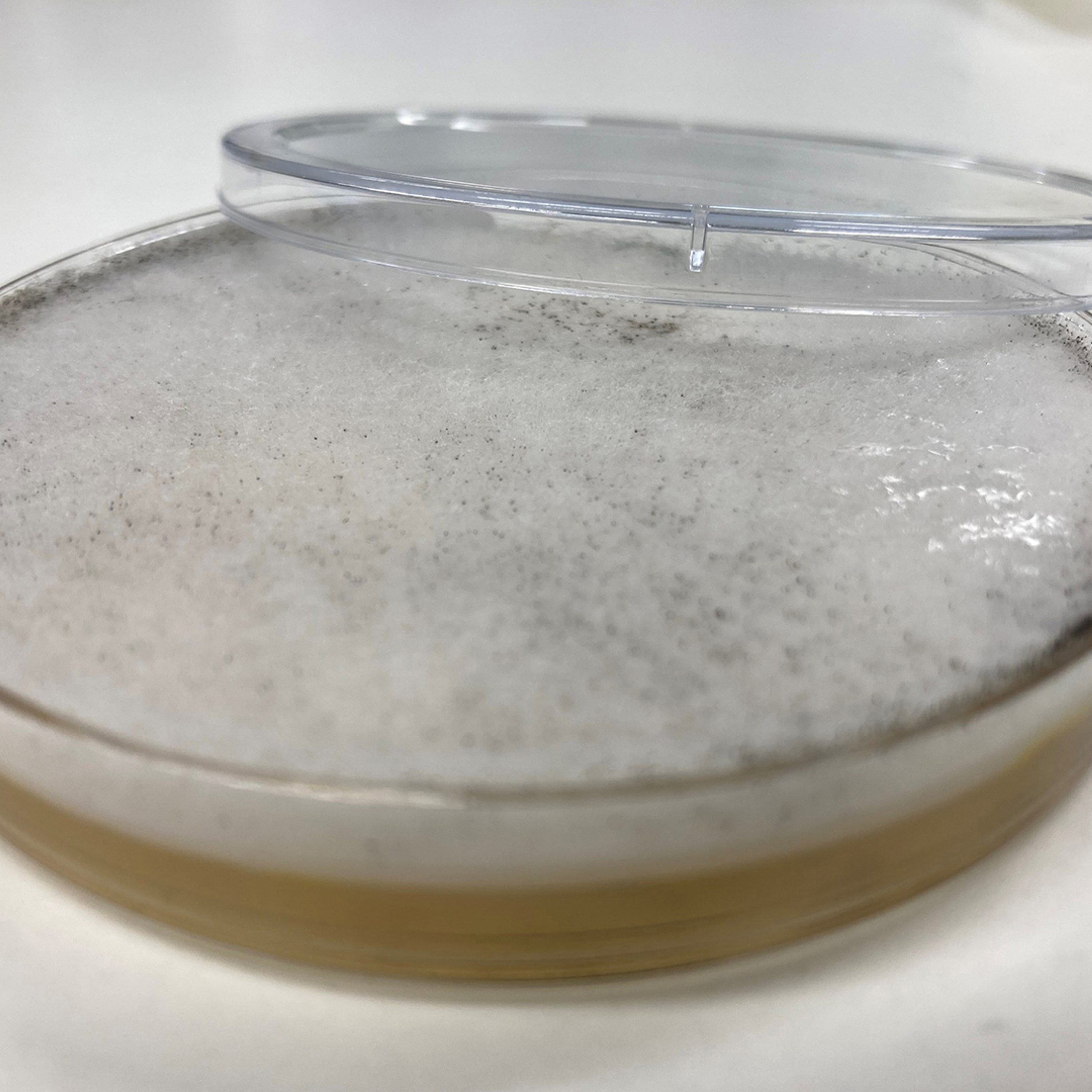
Fungal pandemic threat
May 29, 202328 min<p>We are familiar with fungal infections like Thrush and Athlete’s Foot, but fungal diseases that can kill are on the increase. The World Health Organisation is so concerned that it has published its first ever list of life threatening fungi. James Gallagher hears stories of hospitals being shut down, a ruined honeymoon and fungal infections that consume human tissue leaving terrible disfigurement. Add to that The Last of Us, a hit video game turned TV series where a parasitic fungus manipulating the brains of ants has jumped to people. Sounds fanciful but while this particular fungus could not cross from ants to humans, Dr Neil Stone explains why invasive fungal infections are on the rise and a potential pandemic should not be dismissed.</p>

Food Insecurity
May 22, 202328 min<p>Soaring food prices mean putting food on the table is a daily struggle. This is the grim reality for millions around the world. But hunger, so long a feature in lower-income countries, is becoming a familiar picture in richer ones too. James Gallagher reports from the UK, one of the wealthiest countries in the world, where food prices are rising at the fastest rate for 45 years and millions are turning to charity to feed themselves and their families. He visits the charities which help people to continue to eat and cook healthy food and hears from Professor Sir Michael Marmot from University College London, who has spent a lifetime researching the consequences of inequality and poverty. Food insecurity, he tells James, damages the health of children and adults.</p>
Maggots in medicine
May 15, 202328 min<p>After centuries of use in wound-healing, the maggot is back. The rise of the drug-resistant superbug means fresh eyes are focused on the superpowers of the larvae of the greenbottle fly species, Lucilia Sericata. James Gallagher reports on the healthcare professionals who are turning to maggot therapy to help clean up wounds and stop infection. </p><p>He talks to Melanie who has Type 1 Diabetes and had a quarter of her foot amputated. When the skin around the wound started to die, threatening the whole limb, she was offered maggot therapy. Now a self-declared maggot superfan, Melanie watched as the larvae, inside a bag a bit like a teabag, digested the dead skin on her foot.</p><p>And James visits a factory in Wales, BioMonde, preparing medical grade fly eggs for use across the UK health service.</p><p>(Photo: Larvae of the greenbottle fly sitting on so-called horse blood agar seen through a magnifying glass at the pharmaceutical company BioMonde. Credit: David Hecker/DDP/AFP/Getty Images)</p>
Lazy guide to exercise
May 8, 202328 min<p>James Gallagher is on a mission to find out what is the least amount of exercise you can do to still stay healthy. James goes on a Ramblers wellbeing walk, uses a treadmill for the first time and takes a hot bath all to find out how lazy he can be and still gain some health benefits.</p><p>(Photo: James Gallagher on a treadmill. Credit: Emma Lynch)</p>
The impossible number
May 1, 202328 min<p>There is a bizarre number in maths referred to simply as ‘i’. It appears to break the rules of arithmetic - but turns out to be utterly essential for applications across engineering and physics. We are talking about the square root of -1, which makes no sense.</p><p>Professor Fry waxes lyrical about the beauty and power of this so-called ‘imaginary’ number to a sceptical Dr Rutherford. </p><p>Dr Michael Brooks, author of The Maths That Made Us, tells the surprising story of the duelling Italian mathematicians who gave birth to this strange idea, and shares how Silicon Valley turned it into cold hard cash. Professor Jeff O’Connell, Ohlone College California, demonstrates that it is all about oscillations, and Dr Eleanor Knox, philosopher of physics at KCL and a senior visiting fellow at the University of Pittsburgh reveals that imaginary numbers are indispensable for the most fundamental physics of all - quantum mechanics.</p>
The mind-numbing medicine
Apr 27, 202328 min<p>This episode will render you oblivious, conked out and blissfully unaware. It’s about anaesthetics: those potent potions that send you into a deep, deathly sleep. Listener Alicia wants to know how they work, so our sleuths call on the expertise of consultant anaesthetist Dr Fiona Donald. Fiona shares her experience from the clinical frontline, and explains what we do and don’t know about how these chemicals work their mind-numbing magic.</p><p>We hear about ground-breaking research led by Professor Irene Tracey, which reveals how a pattern of slow brain waves can be used to determine the optimum dosage of these dangerous drugs.</p><p>And finally, Drs Rutherford and Fry wonder: what does all this tell us about normal consciousness? Professor Anil Seth shares how we can use brain tech to measure different levels of conscious awareness – from sleepy to psychedelic.</p>


