
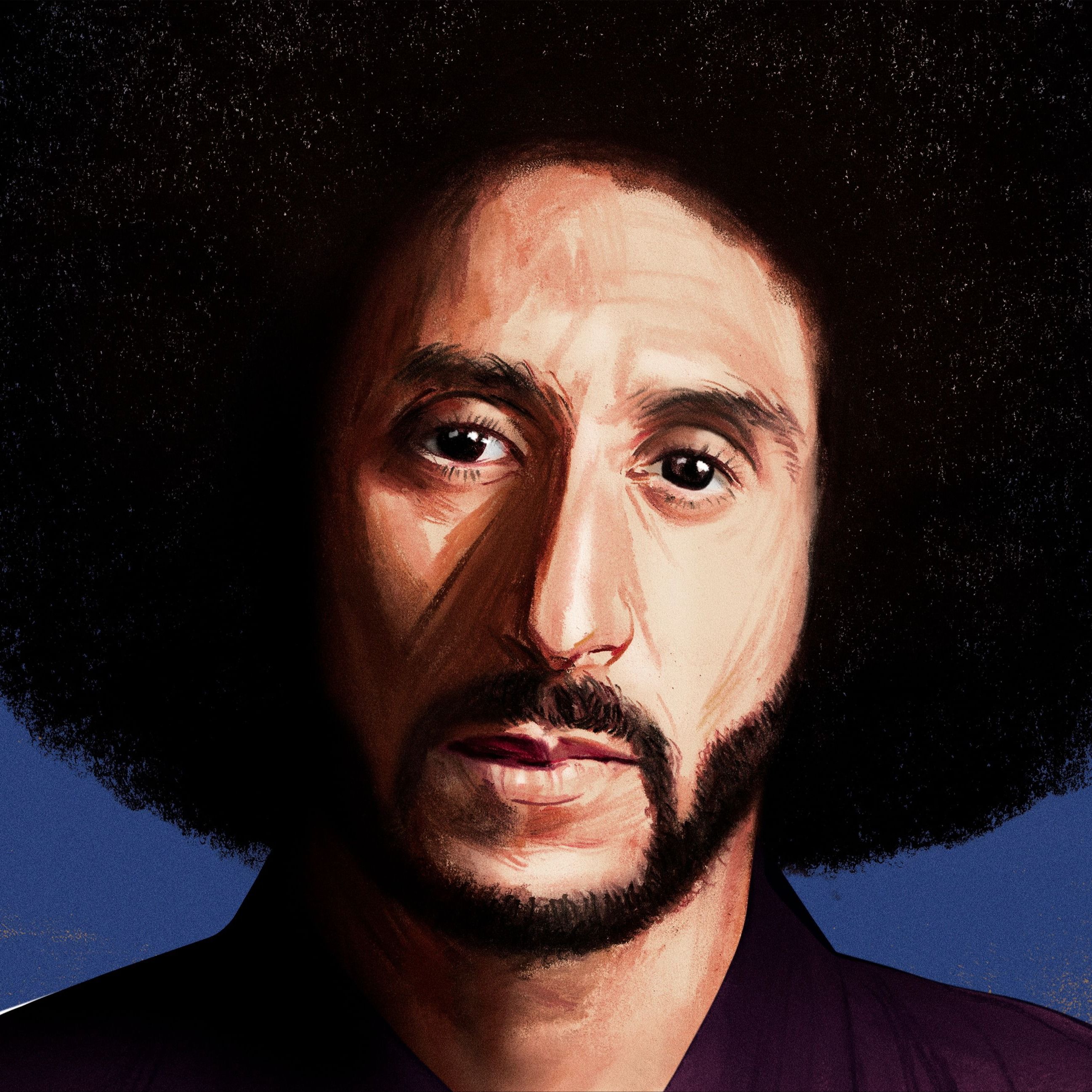
Colin Kaepernick, Ten Years After Taking a Knee
 The New Yorker Radio Hour
  Abrir no Hinto
 Sobre este episódio
<p>Colin Kaepernick had a stunning rise as an N.F.L. quarterback after becoming a full-time starter, in 2012. He was a legitimate dual threat—as effective running the ball as he was throwing it. And, to this day, Kaepernick still holds the record for rushing yards by an N.F.L. quarterback in a playoff game. But his formidable skills as a player were quickly overshadowed by his decision—quiet at first—to engage in protest for social justice a decade ago. He knelt during the national anthem at games, and that generated an enormous amount of controversy, with everyone from his fellow-players to a future President weighing in on his decision. In the aftermath of his demonstrations, the San Francisco 49ers told him that they were going to cut him, and no other team would sign him. In his new memoir, “<a href="https://www.hachettebookgroup.com/titles/colin-kaepernick/the-perilous-fight/9781538777879/" rel="noopener noreferrer"><u>The Perilous Fight</u></a>,” Kaepernick describes how this wasn’t even the full extent of the league’s efforts to punish him. He and David Remnick discuss his new book and the consequences of his political activism. “I had football taken away from me,” Kaepernick explains. “I didn’t get to leave on my terms. And I didn’t get to leave because, ‘Oh, you're not good enough to play anymore.’ It was because of the causes I was supporting and the change I was trying to effect. So that leaves a sour taste in your mouth.”</p><p>Further reading: </p><ul><li>“<a href="https://www.newyorker.com/sports/sporting-scene/the-nfls-change-of-tone-and-the-limits-of-merely-listening" rel="noopener noreferrer"><u>The N.F.L.’s Change of Tone, and the Limits of Merely Listening</u></a>,” by Louisa Thomas</li><li>“<a href="https://www.newyorker.com/sports/sporting-scene/colin-kaepernick-contested-workout-and-the-power-plays-of-the-nfl" rel="noopener noreferrer"><u>Colin Kaepernick’s Contested Workout and the Power Plays of the N.F.L.</u></a>,” by Louisa Thomas</li><li>“<a href="https://www.newyorker.com/news/daily-comment/behind-nikes-decision-to-stand-by-colin-kaepernick" rel="noopener noreferrer"><u>Behind Nike’s Decision to Stand by Colin Kaepernick</u></a>,” by Jelani Cobb</li><li>“<a href="https://www.newyorker.com/culture/annals-of-appearances/what-will-taking-the-knee-mean-now" rel="noopener noreferrer"><u>What Will Taking the Knee Mean Now?</u></a>,” by Doreen St. Félix</li><li>“<a href="https://www.newyorker.com/news/daily-comment/the-racial-demagoguery-of-trumps-assaults-on-colin-kaepernick-and-steph-curry" rel="noopener noreferrer"><u>The Racial Demagoguery of Trump’s Assaults on Colin Kaepernick and Steph Curry</u></a>,” by David Remnick</li></ul><p> </p><p>New episodes of The New Yorker Radio Hour drop every Tuesday and Friday. Follow the show wherever <a href="http://swap.fm/l/tny-radiohour-eBFv3Y" rel="noopener noreferrer"><u>you get your podcasts</u></a>. <br> </p><br/> <p>Hosted by Simplecast, an AdsWizz company. See <a href="https://pcm.adswizz.com">pcm.adswizz.com</a> for information about our collection and use of personal data for advertising.</p>
Ouve este episódio em inglês para aprender inglês
Os episódios de podcast são uma das formas mais densas de absorver inglês ao ritmo nativo. Colin Kaepernick, Ten Years After Taking a Knee de The New Yorker Radio Hour dá-te diálogo natural, fala sem guião e vocabulário que aparece mesmo em conversas reais.
No Hinto, cada palavra da transcrição é tocável. Toca numa palavra desconhecida, vê a tradução na tua língua ao instante e continua a ouvir sem perder o ritmo.
Episódios para aprender inglês
- John Wilson and “The History of Concrete” 15 de set. de 2026
- Edwidge Danticat on Haitian Americans in a Time of Peril 8 de set. de 2026
- Sarah Longwell, a Former Republican, on “How to Eat an Elephant” 4 de set. de 2026
- Gloria Steinem in Conversation with David Remnick, from 2015 3 de set. de 2026
- Ian Frazier and Samy Burch on “Coyote vs. Acme” 1 de set. de 2026
- Kai Bird on Roy Cohn, a Founding Father of Donald Trump’s America 28 de ago. de 2026
- Jessica Tarlov, a Lonely Liberal on Fox News’ “The Five” 25 de ago. de 2026
- Jon Lovett Answers Your Questions 21 de ago. de 2026
- Erin Brockovich Takes on Data Centers 18 de ago. de 2026
- Bernie Sanders Takes on Data Centers 14 de ago. de 2026
- Sam Smith on Their New Album, “Hazel Eyes” 11 de ago. de 2026
- How Socialist Is the D.S.A.? Megan Romer Explains 7 de ago. de 2026
- The Democratic Socialist Running for Mayor of Los Angeles 3 de ago. de 2026
- Michigan’s Abdul El-Sayed Is “Not a Burn-It-Down Kind” of Candidate 31 de jul. de 2026
- A Democrat and a Republican in Congress on the Blowback from Mass Detention 28 de jul. de 2026
- One Refugee’s Journey Through ICE Detention 24 de jul. de 2026
- Pick Three: Richard Brody on “The Odyssey” and Other Summer Films 21 de jul. de 2026
- Rahm Emanuel Says Israel’s Path Is “Not Sustainable Politically” 17 de jul. de 2026
- How an Estimated Seven Hundred Thousand People Have Died from DOGE’s U.S.A.I.D. Cuts 12 de jul. de 2026
- The World Cup, the Knicks, and LeBron James’s Fate: An All-Time Summer in Sports 10 de jul. de 2026
- The Sounds of Summer, with Fred Armisen 7 de jul. de 2026
- Alicia Keys’s New York Musical Goes on National Tour 3 de jul. de 2026
- From The Political Scene: Donald Trump’s Dangerous Politicization of America’s Spy Agencies 30 de jun. de 2026
- America at 250: A View from Britain, with “The Rest Is History” 26 de jun. de 2026
- From Critics at Large: Steve Spielberg's Blockbusters 23 de jun. de 2026
- Hillary Clinton on How Donald Trump Lost the Iran War 18 de jun. de 2026
- The Sports Journalist Pablo Torre Has a Pulitzer, but Still Feels Like the “Turd” in the Pool 16 de jun. de 2026
- Rachel Goldberg-Polin on Losing a Son in Gaza 12 de jun. de 2026
- Seeing the Dark Side of the Moon on NASA’s Artemis II Mission 9 de jun. de 2026
- Jack Schlossberg, the Kennedy Running for Congress in New York 5 de jun. de 2026