
Суспільство
The Diary Of A CEO Clips
This Channel is where we showcase the best clips from The Diary Of A CEO, hosted by Steven Bartlett, this show is an invitation to rethink what’s possible. Through honest conversations with global experts, visionaries, and game-changers, we explore refreshing ideas and mindsets that shape our lives. Whether you’re chasing a dream, navigating change, or simply looking for a new perspective, this is the space for curious, open minds and big ambitions.
 Відкрити в Hinto
Відео для вивчення англійської111
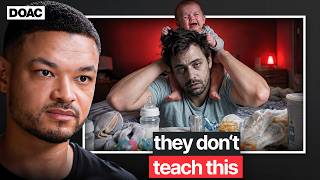
The BRUTAL Truth About Parenting No One Tells You
29 серп. 2026 р.
Dr. Darby Saxbe, professor of psychology and director of the NEST Lab at the University of Southern California, studies what actually happens to men when they become fathers. And some of her findings challenge everything we assume about the so-called "dad bod." She reveals that across both animal and human studies, males tend to gain weight when they become fathers. It's not just the sleep deprivation and stress-driven diet changes (though those play a role). She points to a study of tamarin monkeys fed a standardized diet: the expectant fathers gained more weight than monkeys who weren't about to have offspring, even eating exactly the same food. The body changes happened before birth. Her theory is that it's adaptive: a larger body is more imposing against rivals and provides a buffer against food scarcity. Then comes the counterintuitive part. Studies of single women found that when shown a range of male body types, the dad bod is the most popular. Beyond attraction, women read the dad bod as a signal that a man is more likely to be a hands-on, attentive, caring father, qualities that are genuinely attractive. She contrasts this with the online reaction when singer Olly Murs posted his ripped, toned-up physique: many women said they preferred the before picture. Discover: • Why men physically gain weight when they become fathers • The tamarin monkey study showing weight gain before birth on the same diet • Why science says women find the dad bod most attractive • Why the dad bod signals a more caring, hands-on father • The conversations every couple should have before the baby arrives • Why building a social support network before birth is critical • What matrescence and patrescence do to your sense of self • Why the hardest early period is temporary, and how to give yourself grace 📺 Watch the full episode here - https://youtu.be/Ppyt3MptX5k ❤️ Subscribe to our main channel - www.youtube.com/TheDiaryOfACEO Get your hands on exclusive Diary of a CEO products: https://thediary.com/collections/all?utm_source=youtube&utm_medium=organic&utm_campaign=experiment&utm_term=clipschannel #thediaryofaceo #doac

Tech Insider WARNS: "You Are Not Prepared For 2027"
28 серп. 2026 р.
Tech critic Ed Zitron, host of the Better Offline podcast and one of the most cited voices warning that AI is a bubble, lays out a detailed case for why he believes a crash is coming, and why ordinary people's retirements could be the biggest casualty. Zitron argues we are not just in an AI bubble but what he calls a "RotCom" bubble, and that the collapse likely begins with one company running out of money: OpenAI. He explains that OpenAI needs to raise at least 100 billion dollars a year just to survive, that its planned public listing has been pushed back, and that if it can't go public, a chain of companies tied to it (SoftBank, Oracle, and the big cloud providers) are all exposed. Oracle, he notes, is building over 400 billion dollars of data centers largely for OpenAI, and its revenue has been flat for 15 years when adjusted for inflation. Without OpenAI, he argues, Oracle is in serious trouble. He then explains the domino effect that worries him most. Nvidia is the largest company in the S&P 500 and NASDAQ, making up 7 to 8% of the index, and he believes its revenue could fall 50 to 70% because of what he describes as circular financing (Nvidia funding companies that then raise debt to buy more of its GPUs). When that unwinds, he believes Amazon, Google, Microsoft, and Meta will have to restate their growth guidance, triggering a market pullback. Discover: • Why Zitron believes an AI crash could begin as early as 2027 • How the collapse of one company could trigger a domino effect • Why he believes Nvidia's revenue could fall 50 to 70% • Why ordinary people's retirements are the biggest risk • How circular financing is inflating the AI industry • Why he compares today's bubble to the dot-com crash but bigger • What he personally does with his money (and why) • Why he says to distrust the promises tech companies make 📺 Watch the full episode here - https://youtu.be/Lf5oqGOCRCM ❤️ Subscribe to our main channel - www.youtube.com/TheDiaryOfACEO Get your hands on exclusive Diary of a CEO products: https://thediary.com/collections/all?utm_source=youtube&utm_medium=organic&utm_campaign=experiment&utm_term=clipschannel #thediaryofaceo #doac

The REAL Reason The AI Crash Has Already Started
27 серп. 2026 р.
The man who predicted the 2008 financial crisis, and posted positive returns while the S&P 500 plunged nearly 40%, says the warning signs are flashing again. Ray Dalio, founder of Bridgewater Associates, explains why he believes we are in the biggest investment bubble in American history, and exactly what will make it burst. Dalio is careful to explain cause and effect rather than just sound an alarm. A bubble, he says, is when prices rise dramatically, companies do very well, and then it all collapses, with real consequences for ordinary people. He points to 1929, which was followed by the Great Depression, and 2000, the dot-com bubble. In each case, a revolutionary new technology arrives (electricity, cars, radio in the 1920s; the internet in 2000; AI today), people rightly get excited, and then they lose sight of the one thing that matters most: the price they're paying. Discover: • Why Dalio believes this is the biggest investment bubble in American history • The step-by-step mechanics of how an AI bubble bursts • Why bubbles are almost inevitable with revolutionary new technology • How paper wealth is manufactured and why you can't actually spend it • What the "big cycle" is and why money, politics, and geopolitics collapse together • The specific event that usually pricks a bubble • Why "weak hands" and borrowed money are classic bubble warning signs • Why this pattern echoes 1929 and the dot-com crash 📺 Watch the full episode here - https://youtu.be/Bu0xNDLNORU ❤️ Subscribe to our main channel - www.youtube.com/TheDiaryOfACEO Get your hands on exclusive Diary of a CEO products: https://thediary.com/collections/all?utm_source=youtube&utm_medium=organic&utm_campaign=experiment&utm_term=clipschannel #thediaryofaceo #doac
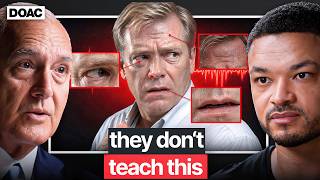
Ex-FBI Agent Reveals How To Read Anyone Instantly
26 серп. 2026 р.
Former FBI agent Joe Navarro spent 25 years decoding human behavior, and he explains why body language is far more reliable than most people think, and how you can learn to read anyone in a matter of seconds. Navarro pushes back on the idea that body language is too culturally variable to be useful. He argues that reading nonverbals is one of the most fundamental human skills, because we are born unable to speak. A mother learns to read her baby entirely through nonverbals, whether the child is colicky, cold, hot, or simply needs reassurance. We evolved this ability because we were surrounded by predators and had to instantly sense comfort and discomfort. His core teaching is to stop hunting for perfect, magic-bullet signals and instead read one simple thing: comfort versus discomfort, positive versus negative. He explains what these states look like. When someone is positively engaged, you see gravity-defying behaviors, emphasis, humor, and broad gestures. When someone is uncomfortable or in doubt, you see restraint, facial touching, and the furrowing of the glabella (the small area between the eyebrows, sometimes called eyebrow knitting). Navarro points out that he can read Steven's doubt in real time by watching his eyes and glabella. Discover: • Why body language is more reliable than most people believe • The one simple thing to read in anyone: comfort versus discomfort • What the glabella (eyebrow knitting) reveals about doubt and dislike • Why first impressions are formed in just three milliseconds • The Harvard research showing we read people with 75% accuracy instantly • Why synchrony equals harmony and how to build instant rapport • How Navarro used mirroring even when negotiating with terrorists 📺 Watch the full episode here - https://youtu.be/ZuiIvevLg40 ❤️ Subscribe to our main channel - www.youtube.com/TheDiaryOfACEO Get your hands on exclusive Diary of a CEO products: https://thediary.com/collections/all?utm_source=youtube&utm_medium=organic&utm_campaign=experiment&utm_term=clipschannel #thediaryofaceo #doac

The SIMPLE Way To FIX Your Low Energy (Science Backed)
25 серп. 2026 р.
Dr. Martin Picard, Professor of Behavioral Medicine and Director of the Mitochondrial Psychobiology Group, explains how a form of light you can't even see may boost your body's energy, blunt your blood sugar spikes, and support the tiny power plants inside every one of your cells. The conversation centers on red light therapy, now a booming field with hundreds of devices from helmets to hairbrushes. Picard explains the science in simple terms. Light is energy, and for light to do something in biology, something in the body has to resonate with it. The cellular antenna for red light appears to be the mitochondria, specifically an enzyme called cytochrome C oxidase. When red and infrared light penetrate your tissue (through skin, even through the skull and into the brain), they appear to help the mitochondria transform energy more efficiently. He walks through a striking study on blood glucose. When researchers shined red light on people's backs as they consumed a large dose of glucose, the spike in blood sugar was smaller than normal. They measured energy metabolism through the breath (oxygen in, CO2 out) and found that the people under red light had slightly higher metabolism. The theory: the light helped the electrons from the glucose flow more efficiently through the mitochondria, so blood sugar didn't spike as high. Discover: • How red light appears to boost your mitochondria and your energy • The study where red light on the back lowered blood sugar spikes • Why red light therapy follows a bell curve and more is not better • How too much red light can trigger cell damage instead of healing • What holding your breath reveals about energy resistance in your body • Why anxiety, depression, and PTSD may be energetic disorders of the brain • Why the "science of averages" can hide who a treatment really helps • Why the ketogenic diet has been life-changing for some treatment-resistant patients 📺 Watch the full episode here - https://youtu.be/6xlmaorRY0w ❤️ Subscribe to our main channel - www.youtube.com/TheDiaryOfACEO Get your hands on exclusive Diary of a CEO products: https://thediary.com/collections/all?utm_source=youtube&utm_medium=organic&utm_campaign=experiment&utm_term=clipschannel #thediaryofaceo #doac

The REAL Reason You Wake Up At 3AM
24 серп. 2026 р.
Dr. Stasha Gominak, a neurologist who practiced for over 20 years and trained at Harvard-affiliated Massachusetts General Hospital, believes she has uncovered a hidden cause behind a cluster of modern health problems, and that it traces back to a single change in how we live. She explains that after leaving neurology practice, she has worked with thousands of patients on sleep, and she noticed something the standard advice couldn't explain. The usual sleep treatments (blackout curtains, white noise, consistent bedtimes, treating the bedroom as a place for sleep) had failed all of them. They had tried everything. Her investigation started with young, thin women suffering daily headaches, who turned out to have almost no REM sleep in the first half of the night. Chasing that thread, she landed on the brainstem, the region that runs the autonomic nervous system, paralyzes us during REM sleep, and governs the balance between fight-or-flight and rest-and-digest. Her patients weren't getting the REM sleep that consolidates memory and regulates mood, which is why she'd been prescribing them antidepressants without addressing the root cause. Discover: • Why a neurologist believes sleep problems are a chemical deficiency, not a behavior problem • The hidden change in the 1980s she links to fatty liver, ADHD, depression, and diabetes • Why she believes moving indoors cost us a vital neurotransmitter • How vitamin D connects to the chemical that governs rest-and-digest sleep • Why standard sleep advice fails the people who need it most • Why she thinks most night owls aren't actually genetic night owls • Why she considers vitamins as risky as any drug if you get them wrong • Why she believes humans were meant to live outdoors like every other animal 📺 Watch the full episode here - https://youtu.be/BbGv7GTbRN8 ❤️ Subscribe to our main channel - www.youtube.com/TheDiaryOfACEO Get your hands on exclusive Diary of a CEO products: https://thediary.com/collections/all?utm_source=youtube&utm_medium=organic&utm_campaign=experiment&utm_term=clipschannel #thediaryofaceo #doac

The REAL Reason AI Is About To Change Everything
22 серп. 2026 р.
Geopolitical expert Ian Bremmer, founder of Eurasia Group and a man who has forecast the world's biggest risks for over 25 years, explains why the AI revolution is about to make intelligence itself something you have to pay for, and why that could split humanity into two different species. Steven raises the scale of what's happening: Jeff Bezos raising 100 billion dollars for an AI venture, Elon Musk with xAI, Anthropic, Google, OpenAI, all racing to build superintelligence. If intelligence becomes the most powerful commodity on Earth, then whoever controls it holds extraordinary power. Bremmer points to Sam Altman's own framing, that you will pay for intelligence the way you pay for water or gas. To the average person, that sounds absurd. Intelligence feels like something we have free will over. Suddenly, a company could control it. Discover: • Why Sam Altman warns you'll pay for intelligence like water or gas • Why Bremmer says AI could split humanity into two different species • The three types of governance he believes we urgently need • Why the US and China need AI arms control before a crisis, not after • What an "AI stability board" would do and why we don't have one • Why Bremmer fears humans becoming computer-like more than he fears AGI • How your smartphone is programming you into a lane • Why resisting the algorithm may be the most human thing you can do 📺 Watch the full episode here - https://youtu.be/EVts3Ui_0AI ❤️ Subscribe to our main channel - www.youtube.com/TheDiaryOfACEO Get your hands on exclusive Diary of a CEO products: https://thediary.com/collections/all?utm_source=youtube&utm_medium=organic&utm_campaign=experiment&utm_term=clipschannel #thediaryofaceo #doac

Exercise Scientist’s #1 Way To GAIN Muscle Faster
21 серп. 2026 р.
Dr. Andy Galpin, Professor of Kinesiology and Executive Director of the Human Performance Center at Parker University, explains why the way most people train wastes time, and how focusing on one thing gets you more results with less effort. The conversation starts with grip strength. Steven mentions he was told it's the single biggest predictor of longevity. Galpin adds crucial nuance. It's true that grip strength is a useful, cheap health marker (under 40 dollars for a device), and people who are very weak tend to be in worse health on average. But the field has taken it too far. Optimizing your grip strength (going from the 80th to the 90th percentile) probably won't make you live a day longer. What grip strength really tests is your nervous system as much as your muscle, which is why grip strength asymmetry (a big difference between your two hands) is now studied as an early predictor of neurological conditions like Alzheimer's and Parkinson's. Steven tests his own grip strength on camera, and the results reveal something surprising: his stronger side on the device isn't his overall stronger side, proving grip strength is a specific type of strength rather than a clean proxy for total-body strength. Galpin then explains the difference between strength and power, a distinction most people miss. Strength is force (mass times acceleration). Power is force multiplied by velocity, how fast you can move a load. This matters because "powerpenia," the accelerated loss of muscle power with age, is highly associated with falls, fractures, and dislocations after 60, which are among the most health-destroying events as you get older. Training for power means moving a moderate load with speed, not lifting heavy slowly. Discover: • Why grip strength is a useful health marker but shouldn't be over-optimized • What grip strength asymmetry reveals about Alzheimer's and Parkinson's risk • The difference between strength and power and why power matters more with age • Why "powerpenia" is linked to falls and fractures after 60 • Why training more days a week isn't necessarily better • Why the popular advice to take short rests is not supported by evidence • Why rep quality beats quantity for building muscle • Why this scientist takes zero supplements right now 📺 Watch the full episode here - https://youtu.be/dmz--DQty8o ❤️ Subscribe to our main channel - www.youtube.com/TheDiaryOfACEO Get your hands on exclusive Diary of a CEO products: https://thediary.com/collections/all?utm_source=youtube&utm_medium=organic&utm_campaign=experiment&utm_term=clipschannel #thediaryofaceo #doac

Global Economist WARNS: "It's Too Late To Stop This"
20 серп. 2026 р.
Economist Steve Keen, who correctly warned of the 2008 financial crash, delivers a stark message: when it comes to climate breakdown, it is already too late to stop it, and the only advice he has left is to brace for impact. Keen argues that we are, in his words, five inches from a brick wall and not slowing down in time. He believes the beginnings of a breakdown in our capacity to maintain civilization could arrive within the next 10 years, and he worries he may even be putting that timeline too far into the future. He traces the failure back 50 years, to a moment when engineers at MIT laid out exactly what was coming, and politicians who listened to media and oil interests trivialized the danger instead. He gets specific about what breakdown could look like. He points to the Atlantic Meridional Overturning Circulation, the AMOC, the ocean current system that regulates Europe's climate. Recent estimates suggest it could stop functioning sometime between now and 2095. If it does, Keen says the temperature across Europe could fall by roughly three degrees per decade for three decades, a 10-degree average drop, with extremes in London ranging from minus 20 to plus 35. He questions whether a country that grinds to a halt over leaves on the train tracks is remotely prepared for that scale of disruption. Steven pushes the conversation toward solutions and grounds it in what is actually possible. A world government is not going to happen. The level of global coordination required is not realistic. So rather than despair, the argument lands on the one thing that can be done: redirect the money currently spent trying to mitigate the problem into creating forms of energy that produce no emissions, fuel prosperity, and drive innovation, instead of assuming we are all doomed and nothing can be done. Discover: • Why an economist who predicted 2008 says it is already too late to stop climate breakdown • What "brace for impact" actually means for the next 10 years • The AMOC collapse that could drop Europe's temperature by 10 degrees • Why London could swing between minus 20 and plus 35 degrees • How engineers warned us 50 years ago and were ignored • Why world government and global coordination are not realistic solutions • The one realistic response: emission-free energy that also fuels prosperity • How disruption in the Strait of Hormuz could trigger a global food shock 📺 Watch the full episode here - https://youtu.be/Y43T7VQGtOs ❤️ Subscribe to our main channel - www.youtube.com/TheDiaryOfACEO Get your hands on exclusive Diary of a CEO products: https://thediary.com/collections/all?utm_source=youtube&utm_medium=organic&utm_campaign=experiment&utm_term=clipschannel #thediaryofaceo #doac

If You Think God Is REAL, You NEED To See This
19 серп. 2026 р.
Professor Brian Greene, theoretical physicist at Columbia University and one of the world's leading string theorists, explains why he believes God is a human creation, why religion was invented to quell our fear of death, and why he prays even though he's certain no one is listening. Greene is careful and respectful, but his position is clear. The kind of God many people describe, an anthropomorphic being sitting on a throne in a heavenly place, feels to him like a human creation, though a wondrous one. He doesn't see religion as an enemy of science. Instead, he sees it as a structure designed to quell our existential anxiety. Where did religion come from? He traces it to our ancestors recognizing that they would die. He describes ancient burial caves where the grave goods (animal teeth stitched together, objects that would take a single person years to create) were buried with the dead. Why spend that time? Because our forebears imagined death was not the end, that the individual would need those goods on their journey into the afterlife. That fear, that death is too terrifying to imagine as the end, is where Greene sees the glimmers of religious sensibility emerging. He shares his own practice honestly. Raised culturally Jewish, he does pray on occasion. But he does not believe he's praying to an actual God. When Steven asks who he's praying to, Greene says: the universe, recognizing that the prayer will fall on deaf ears because there's nothing out there to hear it, but it makes him feel better. He allows the scientific side of his mind and the irrational human side to each have their place. Discover: • Why Greene believes God is a human creation, not a discovery • How religion emerged from our ancestors' fear of death • Why he prays even though he believes no one is listening • Why near-death experiences have a logical, non-supernatural explanation • How science has pushed our understanding back to the Big Bang • Why a human lifetime registers as zero on the cosmic calendar • Why our smallness in the universe is actually what gives us significance • Why an infinite universe means there are copies of you out there 📺 Watch the full episode here - https://youtu.be/Qifsxitq_q4 ❤️ Subscribe to our main channel - www.youtube.com/TheDiaryOfACEO Get your hands on exclusive Diary of a CEO products: https://thediary.com/collections/all?utm_source=youtube&utm_medium=organic&utm_campaign=experiment&utm_term=clipschannel #thediaryofaceo #doac

The REAL Reason Scientists Know Reality Is An Illusion
18 серп. 2026 р.
Professor Brian Greene, theoretical physicist at Columbia University and one of the world's leading string theorists, explains why the odds say you are almost certainly not real, and why the deepest truth about what you are made of is stranger than anything you were taught in school. He starts by explaining string theory in the simplest possible terms. You know matter is made of molecules, which are made of atoms, which are made of electrons and quarks. But is that the end of the story? String theory says no. If you zoomed in with a powerful enough microscope, inside every electron and every quark you would find a tiny vibrating filament, a string. Just as a violin string produces different musical notes depending on how it vibrates, these strings produce different particles depending on their vibration pattern. So at the deepest level, everything (including you) is just energy vibrating in different patterns. He is honest that string theory is unproven. We don't have particle colliders powerful enough to see the strings directly. The ideas come from mathematics: when you combine the equations of quantum mechanics and general relativity inside the math of string theory, everything fits together harmoniously, and physicists follow where the math leads. The conversation then turns to the idea that unsettles most people. Steven asks whether reality could be a simulation. Greene says he cannot prove that it isn't. He explains the argument popularized by philosopher Nick Bostrom: if any advanced civilization ever develops the ability to run conscious, high-fidelity simulations of their ancestors, they would run millions or billions of them. Those simulated realities would vastly outnumber the single real universe. So statistically, any conscious being asking whether they're real is almost certainly living inside a simulation rather than base reality. As Greene puts it, the odds are that anyone who thinks they're real is not. Discover: • What string theory actually is, explained as simply as possible • Why you, at the deepest level, are just vibrating energy • The simulation argument and why the odds say you're not real • Why Greene cannot prove we are not living in the Matrix • Why he believes all human emotion is just electrical impulses • Whether ChatGPT or Claude could ever be truly conscious • Why he thinks humans will blend with AI into a new life form • Why he is at peace with the end of humanity as we know it 📺 Watch the full episode here - https://youtu.be/Qifsxitq_q4 ❤️ Subscribe to our main channel - www.youtube.com/TheDiaryOfACEO Get your hands on exclusive Diary of a CEO products: https://thediary.com/collections/all?utm_source=youtube&utm_medium=organic&utm_campaign=experiment&utm_term=clipschannel #thediaryofaceo #doac

The REAL Reason Scientists Know Aliens Will NEVER Visit
17 серп. 2026 р.
Professor Brian Greene, theoretical physicist at Columbia University and one of the world's leading string theorists, makes a claim that challenges the deepest assumption you hold about yourself: you do not have free will, and he says this with high confidence. His reasoning is simple and unsettling. When he looks at a person, he sees a "man-shaped collection of particles," and every one of those particles is fully governed by the laws of physics. When you raise your hand, it is not you doing it. It is the laws of physics guiding the particles in your brain, sending an electrical signal down your arm, causing your muscle to contract. You do not control the laws that govern those particles, so you do not control the decision, and you do not control your life. The feeling that you author your own choices is, he says, a powerful and seductive story your brain tells itself, possibly because it had evolutionary utility. He extends this to everything we consider meaningful. Concepts like caring, happiness, sadness, meaning, purpose, morality, choice, and freedom are all human-made constructs. They don't exist out there in the universe. There is no notion of free will floating in space beyond the Andromeda galaxy. These are ideas our species invented to organize our experiences and give us a utilitarian advantage. Greene is clear that this doesn't diminish them. He accepts his sense of self, but he sees it for what it is. He then turns to consciousness and the afterlife. He explains the appeal of the idea that our consciousness floats off and rejoins a universal source when we die. He references Ernest Becker's "The Denial of Death" and says these are human-authored stories to combat our recognition that we are mortal. They make us feel good, and there's nothing wrong with that, but he thinks it's important to see them for what they are. He believes consciousness emerges when there is enough information processing carried by the motion of particles, nothing more. Discover: • Why a Columbia physicist says you have no free will, with high confidence • Why every choice you think you make is just particles obeying physics • How concepts like meaning, morality, and purpose are human inventions • Why Greene says heaven is a story we tell ourselves to deny death • The reframe that turns cosmic insignificance into liberation • Why an advanced alien civilization would never bother visiting us • Why traveling to the future is real, undisputed physics • Why traveling to the past would require wormholes that may not exist 📺 Watch the full episode here - https://youtu.be/Qifsxitq_q4 ❤️ Subscribe to our main channel - www.youtube.com/TheDiaryOfACEO Get your hands on exclusive Diary of a CEO products: https://thediary.com/collections/all?utm_source=youtube&utm_medium=organic&utm_campaign=experiment&utm_term=clipschannel #thediaryofaceo #doac

The REAL Reason Healthy People Drop Dead
15 серп. 2026 р.
Dr. Andy Galpin, Professor of Kinesiology and Executive Director of the Human Performance Center at Parker University, sits down with Steven to interpret his actual blood results, and what starts as a routine review becomes a lesson that could save lives. The first thing Galpin sees is Steven's cholesterol. Not one marker is good. Steven immediately gives context: at the time of the test, he was on a ketogenic diet, his uncle died of a heart attack, and his father had heart surgery just the week before. Galpin explains the crucial distinction between medicine and performance. Cholesterol has lifestyle, dietary, and familial causes. Steven doesn't smoke, doesn't drink, isn't obese, which means his high numbers are actionable and, combined with his family history, worth taking seriously. Galpin explains why Steven was told to cut steak, bacon, and butter: those are high in saturated fat. But saturated fat isn't evil. There are no evil foods, only evil context. If Steven's numbers rose after he increased saturated fat on keto, that's not a positive sign, though it doesn't make ketogenic diets universally bad. Discover: • Why young, fit people with normal blood work can still drop dead • The friend whose life was saved by a scan his cardiologist said he didn't need • Why Steven's ketogenic diet may have spiked his cholesterol • How a client dropped his cholesterol from 347 to 163 • Why fiber and stress reduction physically lower cholesterol • Why a thicker heart wall is usually a healthy adaptation • Why low omega-3 and high mercury means changing your source, not the dose • Why aging is not the excuse we think it is for physical decline 📺 Watch the full episode here - https://youtu.be/dmz--DQty8o ❤️ Subscribe to our main channel - www.youtube.com/TheDiaryOfACEO Get your hands on exclusive Diary of a CEO products: https://thediary.com/collections/all?utm_source=youtube&utm_medium=organic&utm_campaign=experiment&utm_term=clipschannel #thediaryofaceo #doac

THIS Is #1 FASTEST Way To Burn Fat WITHOUT Trying
14 серп. 2026 р.
Dr. Andy Galpin, Professor of Kinesiology and Executive Director of the Human Performance Center at Parker University, says the biggest misconception about fat loss is that it's complicated. It isn't. It's categorically simple. It's just practically hard. And understanding that difference changes everything. He explains that there are only a few things you have to do to lose fat, but a billion ways to get there. The key is knowing what kind of person you are. He uses the analogy of cooking versus baking. Baking is chemistry: you weigh and measure everything, follow the recipe exactly, and don't deviate. Cooking is concepts: you work with what's in the fridge and stay loose. For fat loss, some people need the baker approach (weigh and measure every gram, check weight daily, follow exactly what they're told) and some people need the cook approach (one to three simple rules, stay airtight to the concepts). Most people, he says, actually want the detailed baker approach, not because they love precision, but because it removes the anxiety of guessing. When you weigh and measure, you have no choices to agonize over. But his recommendation for everyone is to do the baker approach first for two weeks: measure everything, learn what a tablespoon of peanut butter actually looks like, what a cup of rice really is. Then you can back off and operate on concepts with an educated eye. Discover: • Why fat loss is "categorically simple" but practically hard • The cook vs baker framework for finding your fat loss approach • Why you should weigh and measure everything for just two weeks • The diet recall study that revealed people eat 40% fat when they assume 20% • Why you burn fewer calories in workouts than you think • The 5-4-3-2-1 method for fat loss • Why having any training plan beats having no plan • Why information never changes behavior and what actually does 📺 Watch the full episode here - https://youtu.be/dmz--DQty8o ❤️ Subscribe to our main channel - www.youtube.com/TheDiaryOfACEO Get your hands on exclusive Diary of a CEO products: https://thediary.com/collections/all?utm_source=youtube&utm_medium=organic&utm_campaign=experiment&utm_term=clipschannel #thediaryofaceo #doac

If You Think Death Is The "END", You NEED To See This
13 серп. 2026 р.
Graham Hancock, the bestselling author and presenter of the Netflix series Ancient Apocalypse, sits down for a deeply personal conversation just weeks before heart surgery. And he delivers a warning that has nothing to do with pyramids or lost civilizations, and everything to do with where humanity is heading right now. When asked about the closing question left by a previous guest (is there a danger of sleepwalking into worshipping a machine god?), Hancock's answer is immediate: we are already doing it. He argues that science has been elevated to occupy the space once held by religion. And he draws a sharp line between science as a tool and science as an object of worship. He says the phrase "trust the science" betrays science itself, because the fundamental ethic of science is not to trust but to question and challenge. His preferred phrase is "investigate the science." See whether it's right for you. See what else is available. Anybody who says don't ask questions, he argues, is doing great harm. He warns that our species is poised on the edge of an abyss. Our technology has outgrown our mentality, and we are not in good shape to deal with the challenges ahead. He believes the chance of a nuclear exchange grows higher, and that unlike his generation (born in 1950, five years after the end of World War II), people today are not aware of the true horror of global war. He believes the most likely way we bring our civilization back to the Stone Age is not a comet impact but nuclear war, something we would do to ourselves. Discover: • Why Graham Hancock says we are already worshipping a machine god • The reason he refuses to ever say "trust the science" • Why he believes our species is on the edge of an abyss • The Egyptian judgment scene and what it says about how you live your life • His emotional reflection on love and family before heart surgery • Why he believes nuclear war is the most likely path back to the Stone Age • The accusation that hurt him most and why he cannot forgive it • Why independent inquiry is the most important thing he wants to leave behind 📺 Watch the full episode here - https://youtu.be/Xs94KBeIiAo ❤️ Subscribe to our main channel - www.youtube.com/TheDiaryOfACEO Get your hands on exclusive Diary of a CEO products: https://thediary.com/collections/all?utm_source=youtube&utm_medium=organic&utm_campaign=experiment&utm_term=clipschannel #thediaryofaceo #doac

If YOU Touch Receipts, You NEED To Stop!
12 серп. 2026 р.
Dr. Rhonda Patrick, a biomedical scientist specializing in aging and disease prevention, walks through Steven's kitchen and reveals the hidden sources of BPA, phthalates, microplastics, and forever chemicals that most people handle every single day without realizing it. And the most surprising culprit of all is the receipt. She explains that receipts are printed on thermal paper, and the printing works because the paper is coated with bisphenol A (BPA). They are, in her words, literally covered in it. Cashiers who handle receipts all day have extremely high levels of BPA, especially if they use hand sanitizer or lotion, because BPA is fat-soluble and the creams carry it across the skin and into the bloodstream at levels up to 100 times higher. She points to a study in adolescent boys where high BPA levels were associated with a 50% reduction in testosterone, at a stage of life when testosterone is critical for development. Her advice: opt for emailed receipts, avoid touching them when you can, and if you work as a cashier, wear nitrile gloves (not latex, which does not protect against BPA). She then goes through the rest of the kitchen. Black plastic is one of the worst offenders because it is typically made from recycled electronics, which contain flame retardants (cancer-causing brominated chemicals) that leach into food, especially hot food. Acidic and spicy foods accelerate the leaching, which means hot sauce, ketchup, and mustard in plastic containers are delivering chemicals straight onto your meals. She recommends switching all condiments to glass. Discover: • Why receipts are coated in BPA and how they raise your levels dramatically • The study linking high BPA in boys to a 50% reduction in testosterone • Why cashiers should wear nitrile gloves (not latex) when handling receipts • Why black plastic is the worst offender in your kitchen • How acidic foods like hot sauce and ketchup accelerate chemical leaching • Why glass bottled water can have more microplastics than plastic • The difference between microplastics and nanoplastics and why size matters • Why reverse osmosis water needs mineral drops added back in 📺 Watch the full episode here - https://youtu.be/PyhmvAL-iYw ❤️ Subscribe to our main channel - www.youtube.com/TheDiaryOfACEO Get your hands on exclusive Diary of a CEO products: https://thediary.com/collections/all?utm_source=youtube&utm_medium=organic&utm_campaign=experiment&utm_term=clipschannel #thediaryofaceo #doac
If YOU Take Vitamin D, You NEED To See This
11 серп. 2026 р.
Nearly 1 in 3 American adults take vitamin D. Dr. Stasha Gominak, a neurologist with over 20 years of clinical experience, explains why the pill in your cabinet is not the same as the vitamin D your body makes from sunlight, and why for many people, supplementing is the wrong approach entirely. She explains that when UVB light hits the cholesterol in your skin, it does not just produce vitamin D3. It produces 15 to 20 other chemicals at the same time. These other compounds prevent inflammation, protect your skin, and do things researchers are only beginning to understand in the last 10 years. When you swallow a vitamin D3 pill, you get none of them. She also points to research suggesting that the vitamin D made on your skin is sulfated, which means it behaves differently in the body than the supplemented form. She walks through the cases of two patients. Natalie started with vitamin D, slept better for two years, then stopped sleeping well. When she added the B50 combination, especially after her pregnancy, she lost weight, her postpartum depression cleared, her antidepressant went away, and her resting heart rate (which had climbed above 110) came back down. She is now a triathlete again. Crucially, she only took the B vitamins for three months, then a multivitamin, and eventually came off supplements entirely. The doctor's belief: if this process happens spontaneously in every other animal on the planet, humans shouldn't need supplements forever either. Squirrels don't go to the vitamin store. Discover: • Why a vitamin D pill is missing 15 to 20 chemicals your skin makes from sunlight • The difference between sulfated (skin-made) and supplemented vitamin D • Why the doctor says "if nothing is wrong with you, don't mess with vitamin D" • How fermented foods act as a natural B vitamin source • The patient who went from antidepressants to being a triathlete again • Why you should keep a log of your symptoms when supplementing • How redheads have a genetic superpower for making vitamin D • Why being outside is the healthier answer for nearly every disease 📺 Watch the full episode here - https://youtu.be/BbGv7GTbRN8 ❤️ Subscribe to our main channel - www.youtube.com/TheDiaryOfACEO Get your hands on exclusive Diary of a CEO products: https://thediary.com/collections/all?utm_source=youtube&utm_medium=organic&utm_campaign=experiment&utm_term=clipschannel #thediaryofaceo #doac

The REAL Reason You Should Quit Right Now
10 серп. 2026 р.
Bestselling author Seth Godin explains the difference between a "dip" you should push through and a "cul-de-sac" you should quit immediately. And he argues that most people stay stuck in jobs they hate for reasons that fall apart the moment you examine them. He starts with the framework. A dip is the hard part between starting something and getting good at it. Organic chemistry on the way to becoming a doctor. The gym in February when you want six-pack abs by summer. Every doctor in the world got through organic chemistry, so when it shows up, you should say thank you, because it means you've reached the hard part that leads to the other side. A cul-de-sac is different. It's a dead end. Nobody ever smoked their way through emphysema. When something can't get better no matter how much more you put into it, that's not a dip, it's a trap. He challenges the most famous motivational advice in the world. A gym wall quote from Michael Jordan reads: "If you quit once it becomes a habit, never quit." Godin says Jordan is simply wrong. Jordan doesn't play professional basketball, baseball, or golf anymore. He quit all of them because they stopped being productive. "Never quit" and "grievance" were the two fuels that made Jordan the greatest, but for most people they're a trap made of shame and stuck-ness. Discover: • The difference between a "dip" worth pushing through and a "cul-de-sac" you should quit • Why Seth Godin says Michael Jordan is wrong about never quitting • How "the buts" keep people trapped in jobs they hate for decades • Why accepting your choice makes a job you hate immediately better • The 1976 care home study where small daily choices cut death rates by 50% • Why the stress of helplessness amplifies physical pain • The reframe of "do what you love" that changes everything • Why the two most important days are the day you're born and the day you decide why 📺 Watch the full episode here - https://youtu.be/g7AxxkywiFI ❤️ Subscribe to our main channel - www.youtube.com/TheDiaryOfACEO Get your hands on exclusive Diary of a CEO products: https://thediary.com/collections/all?utm_source=youtube&utm_medium=organic&utm_campaign=experiment&utm_term=clipschannel #thediaryofaceo #doac

Billionaire WARNS: "Stop Or You'll Lose Everything"
8 серп. 2026 р.
A billionaire who made $15 billion last year says the worst thing you can do right now is try to outwork the robots. Michael Saylor, founder of Strategy and holder of 847,000 Bitcoin, explains that the only moat left in a world of AI abundance is pursuing what is hard and scarce. He starts with a principle he has observed across all of human history: within 10 years of any new technology platform, a handful of geniuses push it to its limit and do 95% of everything that can be done. Beethoven and Chopin with the piano. Led Zeppelin with the electric guitar between 1970 and 1980. Mark Zuckerberg with the web. Mr Beast with YouTube. In every case, the winners were not the hardest workers. They were the first people to apply a new technology at the exact moment it became commercially viable. He calls this the "zero to one moment" on the S-curve. He describes how his own company went from $1 billion to $60 billion by finding exactly this kind of moment: combining digital capital (Bitcoin) with digital credit and a digital treasury model to create a financial instrument that could not have existed even 10 years earlier. The window was 12 to 24 months. If they had been 36 months early, they would have hit a wall. If they had waited, they would have been too late. He says they were punched in the face a hundred times and recalibrated every single time. Discover: • Why "don't try to outwork the robots" is a billionaire's top advice right now • The Led Zeppelin principle: how geniuses exploit new technology in its first 10 years • Why a 12-to-24-month window on the S-curve determines who wins forever • How dilutive distractions kill more businesses than competition does • Why every failed restaurant chain started as one great restaurant • The reason pursuing hard and scarce is the only moat left in the AI era • Why success in under four years means you got lucky • How to use AI to enhance your product rather than replace your creativity 📺 Watch the full episode here - https://youtu.be/1aGpJQ8BMLI ❤️ Subscribe to our main channel - www.youtube.com/TheDiaryOfACEO Get your hands on exclusive Diary of a CEO products: https://thediary.com/collections/all?utm_source=youtube&utm_medium=organic&utm_campaign=experiment&utm_term=clipschannel #thediaryofaceo #doac

If You DON'T Own Crypto, You NEED To See This
7 серп. 2026 р.
The man who owns more Bitcoin than anyone on earth except its anonymous creator explains why the US dollar has lost 7% of its economic value every year for 100 years running, and why that makes your savings account the worst place to store your wealth. Michael Saylor, founder of Strategy (formerly MicroStrategy) and holder of 847,000 Bitcoin, starts with a physical demonstration. He places a stack of $10,000 in cash on the table. One hundred years ago, that same $10,000 bought an entire acre of waterfront land in Miami Beach. He knows this because he owns a house on the water and has the deed of sale. Today, that same acre costs $10 to $20 million. The dollar didn't hold its value. It lost it a thousand times over. He walks through every alternative. Cash in a bank loses 7% per year to inflation. Even with 3-4% interest, after taxes you're losing 5-6% of your wealth annually for life. A house appreciates but comes with 2% annual property tax in Florida, which means you pay the full cost of the house to the government every 36 years. Commercial real estate works better because rents offset maintenance costs, but it requires significant expertise. The S&P 500 returns about 10-15% per year but comes with volatility. Gold is up 12% per year over the past six years. Discover: • Why the US dollar has lost 7% of its value every year for 100 years • How $10,000 in 1926 bought an acre of Miami Beach waterfront that now costs $20 million • Why your house is not the wealth-building tool you think it is (2% annual property tax) • How Bitcoin returned 33% per year vs S&P at 15% vs Gold at 12% • Why Bitcoin is the only asset nobody can seize, freeze, or require permission to move • The reason most fiat currencies collapse within 29 years • Why Saylor disagrees with Elon Musk that money will become irrelevant • How to identify assets that robots and AI cannot produce infinite amounts of 📺 Watch the full episode here - https://youtu.be/1aGpJQ8BMLI ❤️ Subscribe to our main channel - www.youtube.com/TheDiaryOfACEO Get your hands on exclusive Diary of a CEO products: https://thediary.com/collections/all?utm_source=youtube&utm_medium=organic&utm_campaign=experiment&utm_term=clipschannel #thediaryofaceo #doac

The REAL Reason The World Just Changed Forever
6 серп. 2026 р.
The man who predicted the 2008 crash says the Iran war has done something far more damaging than any military defeat. It has shown the world that American threats no longer work. Ray Dalio, founder of Bridgewater Associates, says he speaks regularly with world leaders, particularly in Asia. What he is hearing is that countries across the region are reconsidering whether the United States will actually show up when it matters. For decades, the US maintained bases in allied countries as a counterbalancing influence against China. Those bases were a promise: if something happens, we will be there. That promise is now in question. He explains the mechanics. China is already a larger trading partner than the United States for most countries. If China threatened to blockade semiconductor chips leaving Taiwan, the world's stock markets would crash. If China pressured the Philippines (which has a treaty with the US equivalent to NATO), would the American public support sending aircraft carriers to defend the Filipinos? He says the answer is increasingly no. And the Iran war is the reason everyone now knows it. He draws a direct parallel to the British Empire. He remembers a time when the United States would simply hint to a country that it wanted something done a certain way, and it would happen. Not because of military force, but because of the totality of American power (economic, diplomatic, military). That power is eroding. The Iran war, he says, was the moment the "light bulb went off." Just as the Suez Canal crisis revealed that the British Empire could no longer enforce its will, the Strait of Hormuz has revealed the same about America. Discover: • Why the Iran war was "a big mistake" that exposed American vulnerability • How countries in Asia are reconsidering whether the US will defend them • The Suez Canal parallel that explains what is happening to American power • Why China could crash world markets by blockading Taiwan chips for five days • How the US went from hinting at countries to losing control of the Strait of Hormuz • Why Dalio believes the future will be regional powers, not one superpower • Where the UK and US sit on the 80-year decline cycle • The objective measures Dalio uses across 500 years to diagnose a nation's health 📺 Watch the full episode here - https://youtu.be/Bu0xNDLNORU ❤️ Subscribe to our main channel - www.youtube.com/TheDiaryOfACEO Get your hands on exclusive Diary of a CEO products: https://thediary.com/collections/all?utm_source=youtube&utm_medium=organic&utm_campaign=experiment&utm_term=clipschannel #thediaryofaceo #doac

Manipulation Expert: “Win ANY Argument Like This”
5 серп. 2026 р.
A former US Navy Chief who spent 20 years specializing in behavioral operations and interrogation reveals what he calls "maybe the most dangerous persuasion skill there is." Chase Hughes explains the LEGO technique: place two pieces of information near someone, never connect them, and their brain will do the work for you. The reason it works is that any idea a person believes came from their own mind is one they have no ability to resist. He demonstrates with an example everyone will recognize. A news anchor says: "Local woman reported missing. Neighbors saw her arguing with her boyfriend earlier that day. Details after the break." The anchor never said the boyfriend did anything. But the viewer's brain connected the two pieces of information and arrived at a conclusion that feels like their own. He says the media does this constantly and that the same technique, applied in a courtroom, is the biggest unfair advantage in any legal proceeding. He then reveals how he uses this in real trials. He is the only trial consultant he knows of who offers a 200% money-back guarantee. He walks through a case he worked for a large grocery company being sued after a customer slipped on a green bean. His job was to select jurors with an internal locus of control (people who believe they are responsible for their own lives) while keeping his strategy hidden from opposing counsel. The covert question he used: "How does a person catch a cold?" One person blames other people for sneezing and not wearing masks. Another says they caught a cold because they didn't wash their hands or take care of their body. Two completely different answers that reveal everything about how that person assigns responsibility, and opposing counsel has no idea what they're looking for. Discover: • The LEGO technique that makes people believe your idea was theirs • How the news uses two pieces of information to control your conclusions • The covert jury selection question that reveals everything about a person • Why a 200% money-back trial consultant asks "how does a person catch a cold" • How to identify which story archetype someone is living inside • The courtroom technique that plants David and Goliath without ever saying those words • Why 45% of job applicants reveal they have an internal locus of control • The "file clerk" analogy that explains how your brain makes decisions all day 📺 Watch the full episode here - https://youtu.be/9uSXOr-AdAU ❤️ Subscribe to our main channel - www.youtube.com/TheDiaryOfACEO Get your hands on exclusive Diary of a CEO products: https://thediary.com/collections/all?utm_source=youtube&utm_medium=organic&utm_campaign=experiment&utm_term=clipschannel #thediaryofaceo #doac

The REAL Reason Life Is About To Get Harder
4 серп. 2026 р.
A billionaire investor who predicted the dot-com crash and the 2007 housing collapse says it's "perfectly reasonable" for his own children and grandchildren to consider leaving the United States. Steven asks: for the average person listening right now, what is the most important thing they need to know? Jeremy Grantham's answer is blunt: brace yourself for tougher times ahead. Life for the last 10 to 20 years has already been harder than people expected. It is likely to get worse. Housing is more expensive, rents are higher, and jobs are getting scarcer. Steven then asks: should they be thinking about the country they live in? Grantham pauses and says: absolutely. When pressed on which countries he wouldn't recommend, he declines to answer directly but then says he wouldn't recommend the United States because the social contract is dissolving. Discover: • Why a billionaire says the American social contract is dissolving • How US maternal mortality is 50% worse than the next worst developed country • Why Norway had zero mothers die in childbirth while America had 21 per 100,000 • The specific countries he recommends instead (Denmark, Japan, France, Germany) • Why he says it's "perfectly reasonable" for his kids to consider leaving America • How corporations went from community builders to "cold-blooded profit maximizers" • The single most important measure of civilization according to a billionaire • Why "no help is coming" and what you should do about it right now 📺 Watch the full episode here - https://youtu.be/32u5T6lO8qk ❤️ Subscribe to our main channel - www.youtube.com/TheDiaryOfACEO Get your hands on exclusive Diary of a CEO products: https://thediary.com/collections/all?utm_source=youtube&utm_medium=organic&utm_campaign=experiment&utm_term=clipschannel #thediaryofaceo #doac

The REAL Reason The Rich (Legally) NEVER Pay Tax
3 серп. 2026 р.
A 2028 presidential frontrunner explains why a billionaire can pay a lower effective tax rate than a teacher or a firefighter, and why politicians on both sides have done almost nothing about it. The conversation starts with Steven sharing something he discovered at 27 years old. When his company went public, someone told him he could take a loan against his stock. If the stock was worth $50 million, a bank would transfer him $25 million in cash at near-zero interest with no tax liability. He could live off the loan, start new companies, and never trigger a taxable event. He asked: is this what all the rich people do? The answer was yes. He was told Elon Musk does the same thing with his Tesla stock, receiving a billion dollars in cash transfers without ever having a tax transaction. Pete Buttigieg responds: this is the cat-and-mouse game of tax policy. Whenever a new rule closes one loophole, wealthy people find another. But he argues that the fear of that cycle has caused politicians to "hesitate to do anything" and "refuse to do anything because it might be hard or because it might not last." He says that logic would be an argument against having any law at all. Discover: • How billionaires take tax-free loans against their stock and never pay tax • Why Elon Musk can receive a billion dollars in cash without a tax transaction • The analysis showing tax cuts alone account for the entire increase in national debt • Why 9 out of 10 House seats are predetermined in a 50/50 country • The reason 60 to 70% of Americans agree on major issues but nothing gets done • Why politicians are incentivized to pass the baton rather than fix the system • What a 2028 frontrunner says about Kamala Harris, Gavin Newsom, and AOC • Why he says "what we had before is what created the demand for Trump" 📺 Watch the full episode here - https://youtu.be/mF6uk7UOHBM ❤️ Subscribe to our main channel - www.youtube.com/TheDiaryOfACEO Get your hands on exclusive Diary of a CEO products: https://thediary.com/collections/all?utm_source=youtube&utm_medium=organic&utm_campaign=experiment&utm_term=clipschannel #thediaryofaceo #doac
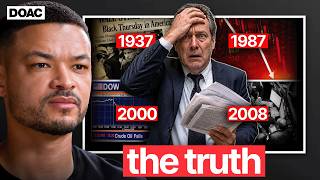
The REAL Reason A 60% Crash Is Coming
1 серп. 2026 р.
The man who predicted the 2008 crash and made 9.5% while the market fell 40% says the safest place most people put their money is actually the worst possible investment. Ray Dalio, founder of Bridgewater Associates, says cash is "guaranteed almost to have the worst return over the longer period of time" because inflation eats it away at 3.5 to 4% per year, and even earning interest doesn't keep pace after taxes. He walks through every option available to the average person. Cash feels safe but loses value every year. Stocks can grow but crash 60 to 70% in a bear market. Gold is "the only financial asset that is not somebody else's liability," meaning nobody has to honour a promise for it to be valuable. Bonds pay interest but get hurt when inflation rises. Property provides forced savings and better tax treatment. And Bitcoin is a form of money that can't be printed, but it can be tracked by governments, hacked by quantum computing, and banned by regulation. Dalio keeps roughly 1% of his portfolio in Bitcoin and prefers gold for hard money protection. Discover: • Why cash is guaranteed to be the worst investment over the long term • How inflation silently erodes your savings at 3.5% to 4% every year • Why gold is "the only financial asset that is not somebody else's liability" • The reason Ray Dalio keeps only 1% of his portfolio in Bitcoin • Why the top 10% of talent will thrive while everyone else is at risk • How AI is replacing higher and higher levels of thinking and reasoning • Why college graduates are becoming increasingly difficult to employ • The principle that investing 10% more effort can double your income 📺 Watch the full episode here - https://youtu.be/Bu0xNDLNORU ❤️ Subscribe to our main channel - www.youtube.com/TheDiaryOfACEO Get your hands on exclusive Diary of a CEO products: https://thediary.com/collections/all?utm_source=youtube&utm_medium=organic&utm_campaign=experiment&utm_term=clipschannel #thediaryofaceo #doac

Billionaire WARNS: "There Is NO Way To Fix This"
31 лип. 2026 р.
The man who predicted the 2008 crash and made 9.5% while the market fell 40% says the UK has "gotten overindebted, underproductive, and run out of choices." Ray Dalio, founder of Bridgewater Associates and manager of roughly $150 billion, explains that this is the classic decline cycle he has studied across 500 years of history in multiple countries. Steven asks what the UK is a cautionary tale of. Dalio's diagnosis is blunt: they can't raise taxes because people and capital will leave. They can't cut benefits because the people receiving them are already suffering. They can't borrow more because lenders don't want to lend to a country in this condition. And they've had six new prime ministers in seven years because each one makes promises that can't be kept. He explains the mechanics of what comes next in this cycle. Central banks respond with a mixture of printing money (which produces inflation) and restructuring debt (lengthening maturities, changing terms). Quite often, governments also impose capital controls, preventing citizens from leaving the country with their money. Exit taxes follow. These are not theoretical possibilities. Dalio says this is what has happened repeatedly across 500 years of economic history when countries reach this stage of the cycle. Discover: • Why the UK is showing all the classic signs of economic decline • How capital controls could prevent people from leaving with their money • What Ray Dalio tells his own grandchildren about the future • Why adaptability matters more than intelligence or hard work • The mechanical problem with wealth taxes that nobody discusses • Why 22% of Connecticut high school students have dropped out or are failing • How the incarceration budget has become larger than the education budget • The reason 6 of the last 7 years produced a new UK prime minister 📺 Watch the full episode here - https://youtu.be/Bu0xNDLNORU ❤️ Subscribe to our main channel - www.youtube.com/TheDiaryOfACEO Get your hands on exclusive Diary of a CEO products: https://thediary.com/collections/all?utm_source=youtube&utm_medium=organic&utm_campaign=experiment&utm_term=clipschannel #thediaryofaceo #doac

War Expert WARNS: "It's Coming Home"
30 лип. 2026 р.
A war advisor who has briefed every White House since 9/11 says the collision of the Iran war with the upcoming midterm elections is starting to look like the 1960s. Professor Robert Pape explains that his nightmare scenario has arrived: an international crisis happening at the same time as a domestic political crisis. He opens with the question Steven asks: what is it about invading a country versus bombing it that triggers suicide terrorism? Pape explains that in 25 years of studying suicide attacks, the single biggest risk factor is not killing people from the air. It is ground forces imposing political control. When America toppled the Taliban with air power, there were almost no suicide attacks. The suicide terrorism started years later when ground forces poured into Afghanistan to control territory. The trigger is not violence. It is the loss of control over your way of life. He then addresses Trump's Truth Social post from hours before the recording: "Every time Iran kills an American soldier, they will pay for that killing many times over." Steven asks: is there an achievable off-ramp that restores free shipping through Hormuz without a strategic defeat? Pape's answer is direct: "No. That ship sailed." Discover: • Why ground forces, not bombing, trigger suicide terrorist campaigns • The reason there is no achievable off-ramp left in this war • Why the midterm elections will determine if this becomes a forever war • How Congress shutting down war funding mirrors Vietnam in 1974 • The constitutional crisis that emerges when Congress and the President clash • Why the domestic crisis and the international crisis are about to collide • How the Supreme Leader's statements mirror the language that preceded the Paris attacks • What Pape would say to Trump if asked for advice: "Don't call me" 📺 Watch the full episode here - https://youtu.be/cxJgLJGHsWc ❤️ Subscribe to our main channel - www.youtube.com/TheDiaryOfACEO Get your hands on exclusive Diary of a CEO products: https://thediary.com/collections/all?utm_source=youtube&utm_medium=organic&utm_campaign=experiment&utm_term=clipschannel #thediaryofaceo #doac

The REAL Reason You Dream Every Night (Science Backed)
29 лип. 2026 р.
Every night when you fall asleep, you become clinically psychotic. That is the claim from Dr. Matthew Walker, Professor of Neuroscience at UC Berkeley and one of the world's leading sleep experts. Before you reject the diagnosis, he presents five reasons. First, you start seeing things that are not there. You are hallucinating. Second, you believe things that could not possibly be true. You are delusional. Third, you become confused about time, place, and person. You are disoriented. Fourth, your emotions swing wildly from one extreme to another. You are emotionally labile. And fifth, you wake up and forget most or all of it. You are suffering from amnesia. If you experienced any one of those five symptoms while awake, you would seek psychological help. But during REM sleep, it is a normal biological and psychological process. Discover: • Why you become clinically psychotic every night (five symptoms) • How REM sleep acts as "overnight therapy" by stripping emotion from memories • The only time in 24 hours when your brain's stress chemical completely shuts off • Why PTSD nightmares are a broken record and how a blood pressure drug accidentally cured them • Image Rehearsal Therapy: how to rewrite your nightmares permanently • Why losing the last 2 hours of sleep means losing 50 to 70% of your REM sleep • The simplest way to get more REM sleep (just 15 minutes longer) 📺 Watch the full episode here - https://youtu.be/qxxnRMT9C-8 ❤️ Subscribe to our main channel - www.youtube.com/TheDiaryOfACEO Get your hands on exclusive Diary of a CEO products: https://thediary.com/collections/all?utm_source=youtube&utm_medium=organic&utm_campaign=experiment&utm_term=clipschannel #thediaryofaceo #doac

War Expert WARNS: "They're Lying About Who's Winning"
28 лип. 2026 р.
President Trump said on Truth Social in May 2026: "They have no navy. It's been knocked down. They have no air force. That's been knocked out. Their radar has been knocked out. Virtually everything they have has been knocked out." Professor Robert Pape, who has advised every White House since 9/11, responds: "If everything has been knocked out, then how come there's no safe passage through the Strait of Hormuz? How come this weekend we saw more Americans tragically die because of Iranian attacks? Because what they have left, we can't knock out. And there's plenty to do the damage." He walks through how the war has actually made Iran STRONGER, not weaker. Before the war started on February 28th, Iran did not control the Strait of Hormuz at all. It had no fees, no leverage, no dominance over the world's most critical oil chokepoint. Within two weeks, Iran seized control of 20% of the world's oil supply. Today, five months later, that control has only solidified. He then reveals what happened with the MOU (Memorandum of Understanding) that JD Vance negotiated. He says Vance approached it as a business deal: open the Strait and we'll pay you. But Iran wasn't negotiating for money. It was negotiating for POWER. The document, which both the White House and the Iranian government published word for word, contains clauses that give Iran control of the Strait of Hormuz and the discretion to set shipping fees with no constraint and no US involvement for as far as the eye can see. Discover: • Why Iran is stronger today than before the war started five months ago • How the MOU gave Iran control of the Strait of Hormuz with no constraints • Why JD Vance's business deal approach was a "fundamental misunderstanding" • The three specific ways Trump violated the agreement within 48 hours • How Iran's "security resistance belt" threatens every oil route in the region • Why Trump's claim that "virtually everything has been knocked out" doesn't match reality • How Iran still attacks US bases and ships despite months of bombing • The reason Iran moved from survival to ambition in the first two weeks 📺 Watch the full episode here - https://youtu.be/cxJgLJGHsWc ❤️ Subscribe to our main channel - www.youtube.com/TheDiaryOfACEO Get your hands on exclusive Diary of a CEO products: https://thediary.com/collections/all?utm_source=youtube&utm_medium=organic&utm_campaign=experiment&utm_term=clipschannel #thediaryofaceo #doac

If YOU Take Vitamin D, You NEED To Stop!
27 лип. 2026 р.
Nearly 1 in 3 American adults take vitamin D. Dr. Stasha Gominak, a neurologist with over 20 years of clinical experience, says many of them are unknowingly making themselves worse. She discovered the problem by accident. After years of successfully treating patients' sleep with vitamin D supplementation, her patients started coming back with new complaints. Joint pain. Burning in their hands and feet. Agitation. Two women in the same month asked her the same question: "Is this related to that vitamin D I've been taking with you?" The answer was yes. When you take vitamin D, your body begins making more repairs, which requires more B vitamins. If the B vitamins are not being replenished, the body is driven into a secondary deficiency state. The vitamin D was helping their sleep, but it was simultaneously depleting a resource they didn't know they needed. She tried the fix on herself first. A patient walked in with a book about pantothenic acid (vitamin B5) and its connection to cortisol production and pain. She had developed the same unexplained pain in her own body. She went to the vitamin store, picked up B100 (a complex containing all eight B vitamins at 100 milligrams each) and a separate 400 milligram dose of B5. The B5 at 400 milligrams was too much. She developed restless legs and agitation. When she stopped the B5 and stayed on just the B100, everything resolved. Her pain disappeared within a day. Discover: • Why taking vitamin D on its own can deplete your B vitamins • The dose of B5 that made patients say "were you trying to kill me" • Why all eight B vitamins are produced by bacteria in your gut • How millions of people who took vitamin D during COVID may now have hidden B vitamin deficiencies • The three-month B50 protocol that jumpstarts the gut microbiome • Why a patient on nine medications stopped three of them after correcting her deficiency • The reason probiotics often fail (they lack the growth factors to reproduce) • Why no obese animals exist in the wild but indoor cats and dogs become obese 📺 Watch the full episode here - https://youtu.be/BbGv7GTbRN8 ❤️ Subscribe to our main channel - www.youtube.com/TheDiaryOfACEO Get your hands on exclusive Diary of a CEO products: https://thediary.com/collections/all?utm_source=youtube&utm_medium=organic&utm_campaign=experiment&utm_term=clipschannel #thediaryofaceo #doac