Parenting
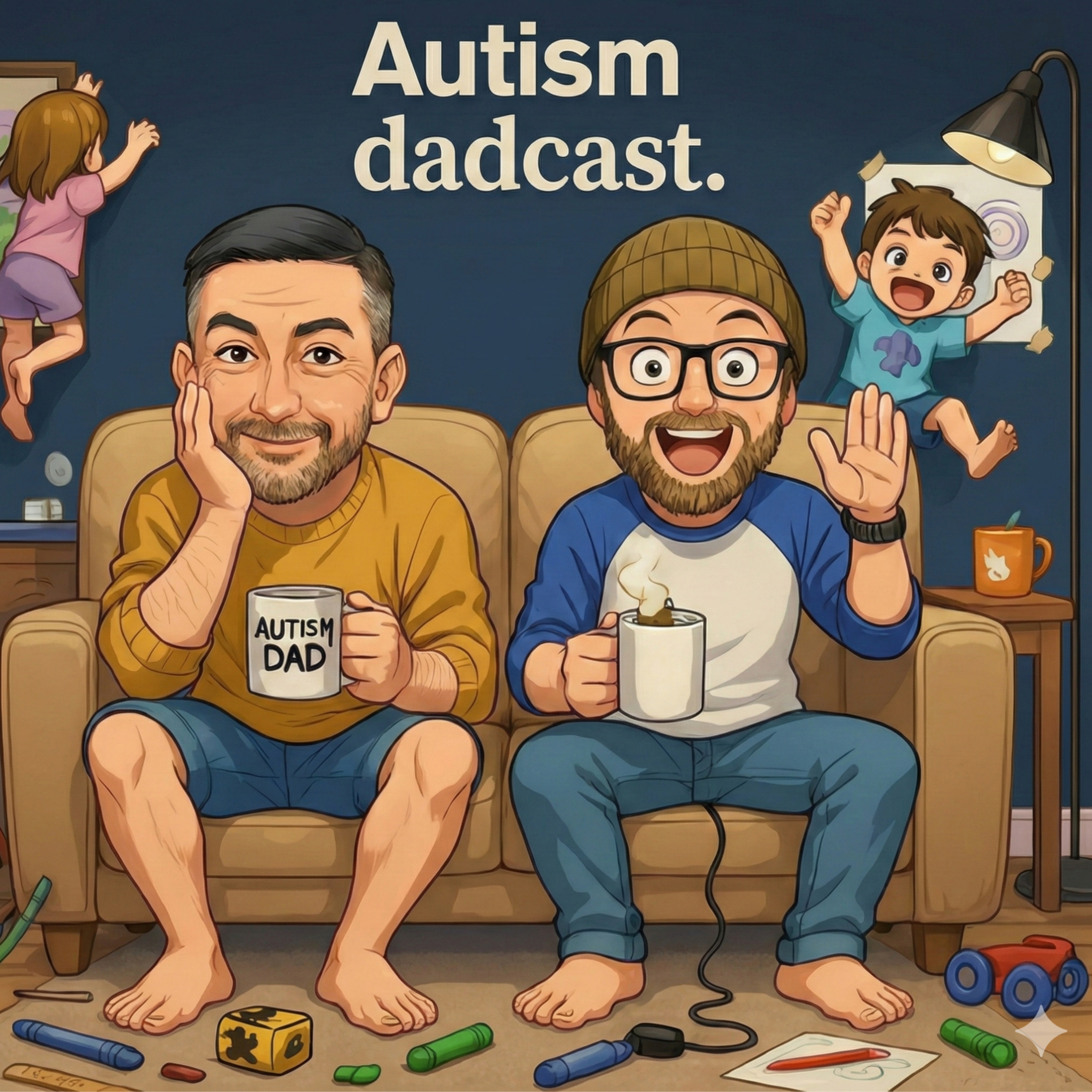
Autism Dadcast
Gaz and Andrew
An unfiltered, unflinching, and occasionally inappropriate deep dive into the world of autism parenting-from a dad's perspective.
 Abrir en Hinto
Episodios para aprender inglés53
858 Parents Told Us The Fear They Never Say Out Loud
7 sept 202650 min<p>Andy put a post up asking autism parents to name the one fear they have never said out loud. 858 people answered, and 103 of them said almost exactly the same thing.<br>So we sat down and read them. Not the tidy ones, the ones people only admit when nobody can see their name next to it. Mourning the child you thought you were getting. Envying families who can wake up and just go somewhere. Feeling like you are managing your child rather than enjoying them. Wondering, honestly, what your life would look like if this had gone differently.<br>And underneath nearly all of them, the same question that every one of us circles back to at three in the morning: what happens to them after I am gone.<br>If you have ever had a thought you were ashamed of, this episode is 858 people telling you that you are not the only one who has had it.<br>Timestamps<br>00:00 Cold open<br>00:13 Intro<br>00:39 The Indi app and a summer of tracking<br>02:25 The post that got 858 replies<br>03:33 The child you thought you were getting<br>07:12 Watching other families do the ordinary<br>12:38 "It's not a superpower, and I'm tired of pretending"<br>16:00 Neuro spicy, and who gets to pick the words<br>23:11 Managing, not living<br>26:33 What it costs the other children<br>30:52 The fear nobody says out loud<br>32:47 What happens when I die<br>42:42 Studio news, guests, and the fantasy league<br>47:13 Why we now support a Serie B team in Italy<br>Gaz and Andy are two dads raising autistic children, talking about the bits nobody else says out loud.<br>Link tree in bio.</p>
#46 | Robbie Williams & Should Autism Be Split Into Levels?
19 ago 202653 min<p>Robbie Williams announced at 52 that he is autistic, and said he has "a little bit of autism". Within a day the community had split over the phrasing.Gaz and Andy use it as a way into the question that keeps coming back. If one word covers Robbie Williams, and the same word covers Lydia, who is five, non-verbal and working with Makaton cards, does it still tell anyone anything? And if it doesn't, would splitting autism into levels help, or would it quietly move support away from the families already fighting hardest to get it?Along the way, Lydia brings her mum her shoes and says ""Daddy"" for the first time. Thomas drops his communication card in a packed Aldi, and two strangers know exactly what it is.Timestamps00:00 Robbie Williams, 52, and ""a little bit of autism""07:42 Has the word ""autism"" stopped meaning anything?09:23 ""I have to explain that she's not Robbie Williams""11:25 What levels would do to the families in the middle14:03 ""Mild"" autism, and who gets to decide it's mild16:25 Making profound autism visible enough to change policy18:16 Lydia brings her shoes and says ""Daddy""20:26 A spectrum ""widened to the point of collapse""21:53 Private clinics, and the money behind a diagnosis22:54 Should the diagnosis just be the starting point?25:21 Why is the EHCP process still on paper?26:58 The enemy isn't another autistic family30:11 Does ""autism"" tell you enough about the person?32:12 The autism community police35:04 ""Thomas isn't suffering. I am.""37:23 Aldi, and the stranger who knew what the card was for41:27 Who would be in charge of drawing the lines?44:23 If it's already split where you live, tell us how it works47:21 The autism dads' night out51:07 Country Fest, and two men judging dogsLink tree in bio.</p>
#45 | "He Doesn't Look Autistic" | 685 Parents On The Words That Stuck
31 jul 202652 min<p>Andy put a video up asking one question: which phrase from a professional never left you? His own was a paediatrician who would not answer whether Lydia was autistic, and instead said "we just need to ensure she reaches her potential, whatever that looks like." </p><p><br></p><p>Around 685 parents answered. It is the only post we have ever done that got more comments than likes.<br>So we sorted the lot and read them back. The denial, the low expectations, the gatekeeping, the ones that were meant kindly and landed like a brick, and the small number that got it exactly right. Over half of the worst of it came from a professional or a school. This one is heavy in places and very funny in others, and if you have ever been told your child does not look autistic, you are going to recognise most of it.<br>Timestamps<br>00:00 Thomas spells Playbarn on his iPad and reroutes the whole day<br>02:49 The video Andy posted, and the phrase that never left him<br>06:26 685 replies, and more comments than likes<br>07:30 The split: denial, low expectations, cruelty, blame<br>09:18 Over half of it came from a professional or a school<br>10:34 "He doesn't look autistic" and what spazzy is actually short for<br>15:10 The comebacks parents keep ready<br>15:48 The grandad in the supermarket<br>18:15 "Your autistic children may never thrive in school"<br>19:02 Why families actually want a diagnosis<br>22:35 "She isn't worth the funding" and the iceberg<br>23:24 "Masking is a skill you should be proud of"<br>24:38 The tongue tie nobody would treat<br>25:51 Written off, and proven wrong<br>32:05 The ones that were meant kindly<br>34:53 The worst thing anyone said<br>35:50 The comments about the comments<br>36:01 What autistic adults asked us to hear<br>37:38 The professionals who got it right<br>40:36 A diagnosis doesn't change who your child is<br>41:10 Hope without a promise<br>41:25 Eye contact, and who it is really for<br>45:04 Takiwatanga: in his or her own time<br>46:01 "So am I. Don't worry. We see each other."<br>47:20 Lydia's sleep, transitions and the summer holidays<br>Timecodes are taken from the raw recording and need tightening once the cold open is on the front of the final cut.<br>Latest episode in the link tree in bio.</p>
#44 | Stem Cells & Autism: Hope, Science, or a Very Expensive Gamble?
18 jul 20261h 36m<p>Across the world, parents of autistic children are being offered something that</p><p>sounds almost miraculous. Clinics promise better speech, better eye contact,</p><p>calmer behaviour, and in some cases claim to repair or reverse autism. The price</p><p>runs from £10,000 to £40,000, and often more than once.</p><p><br></p><p>Over the last few months we've been approached by clinic after clinic wanting to</p><p>come on the show and sell it to you. We said no. Instead we went and read the</p><p>studies.</p><p><br></p><p>This one isn't about having a go at parents. Every parent looking at this is</p><p>acting out of love, and we've both been desperate enough to try anything. But</p><p>love doesn't mean a clinic gets to make huge claims without evidence. Stem cell</p><p>therapy is a legitimate area of research. It is not currently a proven treatment</p><p>for autism, and there's a difference between something being researched and</p><p>something being proven.</p><p><br></p><p>We also get into the ITV whistleblower, and the GB News piece asking whether</p><p>"those people" should have access to children.</p><p><br></p><p>Timestamps</p><p>00:00 Hope, science, or a very expensive gamble</p><p>02:21 We are not attacking parents</p><p>10:15 What autism actually is</p><p>13:18 What stem cells actually are</p><p>15:56 The 2017 Duke study, 25 kids and no placebo</p><p>18:47 The 2020 Duke study, and what it found</p><p>24:38 Claim: a 95% success rate</p><p>29:08 Why you'd swear blind it worked</p><p>31:45 Thomas and Lydia progressed. Neither had stem cells</p><p>35:37 Claim: it repairs the autistic brain</p><p>38:12 Claim: most children improve</p><p>40:45 Claim: our treatment is evidence based</p><p>43:02 The risks nobody puts in the brochure</p><p>48:00 What that money could buy instead</p><p>50:45 The influencer taking commission</p><p>54:02 Have a word with yourself</p><p>66:45 "Have you missed the treatment window?"</p><p>72:32 Myths and facts</p><p>82:55 The ITV whistleblower</p><p>86:50 GB News and "those people"</p><p><br></p><p>Latest episode in the link tree in bio.</p>
#43 | "Where Will They Be When They're 30?" | Jolanta Lasota, Ambitious about Autism
9 jul 202650 min<p>This week Gaz and Andy sit down with Jolanta Lasota, Chief Executive of Ambitious about Autism, at their college in Isleworth. 16 years leading the charity and mum to a 21-year-old autistic son, Jolanta has seen the whole picture, from the early years right through to adulthood and employment.</p><p><br></p><p>We talk about why purpose matters more than exams, the young man who is non-speaking and holds down two jobs, the boy who was allowed to come to school in his pyjamas, and naming the grief nobody warns you about. Jolanta describes raising an autistic child as walking through woods with no path and no torch, and says the job is to be the one who carries the light. Honest, hopeful, and one of our favourite conversations yet.</p><p><br></p><p>Timestamps</p><p>- 00:00 Welcome, and where we are today</p><p>- 00:27 [GUEST]'s journey, 16 years at Ambitious about Autism</p><p>- 01:07 What's really changed in how we understand autism</p><p>- 05:57 The sensory pod that blew us away</p><p>- 06:58 The schools, the age groups, and post-19 provision</p><p>- 10:36 Why "purpose" matters more than a curriculum</p><p>- 12:20 "Walking through woods with no torch": what family life feels like</p><p>- 13:27 The non-speaking young man with two jobs</p><p>- 15:03 Are employers actually changing?</p><p>- 15:49 Policy, the white paper, and autism as a political football</p><p>- 20:06 Being the "happy helper", never enemy-ising people</p><p>- 22:14 What school looks like at four to seven</p><p>- 24:40 Focus on strengths, don't drill them on what they can't do</p><p>- 27:09 Gaz's own school story: six D's and learning differently</p><p>- 33:03 The weight of GCSEs and "lost leaders"</p><p>- 38:02 Don't underestimate them: the iPad "daddy" moment</p><p>- 40:28 Parents' guilt, and why it won't always be okay</p><p>- 43:47 Grief without a death</p><p>- 45:06 What's next for Ambitious about Autism</p><p>- 49:13 Thanks and close</p>
#42 | "I Wouldn't Pay A Penny To Change Him" | Paul Mullin On Albi, Autism & Being A Dad
26 jun 202645 min<p>Paul Mullin has scored goals in front of millions and become a household name through Welcome to Wrexham. But this one is about the part of his life the cameras rarely catch: being dad to Albi, his autistic son.</p><p>Gaz and Andy sit down with Paul for an honest, Albi-centric conversation about the regression that stopped his little boy in his tracks, the guilt that kept him up at night, and why he wouldn't change a single thing about his son. Plus the moment Albi found a way to tell him 'you're my best friend' without saying a word.</p><p>If you have ever felt like the only dad going through this, this one is for you.</p><p>Timestamps</p><p>00:00 Welcome Paul Mullin</p><p>01:00 The first signs, and Albi after his 12-month jabs</p><p>02:00 Regression: like a click of the fingers</p><p>04:00 The guilt, and crying himself to sleep</p><p>04:30 I wouldn't pay a penny to change him</p><p>05:35 Denial, and getting the diagnosis</p><p>07:20 Speaking about it on Welcome to Wrexham</p><p>08:24 The hope that kills you</p><p>11:38 Why 'he'll be fine' doesn't help</p><p>13:00 Did he grieve? The problem-solver dad</p><p>16:14 Being a footballer dad: time away and routine</p><p>19:12 How Albi communicates now</p><p>22:15 Holidays: frozen meals, dry ice and the airport</p><p>25:40 Coming home: holidays, holidays, holidays</p><p>27:50 Razor-sharp awareness: he just knows</p><p>29:20 The crafty negotiator: jet skis and boats</p><p>33:40 The best friend clip</p><p>35:07 Macho on the pitch, in tears at home</p><p>35:48 Autism in Racing and giving back</p><p>38:26 Nobody ever asks the dad how he is</p><p>43:00 Advice to a dad just starting the journey</p><p>New episodes of the Autism Dadcast every week. </p><p>Real talk, real dads, real autism. </p><p>Listen, follow and find everything in our link tree in bio.</p><p><br></p>
#41 | How One Wrong Word Can Ruin An Entire Day
19 jun 20261h 2m<p>One missed board and one wrong word at in the morning, and Thomas's whole morning falls apart. </p><p>This week Gaz and Andy unpack how much detail autistic kids track, why a single word can rewrite their day, and how much they understand even mid-meltdown. </p><p>Plus Lydia becomes swimmer of the week, the new-neighbour conversation every autism parent knows, and an honest, conflicted take on the under-16 social media ban and what it overlooks for autistic teens.Timestamps00:00 Charlie's shop opening and meeting Sophie the BTS superfan02:00 Lydia's swimming breakthrough: swimmer of the week03:40 Thomas's Monday meltdown: how one wrong word derailed the morning06:10 He knew the score: what the meltdown hid09:15 The new neighbour, the fence, and explaining autism again11:05 Attention to detail: the thing they do best14:35 The under-16 social media ban: where we land26:15 What the ban gets wrong about autistic kidsLatest episode and Discord in the link tree in our bio. Merch from Neurospicy & Co at <a href="http://neurospicyandco.uk/" rel="ugc noopener noreferrer" target="_blank">neurospicyandco.uk</a>, 10% off with code DADCAST.</p>
#40 | Toilet training, Autism & Gut Health.
11 jun 20261h 17m<p>Every parent of an autistic child has been told the same thing: just take the nappy off and sit them on the toilet. This week Gaz and Andy sit down with Charmaine, a learning disability nurse turned continence consultant with over 30 years of experience, and find out why that advice not only fails, it can make things worse.What starts as a chat about toilet training turns into something much bigger: gut health, the gut-brain connection, sleep, meltdowns, and the quiet toll this takes on a whole family. Charmaine explains why you have to start inside the body and not on the toilet, why it is learning and not training, and why no parent struggling with this has ever been failing.If you have ever felt judged, stuck, or completely on your own with this, this one is for you.Chapters00:00 Meet Charmaine, continence consultant02:45 Why toilet training is so hard for autistic kids03:34 Gut health and the gut biome05:43 The gut as a second brain10:07 Where to actually start (inside the body)11:59 The Bristol stool chart21:54 Nobody makes mistakes: parent blame and misinformation25:51 Learning, not training30:05 Why rewards do not work38:20 What the NHS offers, and the postcode lottery49:53 Why it works at home but not at school53:47 It was never lazy parenting57:42 Sleep, the brain and meltdowns1:08:50 Charmaine's support group and free resources1:13:18 The real cost: holidays, work and isolationFind CharmaineClear Steps Consultancy: <a href="https://www.clearstepsconsultancy.co.uk/" rel="noopener noreferrer">https://www.clearstepsconsultancy.co.uk</a>Support group: How to Get the Wee and Poo in the Loo (videos, live sessions and free downloads)Socials: search "continence consultant and trainer" on Facebook, Instagram and LinkedInNew episodes of the Autism Dadcast every week. Real talk, real dads, real autism. Listen, follow and find everything in our link tree in bio.</p>
#39 | "He Opened The Door And Just Walked Off"
4 jun 202658 min<p>You can know your child inside out and still be blindsided in the space of a week.</p><p>This one starts with Thomas opening the front door and wandering off down a hill in a quiet Shropshire village - the same week Lydia did almost exactly the same thing. From there it runs into the half-term chaos that brought biting back out of nowhere, the dread of summer toilet training and puberty creeping into view, and a proper kicking of the Department for Education for handing SEND to Gemma Collins after the white paper left families feeling gaslit.</p><p>Underneath the rage and the dark humour, it lands somewhere quieter. Gaz and Andy talk about the pre-autism photos, the grief that takes turns between two parents, and the two-second forehead touch that says everything a spoken "I love you" never will.</p><p>You'll come away realising two things can be true at once. You can grieve the life you pictured and still get up and be the dad your kid actually needs.</p>
#38 | "What If You Didn't Have to Fight So Hard?"
20 may 20261h 3m<p>You sit down with the paediatrician. You've got half an hour. You know the</p><p>first 20 minutes will be you trying to prove your child is different to every</p><p>other child in that waiting room - and you'll walk out no further forward.</p><p><br /></p><p>Orrin Benford knows that feeling. After a year of being fobbed off across GPs,</p><p>neurologists and urologists for his daughter Indie, he stopped trying to</p><p>remember everything off the top of his head and built something that did it</p><p>for him. This episode is about what happens when parents stop fighting and</p><p>start advocating - with the full picture, not a half-remembered one.</p><p><br /></p><p>In this episode: Orrin's journey from digital-nomad life to full-time parent</p><p>carer in Australia, why so many parents feel gaslit by the system, the</p><p>difference between fighting and effective advocacy, and how technology is</p><p>finally letting parents drive change instead of waiting for the system to</p><p>catch up.</p><p><br /></p><p>🔑 Key moments:</p><p>- 00:38 — Orrin's story: England, Australia, and an airport on Christmas Day</p><p>- 04:29 — The seizure the day after Indie's first birthday</p><p>- 12:15 — Healthcare in Australia vs the UK vs Dubai</p><p>- 17:05 — Why parents hand over "dirty, incomplete data"</p><p>- 19:22 — The two-page summary that changed everything</p><p>- 25:16 — Why it's not gaslighting, but it feels like it</p><p>- 37:35 — The handovers, the ring binders, and the things you forget</p><p>- 46:19 — The things that break parents are the things that didn't need to happen</p><p><br /></p><p>If this episode helped, subscribe and leave a review - it helps other parents find us.</p><p><br /></p><p>Follow Orrin: @OrrinBenford | The app: @theindiapp</p><p><br /></p><p>#AutismDadcast #Autism #Parenting #Neurodiversity #ASD #SEND</p>
#37 | "The Word That Broke Me in Popeye's"
12 may 20261h 3m<p>Adam Parkinson came on this week. One of the Two Mr. Ps. Teaching assistant. Podcaster. Dad of two — a 10-year-old daughter and a 7-year-old autistic son called Max.</p><p>We talked about Max. We talked about the plane aisle moment his wife filmed without telling him, that went viral and started everything. We talked about siblings, and what it means to watch your daughter try not to look upset when her brother destroys her Barbie Dream House. We talked about online trolls, the dads' WhatsApp group, and the time a stranger told him celebrating his son's diagnosis was "like celebrating your kid having cancer."</p><p>And we talked about the moment in Popeye's last weekend when Max tried a chicken tender for the first time, looked up, and said one word he'd never said before.</p><p><br /></p><p>Timestamps:</p><p>0:00 — SATs week, Popeye's, and a school uniform standoff</p><p>3:00 — Meet Adam and the family</p><p>4:00 — Spotting it during lockdown</p><p>5:18 — You're allowed to mourn the life you planned</p><p>6:23 — The plane aisle video that started everything</p><p>8:31 — Isla, sibling of the year</p><p>10:55 — When the Barbie Dream House got destroyed</p><p>11:53 — You can never relax</p><p>13:16 — What people don't understand until they live it</p><p>15:14 — The small wins nobody else sees</p><p>17:25 — Autism top trumps and 23 hours awake</p><p>18:30 — Handling violent moments differently after the community</p><p>20:07 — Verdict. Great. Outstanding.</p><p>21:25 — Are dads in the SEND world overlooked?</p><p>24:33 — Permission to talk</p><p>26:55 — The celebrating cancer comment</p><p>28:13 — Chubby Tommy Robinson and other DMs</p><p>31:51 — The dads' WhatsApp army</p><p>38:33 — Two Mr. Ps and how it started</p><p>49:17 — Pen licences and getting recognised in your swimming shorts</p><p>59:55 — Adam's advice to a dad at diagnosis</p>
#36 | "Are We Doing As Much As We Can?"
8 may 202648 min<p>We ran the London Marathon. We didn't train. We finished it. And then we had a conversation we weren't expecting to have.</p><p><br /></p><p>Halfway through writing this off as a marathon recap, we ended up admitting something neither of us had said out loud before. We talk a lot about wanting to be around as long as we can for our kids. But if we're honest, we're not always doing the things that would actually make that happen.</p><p><br /></p><p>This one's got the funny stuff. The rhinos overtaking us. The fireman in full kit with an air canister on his back. The stranger who fed Gaz crisps when his calf cramped outside a pub. </p><p><br /></p><p>But underneath all of it, the question we couldn't stop asking each other. Are we doing enough? And if we're not, when does that stop?</p><p><br /></p><p>Timestamps:</p><p>0:00 — Medals, recovery, and the post-marathon shock</p><p>1:00 — The trainer mistake nobody warned us about</p><p>3:30 — Hitting the wall at 25k</p><p>4:53 — How slick the event actually was</p><p>6:30 — Cody's Sark and looking for Mish in the crowd</p><p>7:34 — Tower Bridge and faking it for the BBC camera</p><p>8:35 — "I'd love to do it again, but I'd train this time"</p><p>9:00 — Why we're already signing up for next year</p><p>11:21 — The bug we didn't expect to catch</p><p>12:23 — The honest conversation about staying alive</p><p>14:14 — What you'd say on your deathbed</p><p>16:11 — The other dads getting stuck in19:07 — Sean's response when he saw Mish</p><p>19:33 — Ambitious About Autism at mile 25</p><p>21:13 — Garmin lies and the 22-mile detour</p><p>22:35 — The fridge runner and the dementia genes</p><p>23:34 — The best of London on one day</p><p>27:19 — Why the donations kept us going</p><p>29:51 — The crisps, the IPA and the kindness of strangers</p><p>35:01 — Crossing the line and the wave of emotion</p><p>35:32 — The voice note that made Gaz cry</p><p>36:48 — The school forgot Thomas's good luck present</p><p>37:41 — A shout out to Spot Limited</p><p>40:11 — Buying us a coffee mid-marathon</p><p>41:35 — Adam Parkinson and the Australian app</p><p>42:31 — The kick up the arse we needed</p>
#35 | What Mums Wish We Knew
21 abr 20261h 46m<p>We put two sets of questions to the community. One for dads, one for mums. The dads sent seven. The mums sent seventeen. And most of the mums' questions were about how to get their partner on board.</p><p>This one hits different. We talk about what happens when you refuse to accept your child's diagnosis. Why dads get left behind. Why mums end up carrying everything. And the moment you have to stop making it about you and start making it about your kid.</p><p>We also answer the question nobody wants to think about: what do you actually miss? Not the big stuff. The everyday things that every other parent takes for granted.</p><p>If you're a dad still sitting on the fence, this is the one.</p><p><strong>Timestamps:</strong>0:00 — Marathon panic and stepping in human feces4:39 — Q&A starts: dads' questions5:06 — How did the diagnosis hit you?11:27 — Living in silence and burnout17:33 — Golden hope for adulthood19:25 — Low expectations and why we stop pushing our kids23:05 — Why mums do all the work29:01 — Should the UK adopt autism levels?32:12 — Guilt of calling home from work34:53 — Mums' questions begin35:02 — Why does mum do all the research?39:29 — The wake-up call for dads41:44 — How to support your partner after diagnosis46:42 — Processing trauma of being dismissed52:30 — Coping with isolation1:00:04 — The video that broke us1:02:14 — Advice for grandparents, friends, and family1:10:22 — Coping as a single mum1:14:03 — Keeping calm when professionals fail you1:19:22 — Why is it so hard to be heard?1:22:36 — Unawareness in the medical community1:25:35 — No support after diagnosis1:26:59 — Why aren't there enough specialist schools?1:32:22 — What do dads miss the most?1:36:24 — Supporting a partner as a stepparent1:40:39 — Helping your husband find his tribe</p>
#34 | When You Die, Will They Know You Didn't Leave?
14 abr 20261h<p>What happens when you die and your child doesn't understand death? What if they just think you walked away?</p><p>That's where this conversation ended up. It started with a story about a mum who overheard a dad talking about his autistic son and accused him of saying his life was harder than hers. It turned into something neither Gaz nor Andy were prepared for. Pre-recorded death videos. Whether your child needs to see your body. The arithmetic of outliving someone who might never understand why you're not there anymore.</p><p>They also talk about why parents of high-functioning autistic children are often fighting the system harder than anyone else, why dads stop telling their mates anything, and what happens when you've been in combat mode so long you can't switch it off.</p><p>Plus: the Guardian photoshoot, the London Marathon in two weeks, a game-changing app for SEND parents landing in the UK, and Sean ran another half marathon for fun.</p><p>0:00 — Back from Cyprus, the Guardian photoshoot4:23 — The pronoun conversation follow-up5:37 — The dad who stopped telling his mates7:21 — The mum who switched9:39 — The "top trumps" problem in the community13:47 — Luke's story: when your child can't live with you16:04 — What happens when I die?17:33 — The pre-recorded death video18:40 — Love on the Spectrum and the parents who can't grow old22:30 — Everyone's struggles are relative27:51 — The system was worse 30 years ago34:24 — The Discord and epic fails43:16 — The app that's going to change things45:29 — London Marathon and Ambitious About Autism50:22 — Why we're terrible at replying to messages</p><p>If this helped, subscribe and leave a review. It helps other parents find us.</p><p>#AutismDadcast #Autism #Parenting #Neurodiversity #ASD #SEND</p>
#33 | "We Have to Pay to Keep Parenting."
31 mar 20261h 1m<p>When your autistic child turns 18, you stop being their parent in the eyes of the law. You have to apply to the Court of Protection, pay £850, wait four months, and hope social services don't oppose it. If you don't, hospitals won't listen to you and you can't touch their bank account.</p><p>We didn't know this. Most parents of young autistic children don't. A petition hit the parliamentary website asking for it to be scrapped for families where a capacity assessment already confirms the child permanently lacks capacity. The government said no.</p><p>This week we also talk about Andy's relationship breaking down, what it's like becoming one of the statistics, and the growing pile of comments from people telling us we're doing this wrong. From "did you ask your daughter's permission" to "autism doesn't exist, it's just bad parenting" from a mainstream teacher. We read them out. We don't hold back.</p><p>Plus the London Marathon is three and a half weeks away. The furthest either of us has run is 5K. Sean has been smashing half marathons. We're in trouble.</p><p>🔑 Key moments:0:00 — We're back2:02 — Andy's relationship breakdown5:12 — The petition that stopped us scrolling5:38 — What happens when your autistic child turns 186:35 — Deputyship: what it costs and what happens if you don't apply9:05 — The government's response10:35 — London Marathon training (or lack of it)14:06 — £6,559 raised for Ambitions About Autism17:59 — The Cyprus autism half marathon28:26 — How we upset people (reform, pronouns, and profoundly autistic)40:03 — The pronoun comment43:14 — The Hidden 20% podcast backlash45:57 — "Did you ask your daughter's permission?"51:56 — "Classic autism parents making money off their children"53:47 — A teacher who says autism doesn't exist</p><p>If this episode helped, subscribe and leave a review — it helps other parents find us.</p><p>#AutismDadcast #Autism #Parenting #Neurodiversity #ASD #SEND</p>
#32 | "I Nearly Drove Away and Never Came Back"
23 mar 20261h 8m<p>If you've ever looked at your child mid-meltdown and thought "I can't do this anymore," this one's for you.In this episode, Gaz sits down with his wife Mish for a raw, unfiltered conversation about what life was really like from the moment Thomas was born. The traumatic birth. The baby who wouldn't latch, wouldn't calm, wouldn't make eye contact. The feeling of being nothing more than a feeding machine while every other mum seemed to have it figured out. The sleepless nights on a single bed downstairs. The marriage that quietly slid into housemate territory without either of them noticing.Mish talks openly about the moment she nearly got in the car and drove away. About sobbing for two weeks solid after accepting the diagnosis. About looking at Gaz and resenting him for not falling apart the way she was.But this episode isn't just the hard stuff. It's the story of how a picture of a car, a laminator, and principles borrowed from military dog training unlocked communication with their non-verbal son. How Thomas went from endless meltdowns to independently spelling words to tell his parents what he wanted. How that one breakthrough changed everything for the whole family.If you're a parent who feels like your child is trapped inside their own head, this might be the most important hour you spend this week.</p><p><br></p><p>🔑 Key moments:0:00 — Thomas's birth and the early signs9:25 — "Something isn't clicking" — Mish's gut feeling13:00 — The meltdowns and the marriage falling apart19:00 — The photo that made Gaz accept it22:00 — The diagnosis and the grief that followed30:26 — "I nearly drove away" — Mish's breaking point33:22 — Communication cards: where it all started41:40 — The moment Thomas brought them a picture46:50 — Thomas spells C-A-R on his bedroom floor57:44 — Mish's advice to parents who don't know where to startIf this episode helped, subscribe and leave a review. It helps other parents find us.#AutismDadcast #Autism #Parenting #Neurodiversity #ASD #SEND</p>
#31 | We Asked the Minister
17 mar 202632 min<p>The government's SEND White Paper promises a better system. But what happens when the independent expert on your complaints panel gets outvoted by governors? We asked the Minister directly.Gaz and Andy sat down with Georgia Gould, Minister for Schools, inside the Department for Education to put the questions SEND families are actually asking. The tribunal gap. The complaints panel. The undefined "complex needs" threshold. The workforce that doesn't exist yet.She answered all of it — and some of her answers might surprise you.Key moments:2:10 — The tribunal gap: what parents can and can't challenge4:06 — The complaints panel: can the SEND expert be outvoted?7:05 — Why families still have to go back to their local authority11:02 — The 90% debt write-off: what are the conditions?16:11 — "Complex needs" isn't defined. Who decides?25:21 — The workforce problem: what if the specialists aren't there?This is the conversation the SEND community needed to happen. Whether you leave reassured or more concerned - you need to hear it.</p>
#30 | Inside the White Paper: What We Fought to Change
7 mar 20261h 2m<p>Two SEND parents were inside the government meetings every week for months. Here's what they saw — and what they had to fight to change.</p><p>In this episode, Gaz and Andy sit down with Hayley and Aimee from SEND Sanctuary, who were part of the official SEND Improvement Group advising on the white paper. They break down what's actually in it, what nearly made it in that didn't, and why the bits that got quietly removed should worry every SEND family in England.</p><p><br /></p><p>🔑 Key moments:</p><ul><li>The appeal right that was nearly stripped — and how they got it put back</li><li>Why local authorities got off scot-free while schools carry the load</li><li>The Children and Wellbeing Bill that could force you to keep your child in a failing placement</li><li>The four-tier system explained by people who read it before you did</li><li>The backlash they faced from within the community for being in the room</li></ul><p>If this episode helped, subscribe and leave a review — it helps other parents find us.</p><p>#AutismDadcast #SENDWhitePaper #SEND #Autism #SpecialEducationalNeeds #SENDReform #EHCPTribunal #Parenting #Neurodiversity #SENDParents</p>
#29 | EHCPs “Protected Until 2030” Then What?
18 feb 20261h 4m<p>We talk through the latest SEND reform leaks and why the “EHCPs protected until 2030” line doesn’t feel like protection at all. We get into the DfE promo videos, the staged “mainstream SEND classroom” example, and why it looks like the narrative is being set before the white paper drops.</p><p>Key themes:</p><p>- EHCPs “protected until 2030” and what that implies after</p><p>- Mainstream capacity promises vs real-world needsThe stereotype kit: fidgets, coloured cards, tidy optics</p><p>- Safety Valve scheme and the financial incentive to reduce EHCPs</p><p>- 90% deficit write-off and the conditions attached</p><p>- Reform plans, targets, and the fear of rights being weakened</p><p>- Teacher burnout and what happens when support is missing</p><p>- The human cost: meltdowns, exclusion, self-harm, families breaking</p><p>Zoom out and it all looks like money first, optics second, and families last. You can’t fix systemic failure with a glossy brochure and a box of fidget spinners. If the plan is to push more kids into mainstream, where’s the plan to build specialist places, train staff properly, and stop the constant crisis management.</p><p>If you’re living this, you’re not imagining it. You’re not being dramatic. You’re seeing the gap between what they say and what actually happens.</p>
#28 | Your SEND Stories: Where You’ve Been Failed
12 feb 20261h 14m<p>This episode isn’t about us.</p><p>It’s about you.</p><p>We asked families to share where they’ve been failed by the SEND system. What came back was overwhelming.</p><p>Draft EHCPs left open for months.<br />Support written into plans but never delivered.<br />Children kept “on roll” with no education.<br />Operational failures that destroyed trust.<br />Teenagers saying they’d rather be dead than go back to school.</p><p>These aren’t isolated stories.<br />The patterns are repeating across the country.</p><p>With SEND reform on the horizon, we’re asking a simple question:</p><p>If the system already isn’t delivering what’s legally required, what happens next?</p><p>If you recognise yourself in this episode, you’re not alone.</p>
#27 | SEND Reform Leaks
29 ene 20261h 13m<p>We’ve had SEND reform info leaked from a source being called credible, and it’s been picked up by The i Paper and the Financial Times.</p><p><br /></p><p>If it’s real, it suggests a four tier non-statutory system before a child can even qualify for an EHCP, with the EHCP sitting above it all like some golden ticket. That matters because non-statutory support can’t be appealed, and it basically creates a fail-first pathway where kids have to struggle repeatedly before anyone is legally forced to help.</p><p><br /></p><p>We’re not scaremongering. We’re reading what’s out there and reacting as two dads who’ve lived the EHCP reality and know how bad it already is even with legal rights in place.</p><p><br /></p><p>We talk about what this could mean for families who’ve fought years for an EHCP, whether existing plans would be protected, and why a shift from legal duty to “discretion” is the bit people aren’t clocking yet. The support doesn’t just change, the power changes.</p><p><br /></p><p>We also read a message from a family about a five year old who’s non-verbal, in nappies, and placed in mainstream with unsafe outcomes. That’s happening now, under the current framework. So what happens if the right to challenge disappears and the only thing you can appeal is whether the process was followed.</p><p><br /></p><p>We get into the knock-on effect for teachers, schools, and neurotypical kids too. This isn’t just a SEND issue. If you overload mainstream with needs it can’t meet, it hits everyone, fast.</p><p><br /></p><p>If this goes sideways, the only move is organisation. Flood MPs. Make it the only thing they can’t ignore.</p>
#26 | £55,000 To Get Her Child Help
20 ene 20261h 3m<p>We met with the Schools Minister this week. We sat with Georgia Gould on a panel for an hour and we asked the questions you sent in. </p><p>Georgia suggested coming on the podcast for a long form conversation. We didn't ask for it, she offered. That impressed us because politicians don't usually put themselves in uncomfortable positions like that. </p><p>Then we got a message from a parent who had to remortgage their house for £55,000 to get their child the placement they needed. Fifty five thousand pounds. We got another message last week about £30,000. This is what families are doing just to get their kids the support they deserve while there's already a legal framework in place that's supposed to be doing this.</p><p>The Discord went live on Saturday. Two days in and people are already helping each other with private assessments, sleep issues, mobility questions, everything. The Stim and Whistle had its first Saturday night lock in and it went off for two and a half hours. Zoe said she was shy and then became the life of the party and got everyone talking.</p><p>Thomas went to Sainsburys and scanned his own jelly at the self checkout. A few months ago we couldn't even get him through the doors. Lydia might be gluten intolerant so we're looking at food tolerance tests. Stephen sent a voice note about it after hearing what she eats.</p><p>We also talk about the Autism Barbie backlash that wasn't actually a backlash once we heard from a parent whose daughter saw it and said she's just like me. That changed everything for us.</p>
#25 | We're Meeting The Minister for School Minister
14 ene 202644 min<p>First episode back after Christmas and we're catching up on everything. Andy talks about how lowering expectations made Christmas actually work this year. Gaz shares how Mish built Thomas a cardboard slide and put all his presents at the bottom so he could slide straight into them. Pot of Pringles was one of the presents and that was the win right there.</p><p>Lydia's eating fried eggs now. Full runny yolk. She's licking butter off toast and kissing TV screens when steaks appear. New foods are landing and nobody knows why but we're taking the wins.</p><p>We get into the reality of being constantly vigilant. Mish nearly opened the car door to put a bag in while the school bus was there and caught herself just in time because that one move could have derailed the whole morning. That's the chess game we're all playing every single day.</p><p>The Christmas special at Henry Tudor House went better than expected. People jumped on the mic and shared their stories. Steven came down and blew everyone's minds talking about spellers and non verbal communication. If you haven't watched that clip yet, go find it. Watch it twice.</p><p>Wednesday we're meeting with the Schools Minister to talk about the SEND white paper. We've got two questions we can ask and we've taken everything the community sent in and boiled it down. We'll see if this is real consultation or just going through the motions.</p><p>Plus we talk about going number one in Zimbabwe, planning ticketed events, building a Discord server, and whether anyone would actually pay to see two blokes from Shropshire talk about autism.</p>
"I Didn't Want To Go Home"
31 dic 202531 min<p>He had the house. The job. The wife. Three kids. On paper, everything was fine.</p><p>But by the time his son Mason was three or four, he was falling apart. Barely sleeping. Drinking too much. Finding any excuse to stay out longer. Supermarket runs for things they didn't need. One more round at the pub. Anything to delay walking through the front door.He wasn't a bad dad. He just didn't know how to be one — not for a child like Mason. Non-verbal. ADHD. Severe sleep issues. Smashing up the house. And a system that kept saying no.It took a huge row with his wife for something to shift. And it took a reckless, credit-card-funded trip to Disney World to finally understand what his son actually needed.Because in Florida, something changed. Mason — the kid who couldn't queue, couldn't wait, couldn't regulate — went on a roller coaster and came out a different child. Slept every night. Engaged. Calm. Two weeks of the son they always knew was in there.Then they came home. And within weeks, it all came back.This is what it's like to glimpse what's possible — and then have to figure out how to recreate it in a world that isn't built for your kid.Dan talks about the drinking, the guilt, the isolation, the fear of what happens when they're gone, and the relentless reality of raising a child who will probably need support forever. He also talks about hope. Because there is some. Even when it doesn't feel like it.</p>
They Put Him In A Converted Staff Room
30 dic 202515 min<p>A mainstream school put their autistic son in a converted staff room and left him there for two years. They called it support.</p><p>Alan and his wife Alex fought for a specialist placement. Now Magnus is in a school with just 15 children total - five per key stage, one SEN teacher, and four teaching assistants. The transformation has been staggering. He's reading full books out loud for the first time in two years. He's responding to "now and next" language. He understands cause and effect in ways he never did before.</p><p>But getting here meant watching their son be warehoused in a room where nobody knew how to teach him. The staff were kind. The setting was wrong. And for two years, Magnus was left to his own devices while the system insisted this counted as provision.</p><p>This conversation captures what "night and day" actually looks like when an autistic child finally lands in the right environment - and the quiet fury of knowing it should never have taken this long.Alan also talks about the hidden logistics of raising Magnus alongside his neurotypical twin sister Freya. The two of them have vastly different needs, and balancing those needs means separate days out, careful attention management, and accepting that equal doesn't always mean identical.</p><p>Christmas in their household requires military-level planning. Presents hidden in locked cupboards and the boot of the car. Paper wrapped around the top of the stairs to buy an extra hour before the kids come down. Freya tears through her gifts in minutes while Magnus opens one, walks into the kitchen, and doesn't return to the rest for hours. They've learned to let him set the pace.</p><p>There's also the sibling dynamic that nobody prepares you for. Freya understands Magnus is different. She's fiercely protective of him. When a boy at soft play grabbed Magnus, seven-year-old Freya - who does MMA - Sparta kicked him down the slide. Alan was proud. The other kid was crying. No apologies were offered.</p><p>And then there's Anne, the next-door neighbour who deserves a shoutout. Magnus has a habit of bouncing on the trampoline and launching everything he owns over the fence. Once a week, Anne returns a carrier bag full of dinosaurs, Teletubbies, and number blocks. Her greenhouse is still standing. Somehow.</p><p>This episode is honest, funny, and full of the details that only parents living this life would recognise. It's a conversation about what support should look like, what it often doesn't, and the small victories that make the hard days worth it.</p>
I Wasn't The Naughty Kid
28 dic 202531 min<p>She spent her childhood in detention. Locked a teacher in a cupboard. Sat in corridors alone while everyone else learned. Missed the last six months of school because nobody wanted her there.She wasn't naughty. She was undiagnosed.Charlie was finally diagnosed autistic at 32 and ADHD three weeks before this conversation. By then, she'd already closed her business to become a full-time carer for her son AJ — non-verbal, tube-fed, PDA profile, sensory processing difficulties. A child the system repeatedly failed until she walked into school and said "help me or this kid's getting taken off me."Before his feeding tube, AJ didn't eat for six weeks. His lips were peeling. He was grey. His ribs were showing. He looked, in her words, dead. And still the support didn't come until she was already broken.Now she's raising three neurodivergent kids — all different, all on the spectrum, all requiring completely different approaches. She's also built Neurospicy, a clothing brand that refuses the puzzle pieces and the sanitised narratives. And she's planning something bigger: a sensory-friendly soft play hub where families like hers can actually exist in public without being stared at.This is what happens when no one catches you. And what it looks like when you decide to build the thing that should have existed all along.</p>
"No One Has Ever Failed"
26 dic 202537 min<p>Steven has no autistic children. No family connection. No commercial interest. He just watched a movie and couldn't look away.</p><p>In January, he was driving his van on the M1, listening to a documentary called The Spellers. It's about non-verbal autistic children who learned to communicate by pointing to letters on a board. 48 minutes in, he pulled over and cried.</p><p>The children in the film all said the same thing: "I'm in here."</p><p>Since then, he's read over 120 books written by non-speaking autistics and their parents. He's watched every video he could find. He wakes at 4am to research for three hours before his day starts. He's joined 20+ autism groups. He's created a free resource site called Presume Competence.</p><p>And he has one message for parents: the method has a 100% success rate. No one has ever failed.</p><p>In this conversation, Steven explains what he's learned — not from professionals, but from the people who've lived it. He talks about optical dyspraxia and why your child might not be able to catch a ball. He explains why screens flicker in ways neurotypical eyes don't notice. He describes the six sensory buckets that overflow into meltdowns. He shares why swimming pools regulate, why routines matter more than we realize, and why time perception might explain everything.</p><p>He sat with Paddy Curran, a non-speaker from Birmingham, and had a full conversation through a letterboard. Letter by letter. And he nearly cries just talking about it.</p><p>The spelling board is the world's cheapest education device. The entire internet is built from 26 letters. Your child already knows them. They just need a way to show you.</p><p>Steven's goal: a spelling practitioner in every town in the UK. Free resources. No cost to learn. Because if your child can point to a letter, they can say anything.</p><p>This is what presumed competence looks like.</p>
We Had to Hand Our Son Over
24 dic 202531 min<p>Luke has four children. Three of them are autistic. His youngest, Oscar, is non-verbal with PICA — he'll eat anything, including sand and his own faeces.</p><p>For years, Luke and his wife managed. He gave up his job as an HGV driver because the phone calls from home couldn't wait two hours for him to get back from Hereford. His parents were their only support network — his dad had worked with disabled children his whole life.</p><p>Then his dad died unexpectedly. And his mum said the words no one wants to hear: "I can't do it on my own anymore."</p><p>Support workers came on weekends. Some were good. Others turned up 45 minutes late, by which point Oscar had stripped naked and was too dis-regulated to leave. One time, staff at a soft play centre had to tell the support workers that Oscar was naked — because they hadn't noticed.</p><p>Eventually, Luke and his wife had to say the hardest thing a parent can say: we can't meet his needs anymore.</p><p>They explored residential care. The council's response? They wanted to explore foster care first — because it was cheaper. No support systems. No respite for the foster family. Just school. Luke asked them directly: "Why do you think complete strangers are going to do a better job than we did for eight years?"</p><p>They won. Oscar is now in a specialist residential setting with speech and language therapy, 24-hour support, and a chance at communication. Luke still has full parental responsibility. They see him every fortnight. They can bring him home whenever they want.</p><p>But it doesn't sit right. It never will.</p><p>Luke also shares the fight for his middle son's EHCP — tribunal, legal battles, a previous school that sent nothing but a date of birth when asked for evidence. That education costs £120,000 a year. Half a million pounds by the time he finishes secondary school.</p><p>And he says something most parents won't say out loud: "I hate autism."</p><p>Not everyone's autism. His autism. The one that means his family can't go to Christmas gatherings. The one that meant handing his son over. The one that doesn't fit the "superpower" narrative.</p><p><br></p><p>This is what the system doesn't want you to see.</p>
I Diagnosed Myself at 10
22 dic 202514 min<p>At 10 years old, during lockdown, Charlotte watched a BBC series about autism. She saw herself in it. So she did what most adults wouldn't — she researched it, gathered the evidence, and presented it to her parents.They didn't believe her at first. She didn't fit the stereotype. She wasn't a boy obsessed with trains.She was put on the pathway. She waited 3 years. She went through half of secondary school undiagnosed, unsupported, and struggling.When the diagnosis finally came, it wasn't a surprise. She already knew. It was just clarity — recognition from the outside.But the years without support took their toll. Charlotte developed functional neurological disorder. She had seizures. She ended up in hospital. She left secondary education with no GCSEs.And that's when she started her Instagram account.From a hospital bed, she began sharing her story. She found community. She found purpose. She started speaking out — first online, then at youth parliament, then at Westminster.When Gaz and Andy met her at a rally outside Parliament, she was 16. It was her first ever public speech. She'd never even put her hand up in class before.Now she attends youth parliament every week, sits with councillors and decision-makers, and advocates for the changes she never had.Her mom watches from the sidelines, proud of the daughter who diagnosed herself and fought her own corner when no one else would.This is what's possible when someone finally listens.</p>
My Autistic Daughter Wasn't Bad. She Was In Pain.
20 dic 202538 min<p>On this episode, we're joined by Sean for our first ever live Christmas special recorded in front of our community.</p><p>We talk about what Christmas actually looks like with autistic kids — the pressure to make it magical, the year we realised they didn't care about presents, and why one parent picks up McDonald's on Christmas Eve to reheat the next day.</p><p>Sean shares the moment his girls stood up and delivered speaking parts in their school play after years of sitting in the corner with a tablet. We get into schools that actually meet kids where they are, the ones that don't, and a story about a boy who got cut from his nativity because he's autistic.</p><p>Plus — the spitting mystery that had everyone stumped until someone checked her back teeth.</p>