The Best Podcasts to Learn English — And Why the Real Ones Beat the 'Learner' Ones

Contributing writer · Published July 27, 2026
Most “best podcasts to learn English” lists send you to podcasts made for learners — slow, scripted, three minutes long. They’re a fine place to start. But here’s the thing nobody tells you: the goal isn’t to get good at learner podcasts. It’s to understand the podcasts real people actually listen to.
Our library is 134 shows and 59,619 episodes — and almost none of them are “learner” podcasts. They’re TED Talks Daily, The Daily Stoic, Modern Wisdom, The Intelligence from The Economist, Joe Rogan. Real shows, made for native speakers. That’s on purpose, and this guide is the case for making the jump — at every level.
Start here (A2–B1): the on-ramp
If real podcasts still feel like a wall of noise, don’t force it yet. Two on-ramps genuinely work:
- BBC Learning English (6 Minute English) — short, slow, and every episode comes with a transcript. It’s the one genuine learner show worth keeping around, and it’s in our library — the best warm-up there is before you make the jump to real shows.
- Any daily news podcast that’s built to be clear. From our shelf, Apple News Today and Today, Explained are short, well-produced, and edited to be understood — a real step up from scripted lessons without being overwhelming.
The rule at this stage: pick shows with transcripts, and keep episodes under ~20 minutes. You want to finish, not survive. If a news podcast still feels fast, slow the playback to 0.8× — the words separate and your ear catches up.
The bridge (B1–B2): where most people quit — and shouldn’t
This is the level where learner podcasts run out of road and real ones feel just barely too fast. The plateau. The way through it is narrow listening: pick one show, one host, one accent, and stay there for a few weeks. Your ear tunes to a single voice far faster than to ten.
Good bridges from our catalog:
- TED Talks Daily (2,782 episodes) — clear narration, one idea per episode, huge range of topics. The single best bridge show we have.
- The Daily Stoic — short, calm, repetitive vocabulary that reinforces itself.
- The New Yorker Radio Hour — polished, varied, and the interviews are clearly enunciated.
- The Intelligence from The Economist — daily, tightly edited world news in careful, formal English. Great if you want the vocabulary of news and work.



Pick by what you actually care about, not by what’s “good for learners.” Our two biggest categories are True Crime and Society & Culture for a reason: a story you want to follow drags you through the hard sentences. Interest beats difficulty every time.
Here’s the trick that makes real podcasts work before you’re “ready”: listen with the transcript open and tap the words you don’t know instead of pausing to look them up. The pausing is what kills momentum — by the time you’re back, the thread’s gone and so is the will to keep going. Reading along while you listen turns an impossible episode into a hard-but-doable one. (That’s the whole reason we built tap-to-translate transcripts into Hinto — but any show with a transcript works the same way.)
The real thing (B2–C1): unscripted, unfiltered
Now the reward: conversational podcasts, the ones full of interruptions, slang, and people talking over each other. This is real English, and once you can follow it, you’re basically there.
- Modern Wisdom (1,127 episodes) — long-form interviews, clear host, endless topics.
- The Joe Rogan Experience — the deep end. Casual, fast, three hours long, wildly varied guests. If you can follow Rogan, you can follow a work meeting.
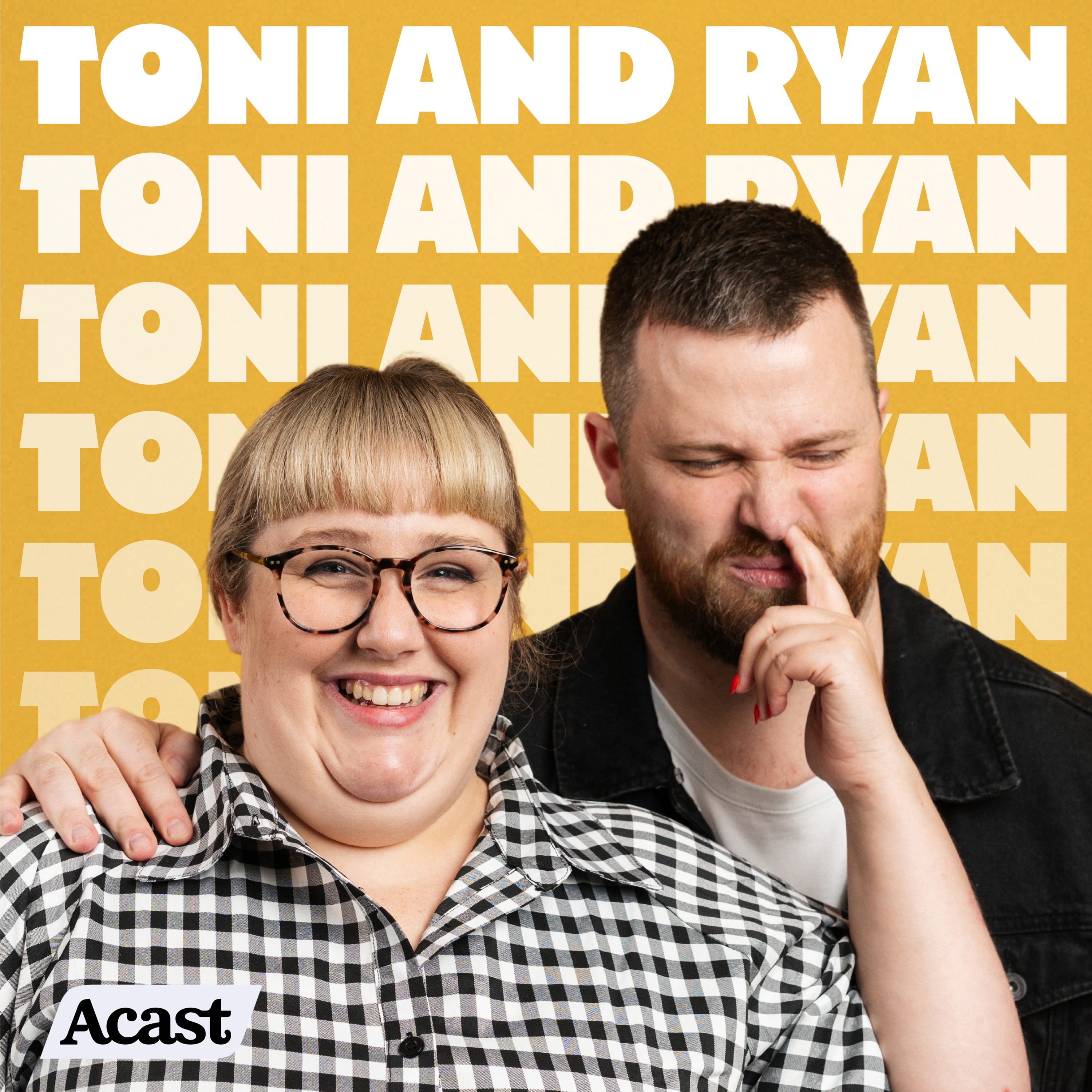
- Comedy shows (Toni and Ryan, Private Parts) — the hardest listening there is, because jokes rely on timing, slang, and shared context. When these start landing, your English has arrived.
- True crime and society shows — our two biggest categories. Narrative-driven, so the story pulls you through the hard parts.


At this level, stop reading the transcript first and only check it when you miss something. You’re training your ear to carry the load.
A note on accents: don’t marry one. A few weeks of a British host, then an American one, then an Australian comedy show — your ear needs the variety more than it needs a single “correct” accent. Real English isn’t one sound.
How to actually learn from a podcast (not just listen to one)
Passive listening while you cook is fine for exposure, but it’s not where the gains come from. The learners who improve fastest do a version of this:
- Listen at your level, not above it. An episode you understand 70–80% of teaches you more than one you understand 30% of. Above your level isn’t “immersion,” it’s noise.
- Save the words that repeat. Not every word — the ones you keep bumping into. Those are the ones worth owning.
- Review them within a day or two, while the episode’s still in your head, so they actually stick instead of evaporating.
That loop — real content, tap the word, review it later — is the entire method. You can run it with a notebook and any podcast that has a transcript; the tool matters less than the habit.
The one-line version
Learner podcasts are training wheels. Useful, temporary, meant to come off. The best podcast to learn English is the one a native speaker would actually choose — followed with a transcript, at a level you can almost handle, with the words you keep meeting saved for later.
Start on the on-ramp if you need it. But aim for the real thing. That’s where fluent lives.
Listen free on Hinto



Frequently asked questions
Are 'learn English' podcasts or real podcasts better? +
Learner podcasts are a good on-ramp because they're slow and scripted with transcripts, but the goal is to understand the podcasts native speakers actually listen to. Use learner shows to warm up, then switch to real ones as soon as you can follow them with a transcript — that's where real fluency comes from.
What are the best podcasts for intermediate (B1–B2) learners? +
TED Talks Daily is the best single bridge: clear narration, one idea per episode, huge topic range. The Daily Stoic (short, calm, repetitive vocabulary) and The New Yorker Radio Hour (polished, well-enunciated) also work well. Listen with the transcript open and tap words instead of pausing.
How do I understand a podcast that feels too fast? +
Listen with the transcript open and read along while you listen. Instead of pausing to look up a word — which snaps your attention out of the episode and often ends the session — tap it in the transcript and keep going. Reading along turns an impossible episode into a hard-but-doable one.
How long should I listen each day? +
Consistency beats length. Fifteen to twenty minutes daily at a level you understand 70–80% of will teach you more than an hour of a show that's over your head. An episode above your level isn't immersion — it's just static you'll tune out.
Related articles
- The Best YouTube Channels to Learn English — Real Channels, Sorted by How Hard They Are The best English on YouTube isn't 'learn English' channels — it's the educational ones made to be understood. A level-by-level guide with real channels and how to watch them at your level.
- How to Learn English by Yourself — A Self-Study System That Actually Sticks You don't need a class to reach fluency — you need a system. Five inputs, a realistic weekly plan, the best free tools, and the self-study mistakes that quietly waste months.
- English Grammar from B1 to C1 — A Roadmap for the Structures That Actually Matter At B1 you know the basics; the road to C1 is a specific set of structures — perfect tenses, conditionals, the passive, nuanced modals. Here's the grammar that matters at each level and how to make it automatic.
- How Long Does It Take to Learn English? The Honest, Hour-by-Hour Answer The honest answer isn't months or years — it's hours. Here's a realistic CEFR timeline from A1 to C1, what speeds it up, and why 'fluent in 3 months' is marketing.