
The Art and Science of the World's Gooiest Cliche | Barbara Fredrickson
 10% Happier with Dan Harris
  Open in Hinto
 About this episode
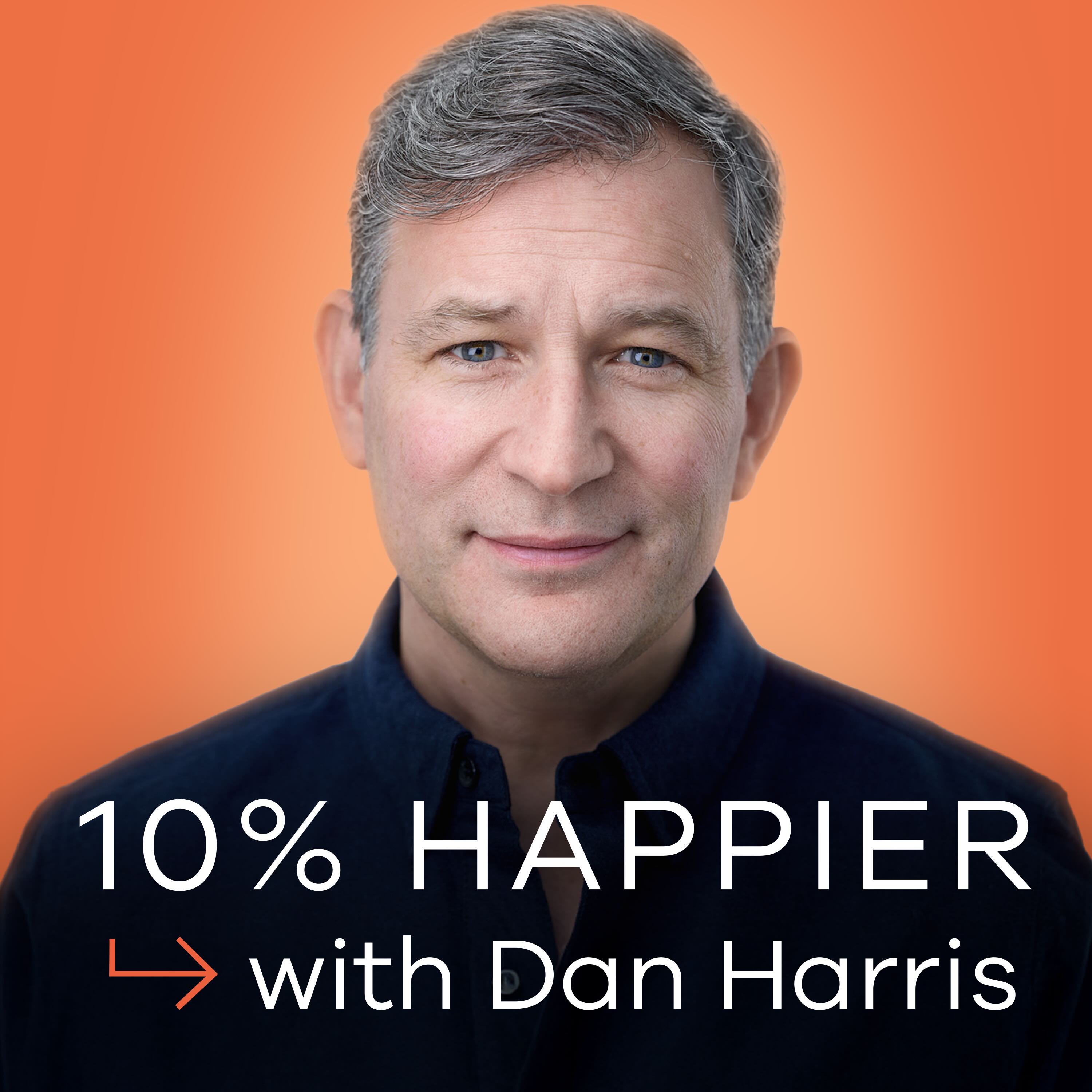
One of our primary missions on this show is to rescue vital ideas that have lapsed into cliches. There are so many important concepts out there that many of us might be tempted to dismiss because they are encrusted with cultural baggage or have been reduced to potentially annoying or sappy slogans. So, for example, we've talked a lot on this podcast about things like: hope, gratitude, and "listening to your body." All of which can sound like the type of empty bromide that your spin instructor yells at you while encouraging you to pedal faster. But, in fact, these are all incredibly important operating principles for a healthy life. And, not for nothing, they are all backed up by hard science. So today we're going to tackle what may be the oldest and gooieset cliche of them all: love. The word has been ruined, in many ways, by Hollywood and pop songs. For many of us, the mere mention of the word conjures images of Tom Cruise, with tears in his eyes, while the string music swells, declaring, "You complete me." But in my view, and in the view of my guest today, love needs to be usefully defined down. In other words, we need to knock love off its plinth, and apply it to a much wider range of human interactions. We also need to think of love not as something magical that requires luck or money or looks, but instead as a trainable skill -- one with profound implications for our health. Barbara Fredrickson is the Kenan Distinguished Professor in the Department of Psychology and Neuroscience at the University of North Carolina at Chapel Hill. She has written two books: one is called Positivity, the other is called Love 2.0. In this interview, we talk about how she defines love, based on her research; how meditation can help build this skill; how taking a few extra minutes to chat with people, even if you feel busy, can have psychological, physiological, and even professional benefits; and how to manage social anxiety as we emerge from our Covid cocoons. This episode is actually part one of a two-part series running this week on social connection. Coming up on Wednesday, we'll hear from Marissa King, a professor at Yale who studies how to create social networks, even when it feels uncomfortable. And by social network, I don't mean something like Facebook. I mean actual networks of actual human beings that you see in person. She's got a lot of practical and actionable advice about how to do that, even within the context of Covid. So be sure to listen in on Wednesday. One more item of business, and it is an invitation for you to participate in this show. In June, we'll be launching a special series of podcast episodes focusing on anxiety, something I'm sure we're all too familiar with. In this series, you'll become intimately familiar with the mechanics of anxiety: how and why it shows up, and what you may be doing to feed it. And this is where you come in. We'd love to hear from you with your questions about anxiety that experts will answer during our anxiety series on the podcast. So whether you're struggling with social anxiety, anxiety about re-entering the world post-Covid, or have any other questions about anxiety - we want to hear from you. To submit a question or share a reflection call (646) 883-8326 and leave us a voicemail with your name and phone number. If you're outside the United States, you can email us a voice memo file in mp3 format to listener@tenpercent.com. The deadline for submissions is Wednesday, May 12th. And if you don't already have the Ten Percent Happier app, download it for free wherever you get your apps or by clicking here: https://www.tenpercent.com/?_branch_match_id=888540266380716858. Full Shownotes: https://www.tenpercent.com/podcast-episode/barbara-fredrickson-341
Listen to this episode in English to learn English
Podcast episodes are one of the highest-density ways to absorb English at native pace. The Art and Science of the World's Gooiest Cliche | Barbara Fredrickson from 10% Happier with Dan Harris gives you natural dialogue, unscripted speech, and vocabulary that actually appears in real conversations.
In the Hinto app, every word in the transcript is tappable. Tap an unknown word, see the translation in your language instantly, and keep listening without breaking flow.
Episodes to Learn English
- What's Worth Living For? | Dr. Atul Gawande Sep 14, 2026
- Neal Brennan On: Talking Back to Your Inner Critic, Why Chasing Validation Doesn't Work, and His Harrowing Psychedelic Journeys Sep 11, 2026
- Top 10 Practices for Resetting Your Time, Space, Body, Inner Critic, and Social Life | Laurie Santos and Gretchen Rubin Sep 9, 2026
- The Science Of Building The Life You Want | Arthur Brooks Sep 7, 2026
- The Psychology Of Success | Guy Raz Sep 4, 2026
- When Life's Not Working, Don't Try Harder. Change Your Situation Instead. | Angela Duckworth Sep 2, 2026
- The Science of Habit Change, Why GLP-1s are Disrupting It, and How To Use It To Have Better Conversations | Charles Duhigg Aug 31, 2026
- Sara Bareilles On: The Feelings You Fear Might Destroy You, What Antidepressants Actually Did to Her Creativity, and Why There's Nothing to Fix Aug 28, 2026
- How To Handle AI Anxiety: A Computer Scientist and a Buddhist Teacher On Managing Uncertainty | Cal Newport & Matthew Brensilver Aug 26, 2026
- Longevity Secrets (And Controversies) From The Blue Zones | Dan Buettner Aug 24, 2026
- The Evidence for Aliens, the Afterlife, Bigfoot, Sea Monsters, and More | Miguel Sancho Aug 21, 2026
- You Can Stop Fixing Yourself: Buddhist Advice on Boundaries, Rituals, and Dropping Your Self-Aggression | Susan Piver Aug 19, 2026
- You Can Get Through It: How to Handle the Hardest Things That Will Ever Happen to You | Dr. Lucy Hone Aug 17, 2026
- The Science of Journaling: How 15 Minutes of Writing Can Free Up Your Brain, Improve Your Health, and Make You a Better Friend | Dr. James Pennebaker Aug 14, 2026
- The Non-BS Science of Manifestation: How Your Imagination Can Help With Pain, Anxiety, Conflict, and Recovery | Cassi Vieten Aug 12, 2026
- The Neuroscience of Likability, Social Connection, and Brain Health | Ben Rein Aug 10, 2026
- Self-Help Without Other People Is Just Selfish — and Here's the Science to Prove It | Dan Harris Aug 7, 2026
- Resetting Your Nervous System When You're Anxious, Hurting, or Just Powering Through | Johanna Franzel Aug 5, 2026
- For The Lonely, Suffocated, or Overextended: How To Balance Your Relationships When Others Won't Change | Nedra Glover Tawwab Aug 3, 2026
- When You Don't Know What You Actually Want: How To Say No, When To Say Yes, and The One Question That Cuts Through It | Yara Shahidi Jul 31, 2026
- You're Gonna Be Alright No Matter What: On Facing Anger, Aging, and Loss With Humor and Grace | Sylvia Boorstein Jul 29, 2026
- How To Read People, Calm Tension, Build Trust, and Ask For What You're Worth | John Richardson Jul 27, 2026
- That Feeling of "Always-Behind and Never-Enough"—Here's the Antidote | Ellen Hendriksen Jul 24, 2026
- Secrets From the Therapist's Couch: How Boundaries Actually Work, How To Come To Peace With Your Parents, and Why It's Not Too Late To Change | Lori Gottlieb Jul 22, 2026
- Joyful Anyway: Surviving the Sh*t Show of Regular Life | Kate Bowler Jul 20, 2026
- Why We Crave Gurus: A Skeptic's Reckoning With Belief, Bitcoin, and Burning Man | Vikram Gandhi Jul 17, 2026
- Anxiety, Overthinking, and Overwhelm: Buddhist Hacks For Changing Your Mind | Joseph Goldstein Jul 15, 2026
- Perfectionism, Burnout, and Self-Doubt: Break the Loop with the Science of Mattering | Gordon Flett Jul 13, 2026
- How a Group of Broke 20-Somethings Accidentally Launched the Mindfulness Movement | Jack Kornfield, Joseph Goldstein and Sharon Salzberg Jul 10, 2026
- How To Communicate Effectively With Difficult People: When to Tell the Truth, When to Push Back, and Why Kindness Isn't the Same as Being Nice | Sharon Salzberg Jul 8, 2026